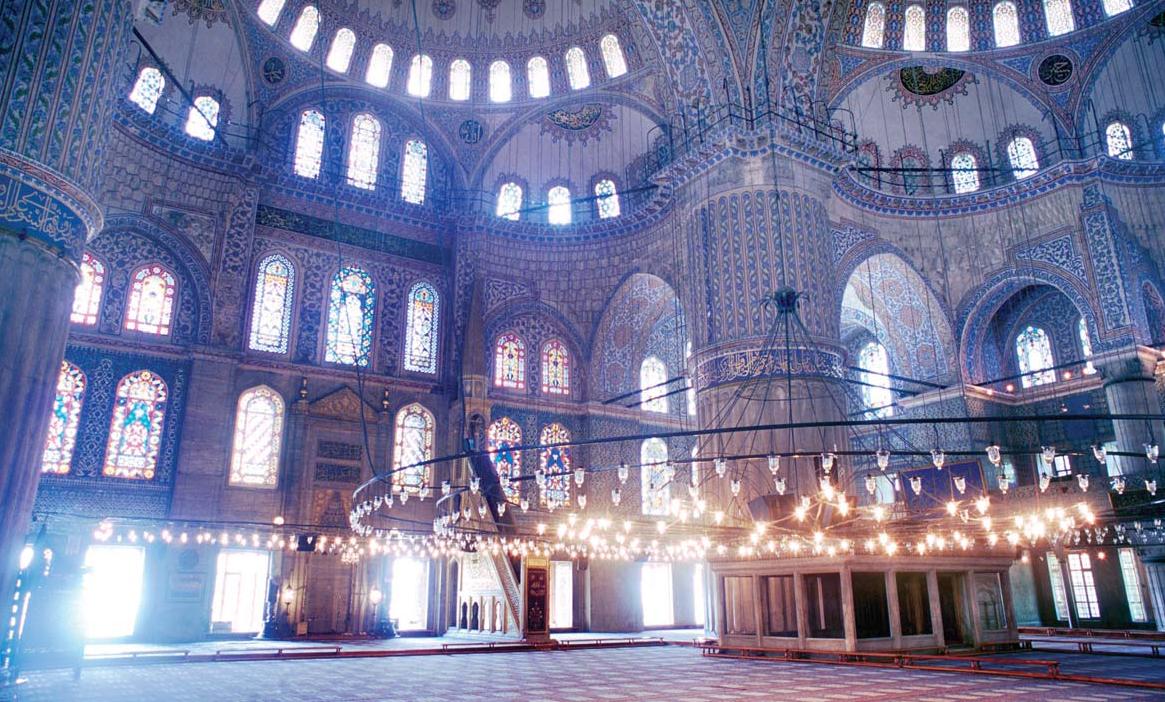
 Dubai Ibn Battuta Mall: The world’s largest themed shopping mall is divided into six main courts, whose architecture reflects ‘the most influential places’ Battuta visited on his 29-year epic journey. I began in the China Court (complete with lifesized junk), proceeded to India Court (with a huge, vaguely Mughal pavilion) and eventually reached Andalucia Court whose Lion Fountain replicates the one in Granada’s Alhambra. Aimed at children, so-called ‘edutainers’ in ethnic costume lead free Learning Adventure Tours that explore Battuta’s travels and uncover some of the Islamic world’s ingenious inventions, such as elaborate water clocks. Despite the glitzy shops and chi-chi boutiques, I was reluctantly impressed. Tunisia Court’s market-cum-medina seemed reasonably attractive, while Egypt’s was mock-Mameluke with pharaonic touches. In the heart of Persia Court, I gazed in near admiration into a swollen dome with majestic archways whose arabesque and geometric mosaics echoed the venerable masterpieces in Isfahan and Shiraz. And then, slap bang in the middle, I noticed a Starbucks. Today’s Dubai is all swagger and big bucks, the biggest this and the largest that. Here size really does matter, luxury is the norm, and first is fab. Its proud construction boom has all kinds of manifestations that waver between the marvellous and the ludicrous.
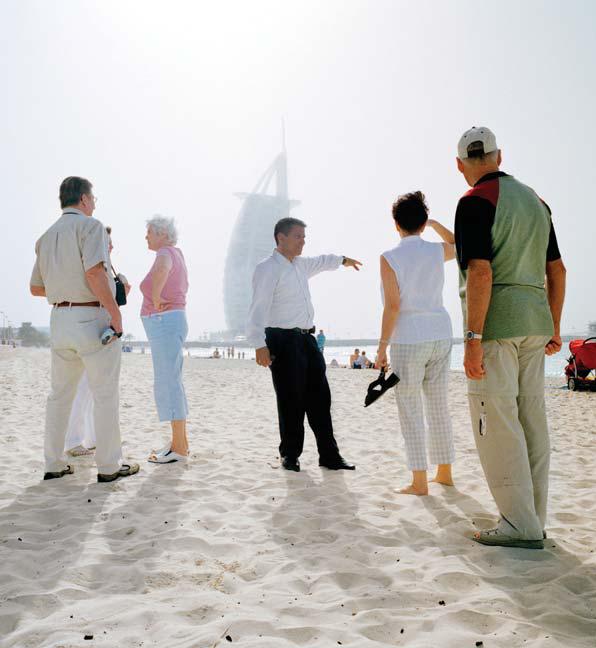 Prestige projects began with the Burj al-Arab, the world’s first seven-star hotel, complete with gold taps and Rolls Royce taxis. Then came The Palm, a man-made island shaped as a haloed palm tree, which will be ribbed with villas and fringed by marinas when complete. Its DNA was so fecund that various further Palms are sprouting, along with another island playground called The World, where the super-rich can buy a country if they don’t already own one. Environmentalists groaned when Ski Dubai – among the world’s largest ski domes, black run included – opened nearly two years ago. So they must be having kittens at the prospect of the new Snowdome, allegedly the largest free-standing transparent structure in the world, with no supporting columns. It will be more than 200 metres across, house a snowboarding mountain, a penguin enclosure and flats called Iceberg Residences.
It never occurred to me that man even built freestanding transparent structures without columns, but then Dubai excels at these things. Take, for example, Infinity Tower. It will be 330 metres tall and – drum roll, please – will be the world’s tallest building to feature a 90-degree twist. Designed, I imagine, by Esher & Magritte Partners, this is the sort of radical approach my three year-old child often attempts with Plasticine. In propertyspeak it’s ‘a masterpiece of contemporary style and spiralling design’. Meanwhile they’re busy with Burj Dubai (to be the world’s tallest building), Hydropolis (its first underwater hotel, 27 acres no less) and – my personal favourite – the gestating Mall Of Arabia.
According to developer Mustafa Galadari, this will be the world’s largest mall. “Even if someone comes up with a bigger one, we will just add more space to our mall to retain the top spot.” It will be just one part of the City Of Arabia development, comprising Wadi Walk (Mediterranean-inspired architecture plus water taxis), 34 tower blocks, and Restless Planet – a dinosaur-based attraction with five giant glass domes and 108 roaring, life-size animatronic dinosaurs that will ‘interact’ with visitors. Like sport ? Head for Dubai Sports City, with the world’s first ICC Global Cricket Academy. Want some sea ? Dubai’s boating berths will increase from 1,000 to 40,000, with the help of Dubai Marina (yes, it’s among the biggest ever maritime projects). Lakes? Try Jumeirah Lake Towers (up to 80 skyscrapers set amid 250,000 square metres of winding canals and lakes). The list goes on and on, and for all their boys-with-toys quality, the numbers are important. Dubai’s master plan aims to at least double tourist arrivals to between 10 and 15 million by 2010. But arguably it is environmentally unfriendly – if not unsound. It already has one of the world’s highest water consumptions per capita and, according to the World Wide Fund for Nature, a huge energy footprint: think of all that air-conditioning and desalination.
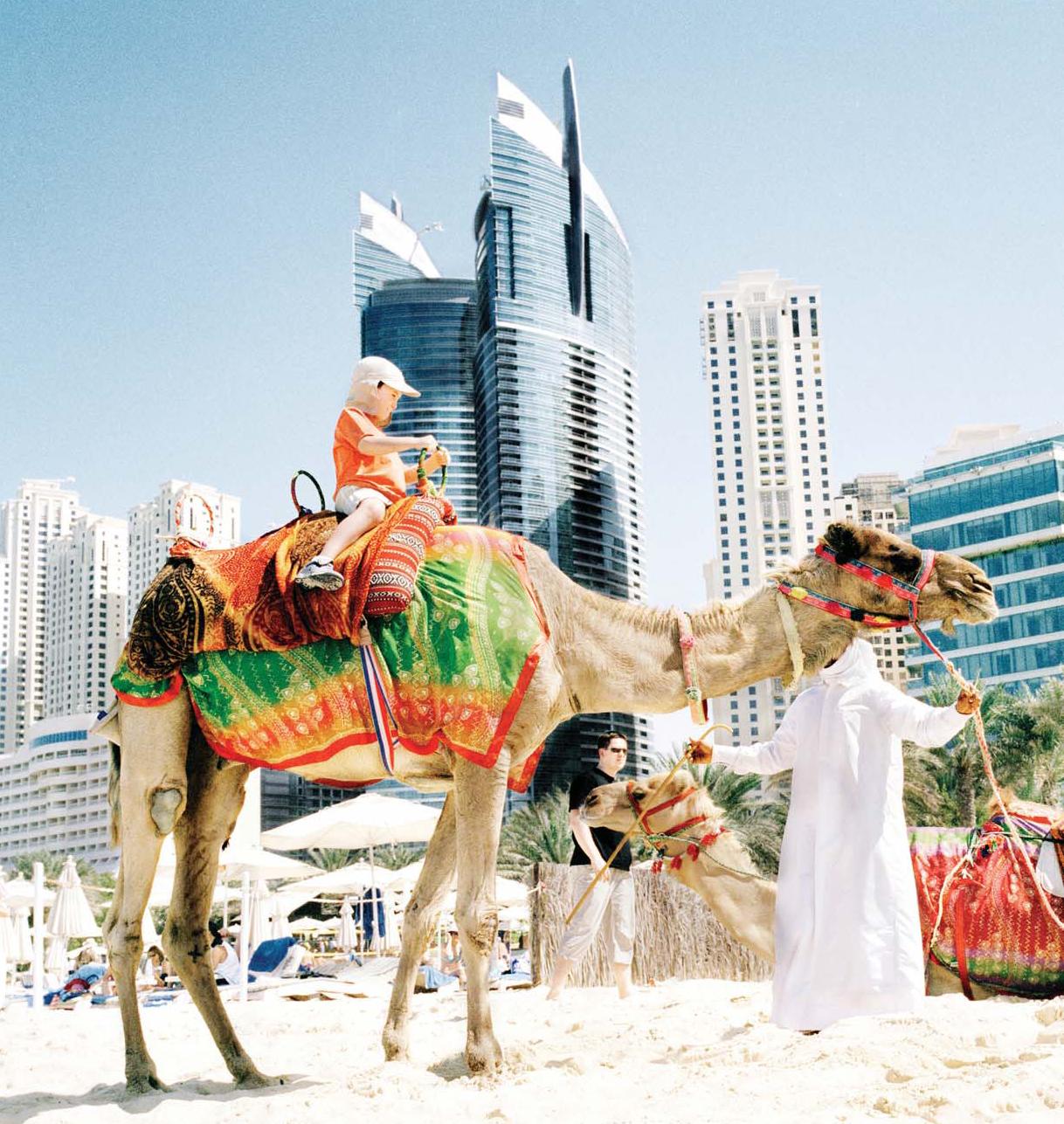
The human cost, too, is gaining attention. In a population of around 1.5 million, about 80 per cent are immigrant labourers, mainly from India, Pakistan and the Philippines, with lives far removed from the glamour of showcase Dubai. Workers’ grievances centre on low pay, harsh working conditions and poor accommodation. Last year, thousands of workers at the Burj Dubai site rioted. Airport labourers promptly downed tools in sympathy. And, most unsettlingly for the authorities, a whiff of organisation hung in the air. There have been mutterings that, in order to gain more impact, protests could be taken to the malls and the beaches. In the midst of all this construction chaos, one of the city’s most important structures is still the 1799 Al Fahidi Fort – now Dubai Museum – because it retains a sense of the older Dubai. Within its mud walls there’s an old photo showing a few huts, the fort, the Creek and plenty of empty desert: it is from the 1950s. Much as one might deride Dubai, its vision and drive are impressive. Meanwhile, I’ll stick to making my largest ever sandcastles on the sweeping Jumeirah Beach.
Dubai has a hot and humid climate, with little rain year-round. Temperatures can often reach 40 degrees or higher, especially in the mid-summer from June to August. October to April are much more bearable. Sporting events are important. Highlights include the Dubai international rugby sevens, the Dubai Desert Classic golf tournament (May), and the world’s most expensive horse race – the Dubai World Cup (March).
Hotels and Resorts in Dubai
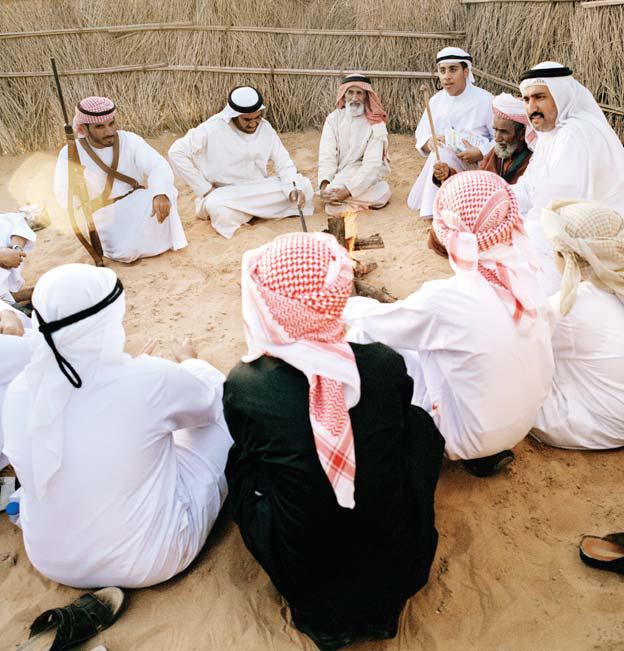
The Burj Al Arab Iconic 28-storey hotel, once dubbed ‘the world’s first seven-star hotel’, housed in a unique sail–shaped building on a man-made island. Private butlers attend to guests in the grand suites. Grosvenor House Hotel Ultramodern tower building in the Dubai Marina, which features an extravagant marble-floored reception hall, an exquisite spa called The Retreat and an outdoor rooftop pool. Its sister hotel, Le Royal Meridien , is well suited for families and longer-stay guests who wish to relax by the outdoor pools or stroll along the hotel’s private stretch of Jumeirah Beach. Al Maha Desert Resort Exclusive hotel designed to resemble a traditional Bedouin encampment and set within a desert conservation reserve, with panoramic views of the Hajar Mountains and the surrounding dunes.
Top destinations in Dubai
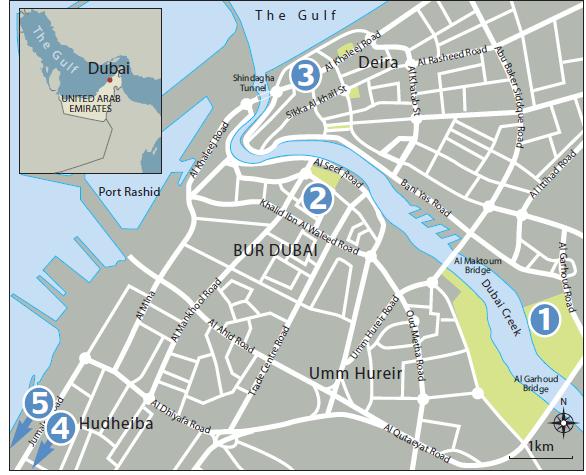
- Dubai Creek Lined by dhows and crossable by water taxi, the creek offers a glimpse of Dubai’s
trading heritage. - Dubai Museum Housed in the Al Fahidi Fort, built in 1787, exhibits show how far Dubai has changed in the past century from small fishing village to glamorous metropolis.
- Deira Gold Souk Selling every conceivable kind of jewellery, this vast market is considered to be the
largest gold bazaar in Arabia. - Ski Dubai High outdoor temperatures didn’t deter the building of the world’s third-largest indoor ski slope in Dubai, coated with 6,000 metric tons of manufactured snow.
- Jumeirah Beach Once a quiet stretch of sandy beach, now lined with luxury hotels and soon the fantasy peninsula of Jumeirah Palm and the island, ‘World