The Metropolitan London

The Metropolitan London
19 Old Park Lane
London, W1K, United Kingdom

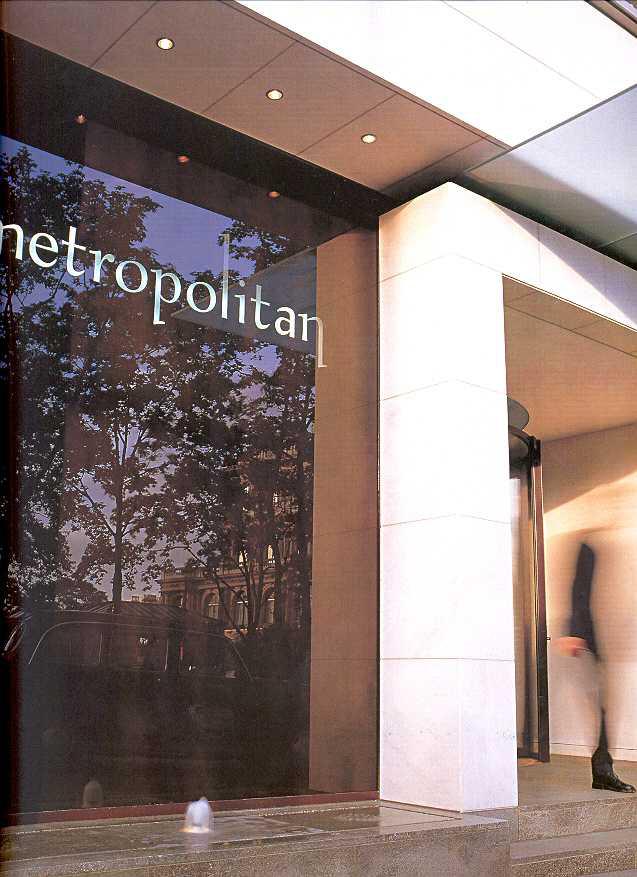
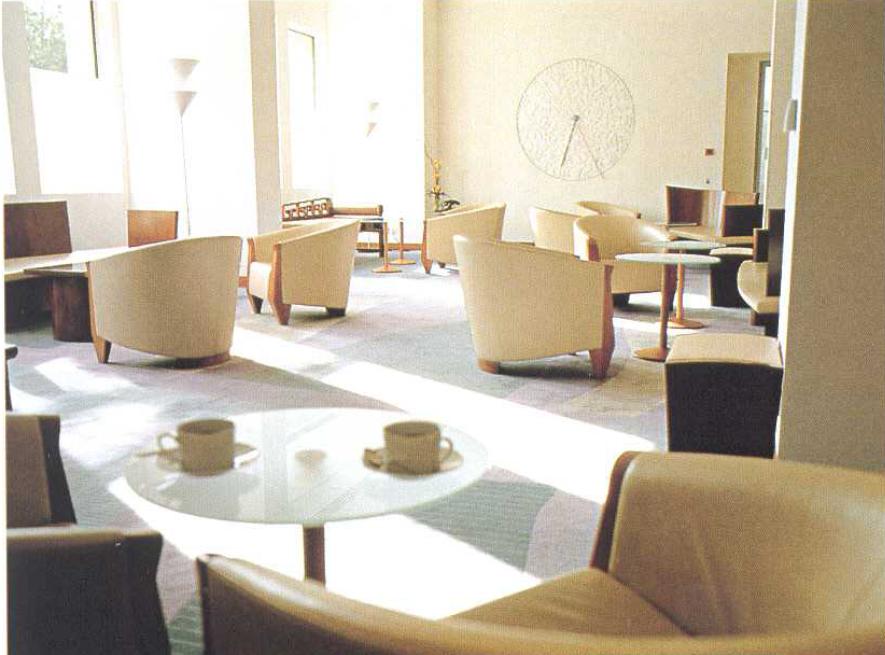
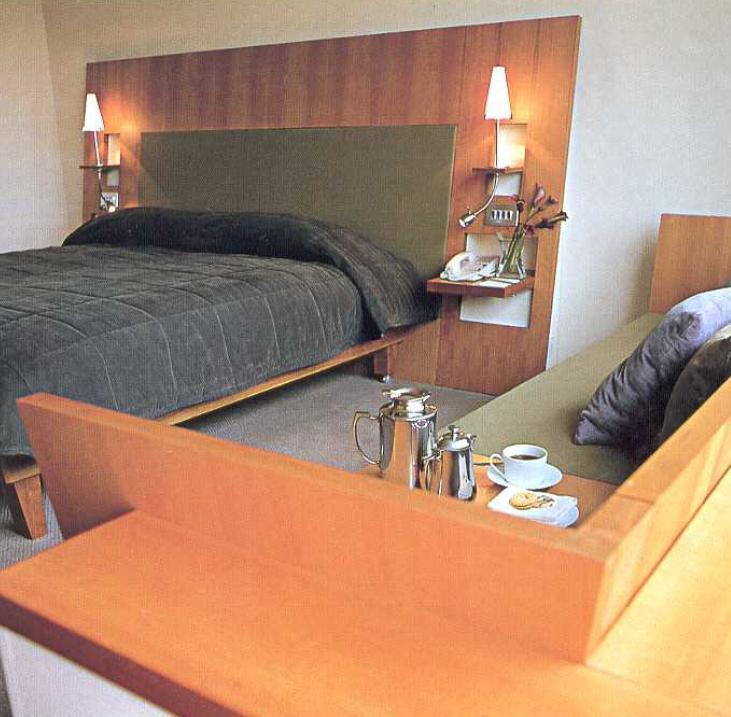
The Metropolitan is located in exceptional place in London: in the exclusive Old Park Lane overlooking Hayde Park. A minimal architecture of glass and stone describes the entrance and the reveals the serene luxury of the interior: Inside, the geometric forms of the furnishings lend a simple elegance to the lobby. The curved shapes of the timber furnishings echo the flowing lines of the carpet, designed by Helen Yardly, and were inspired by the functional forms of the Thai punt. A spectacular bas relief clock is set at the far end, lending a sculptural undertone to the environment. Above the entrance doors, digitally programmed lighting set above glass paneling products a natural skylight effect. The back wall of the lobby is punctuated with service areas using limber lines recesses. These house the reception, two lifts and an exclusive gift shop. In the design  of the 155 bedrooms every guest requirement has been considered. The sweeping curve of the multi-purpose desk accomodates a fax/modem facility at one end, and a triptych mirror attached to the centre fotos out to create a dressing table.  Variable moods can be achieved from the two panels set either side of the pear veneered  headboard with allow full lighting control.

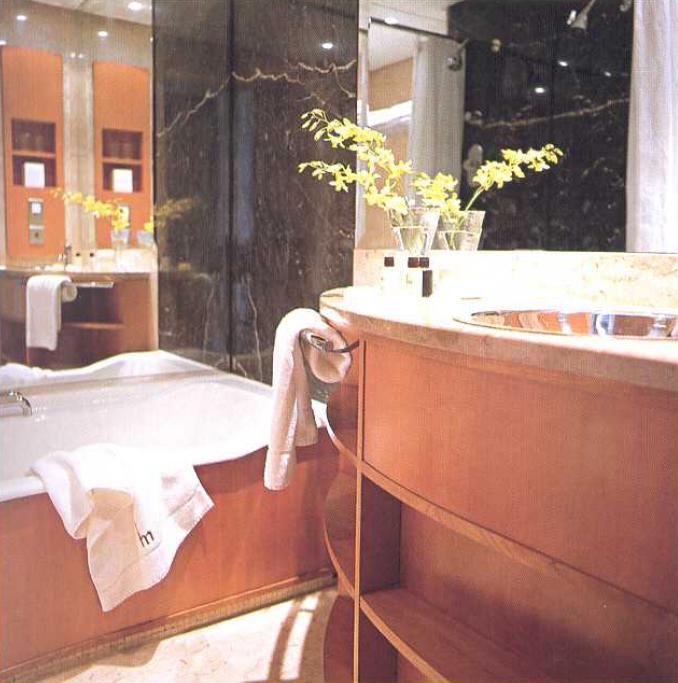
The existing marble of the on-suite bathrooms has been enhanced by the pear wood furnishing. Large mirrors expand the space and details such as the stainless steel sing give an elegant, polished finish. Other feature of the hotel are sophisticated Penthouse Suite, a Japanese restaurant and the Met bar, which can also be accessed from Park Lane.

United Designer have provided comfort without compromising their modern style: managing to combine a serene design aethetic with soft colour schemes and soothing lighting wich invite guests to indulge in contemplationand relaxed conversation. An air of authenticity is achieved by the selection of high quality natural materials throughout which will improve with age, effectively transforming this contemporary interior into a timeless classic.

The entrance lobby to the Metropolitan hotel is characterized by the extremely geometric furniture, which provides it with a touch of sophistication. A spectacular bas-relief clock  presides over the space defined by the reception and the entrance lobby.

On the 10th floor of the Metroplitan, the Penthouse is the ultimate suite with a view. A Japanese rock garden, designed by Peter Chan surrounds all the room.

Wood is an important feature in the design of the 155 rooms, even in the bathroom where the architects used pear-tree wood.

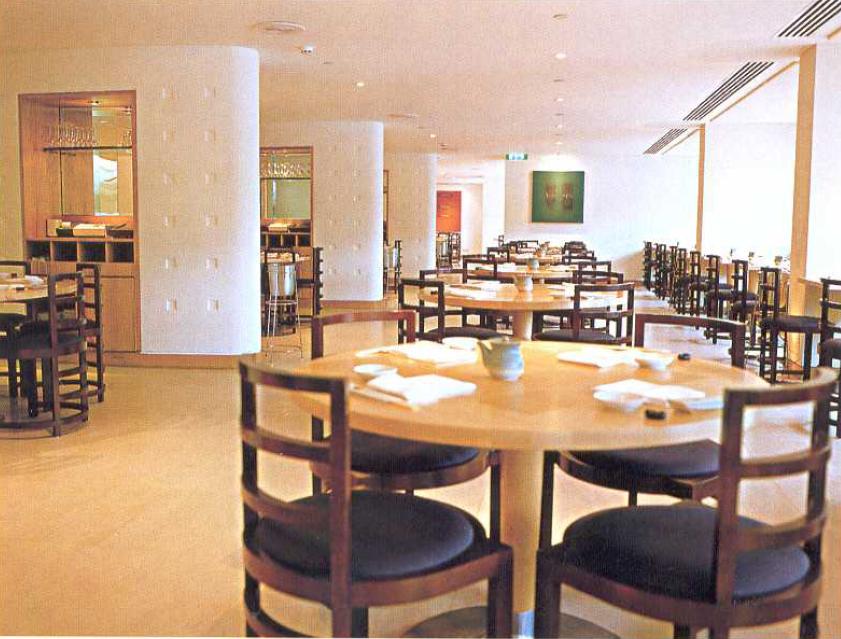
The photograph on this page show the large Japanese restaurant located on the first floor. Its design, like the rest of the hotel, is based on the use of high-quality natural materials.

The Metropolitan London
19 Old Park Lane
London, W1K, United Kingdom

Miro Hotel Bilbao

Miro Hotel
Alameda Mazarredo, 77
Bilbao 48009
(Rates from  95 €)

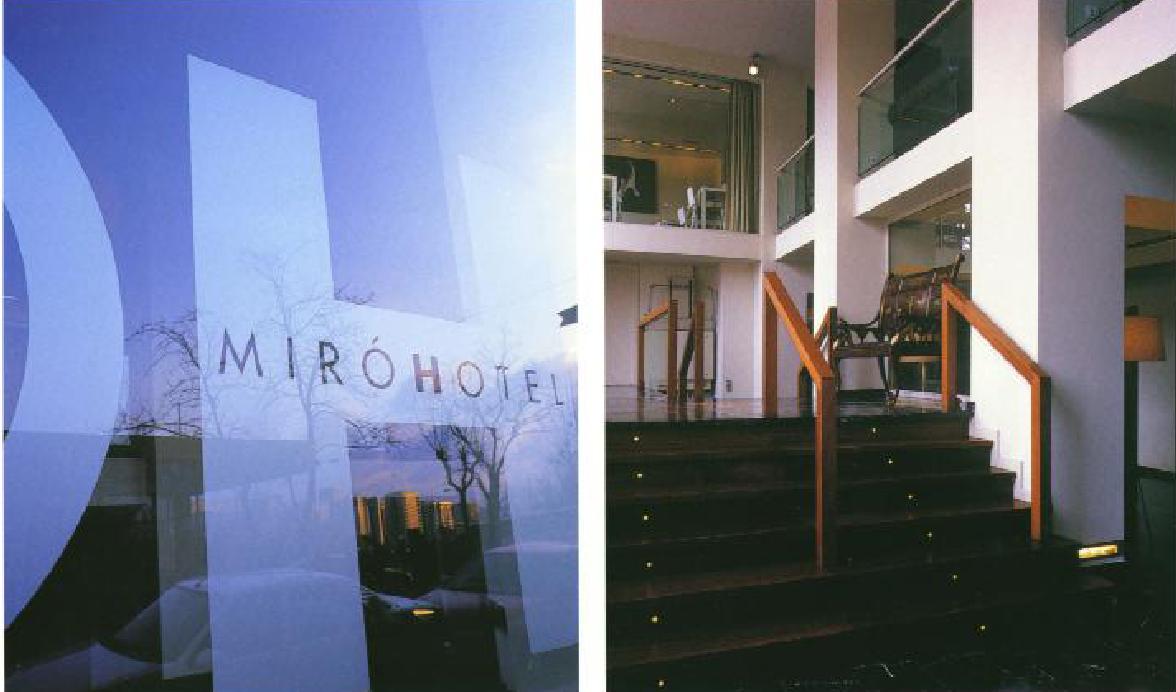
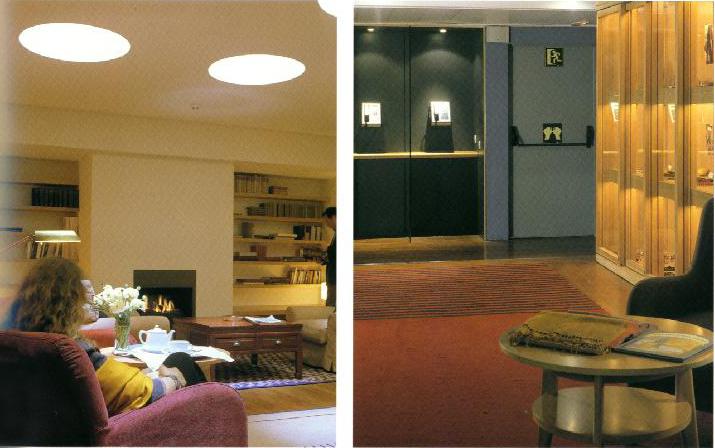
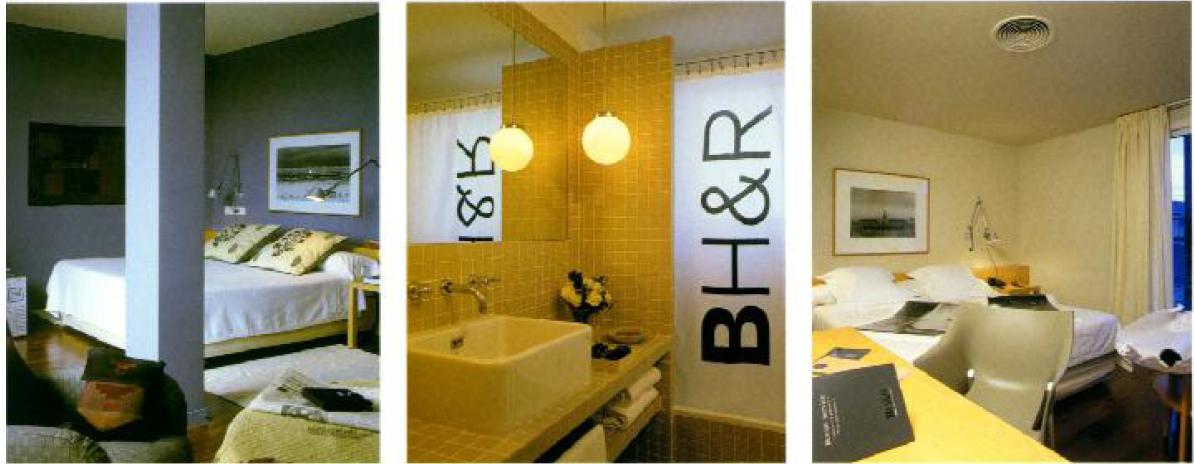
Hotel Information: Miro Hotel Bilbao is located  the heart of Bilbao halfway between the Guggenheim Museum and the Museum of the Fine Arts, a six story building house one of the finest designer hotels in the up and coming city. The Miro Hotel has its own character due to the work of a team who collaborated in order to create a hotel, which, despite its small size, could offer all the advantages of a large hotel. Designer Antoni Miro steered the project´s design in the same spirit of conceptual riga tor which his work in the world of fashion is renowned. The hotel´s minimalism is a guiding principle of the project. Miro Hotel is a decidedly cutting-edge and modern space where practically and discretion stand out in every detail. In order to achieve this an almost monochromatic palette was chosen, against which certain areas, such as lobby or certain pieces of furniture, occasionally contrast in brighter colors and eye catching shapes. The entrance, a space with high geometric lines, is a few steps above the lobby and bar. This arrangement makes these spaces more intimate and cozy than the traditional internationl hotel lobby.The rooms where the same chromatic contrasts continue including the blue hue of the rug are quite pleasure warm spaces.

Guests review score: 7,8/10 (of 77 reviews)

Room Information: 50 rooms. Glass of wine in your room on arrival and free CD and DVD rental. The rest is up to you! Free access to internet via Wi-Fi and DSL.  Minibar, Shower, Safety Deposit Box, TV, Telephone, Air Conditioning, Bathroom Amenities, Bathroom, Heating, Satellite TV, Hairdryer,  Bathrobe.

Rates: from 95 Euro.

Hotel Facilities

General Restaurant, Bar, 24-Hour Front Desk, Non-Smoking Rooms, Rooms/Facilities for Disabled Guests, Elevator, Express Check-In/Check-Out, Safety Deposit Box, Luggage Storage, Gay Friendly,

Activities Fitness Centre,  Library.

Services Room Service, Meeting/Banquet Facilities, Laundry, Dry Cleaning, Car Rental, Fax/Photocopying.

Vincci SoMa

Vincci SoMa
Goya, 79, 28001 Madrid
(Rates from  80 €)

Hotel Infromation: Hotel Vincci SoMa is located in one of Madrid´s busiest neighborhoods, this project consisted to the total renovation of a building that was originally also a hotel. Open spaces and rooms featuring materials that were chosen with great care give the essential of exclusivity coupled with privacy.Vincci Soma has ten levels. The entrance lobby and reception areas are located on the ground floor, while the second floor is set aside for the conference rooms, a restaurant, bar library and private dining room. The guest rooms are located on the remaining floors of the building. The idea creating a domestic environment is reflected on the design of the furnishings as well as the choice of material sand decorative objects. Natural materials have been chosen for the details and finishes among which linen, cotton and wool prevail. As a decorative accent the designers brought together a prestigious collection of work by Spanish photographers that shows varied glimpses of other countries. An exceptional feature of the renovation was the opportunity to design everything from the overall look and feel of the spaces down to the smallest  details and this exercise in design has resulted in a timeless international hotel of great coherence.

Room information: 177 rooms, 166 standard, 3 suites and 8 superior. In the guest rooms a personal and domestic style has been achieved by using a palette of varied, bright tones. In the bathrooms the designers turned the wall coverings rich in color and texture that go weill with the contemporary design of the faucets and fixtures.

Rates: 80 – 90 Euro

Room Facilities:

General: Minibar, Safety Deposit Box, TV, Telephone, Air Conditioning, Radio, Bathroom Amenities, Toilet, Bathroom, Heating, Hairdryer, Wake Up Service/Alarm Clock, Work Desk, CD Player

Service: 24 hours reception, Room service, Laundry service, Dry cleaning, Daily newspaper, Breakfast in room, Car hire, ADSL and free internet WiFi, Currency exchange, Gym, SoMa Restaurant, Library

Vietnam

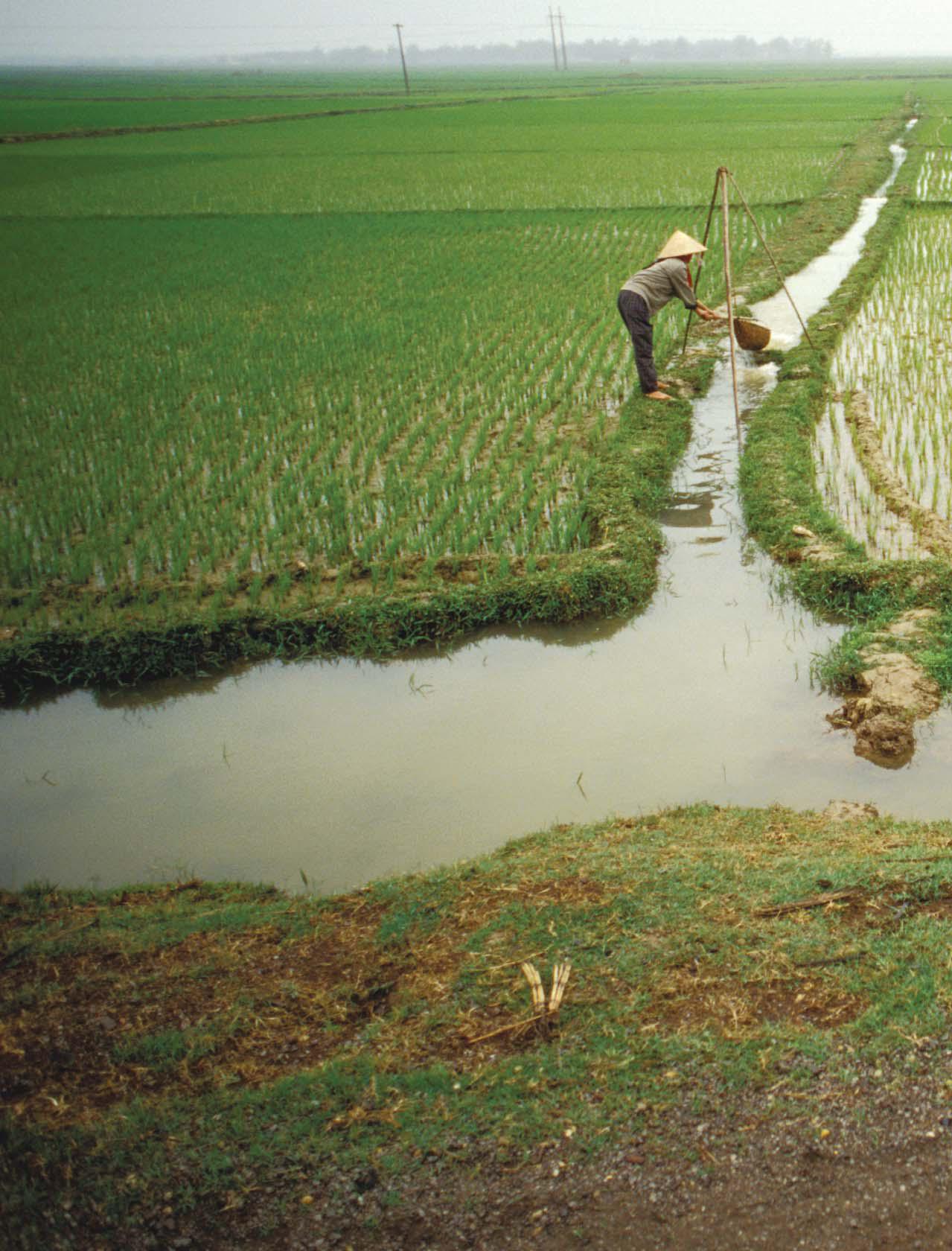
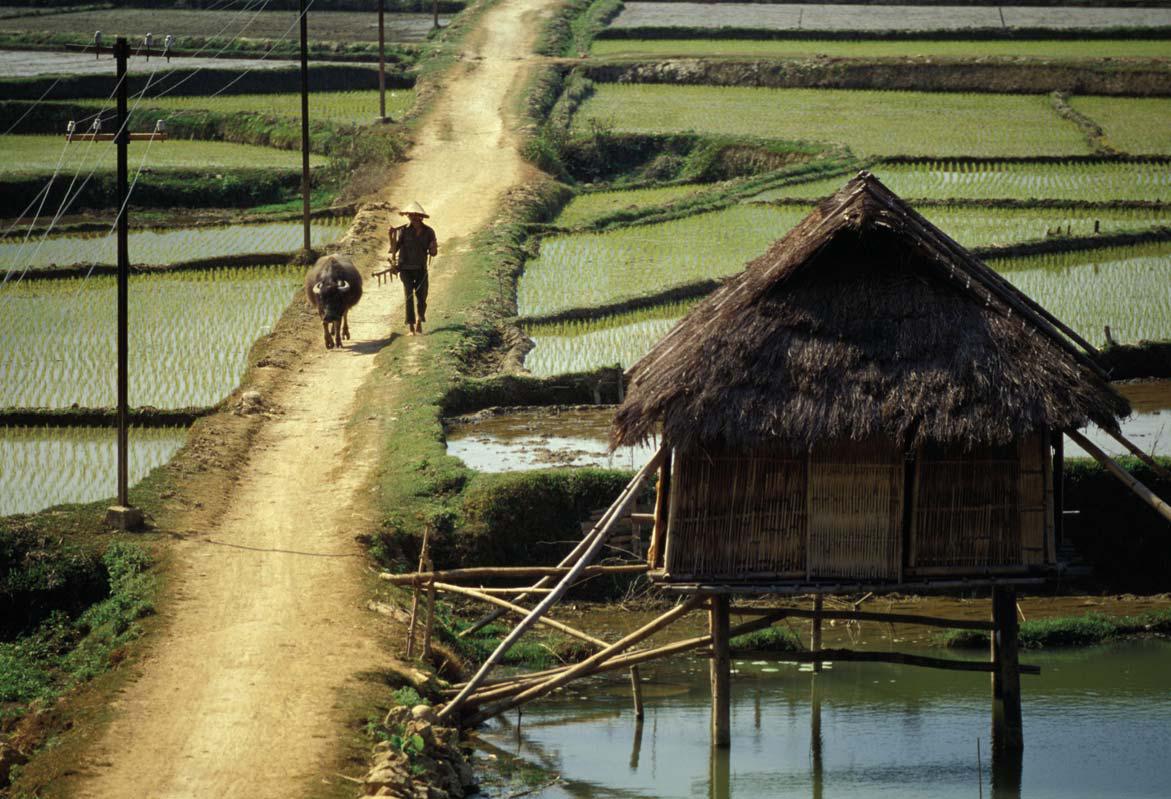
You are not supposed to look left or right  when you cross a road in Vietnam. Just stride forward into the sea of motorbikes and they swirl obligingly around you until you get to the other side. But I was so distracted that I nearly didn’t make it. Slender women in white opera gloves and flowing blue silk trousers, looking like supermodels, were roaring along two to a bike. Wiry men pressed against handlebars had huge potted kumquat trees roped to the pillion. Whole families astride single machines were waving red joss sticks and gold streamers. There’s a sense of energy and celebration in Vietnam. It’s 30 years since the war ended and that’s the longest period of peace the country has known for centuries. Vietnam is booming, not least in its population, which is now 83 million, compared to 13 million in Cambodia and just 5 million in Laos. Every road is packed with bikes. Every inch of land is farmed. Even the airport runway has neat rows of vegetables growing by the side of it. Although much of the country is rural, with lush green rice paddies, evocatively named rivers and a 3,400-kilometre coastline of white sand beaches, the cities have become the height of chic. Fashionable shops, art galleries and restaurants have blossomed in Hanoi and Saigon amid the elegant French colonial buildings and traditional Confucian temples. In Ho Chi Minh City, formerly Saigon, Dong Khoi street is a shopper’s paradise with boutiques that effortlessly blend French style with Asian exoticism. I was lured into Khai Silk and succumbed to an exquisite shirt in cream silk. Afterwards I bought pretty hand-painted postcards of rickshaws from a street artist, and wrote them over a café crème at the charming Paris Deli nearby. Feeling transported back to France, I posted my letters at the colonial post office, designed by Auguste-Henri Vildieu in 1891, opposite Notre Dame Cathedral.

The distinguished yellow building, all white cornices and arched windows with green shutters, has a spectacular vaulted and glazed interior, presided over now by a picture of Uncle Ho, whose aim was to oust the French. The colonial architecture of Saigon and Hanoi is in dispute, as the Vietnamese are content to let it crumble, while the French are eager to restore. Hanoi is almost a French city, from the Long Bien bridge (designed by Gustave Eiffel, who fled Paris for Indochina after his controversial tower) to whole streets of belle époque villas that look as though they have been lifted straight out of Paris or Nice. The Metropole Hotel, with its sparkling white stucco façade, oriel windows and fluted pilasters and balconies, built in 1911 and once host to Graham Greene, is now being revamped by Sofitel. However, the Presidential Palace, built by Vildieu in 1906, has been repainted orange – and will doubtless be red, in true Communist style, by my next visit. But for a sense of timelessness, Halong Bay in the north is the place to go. Here 3,000 steep limestone outcrops rise sheer from the translucent blue water.

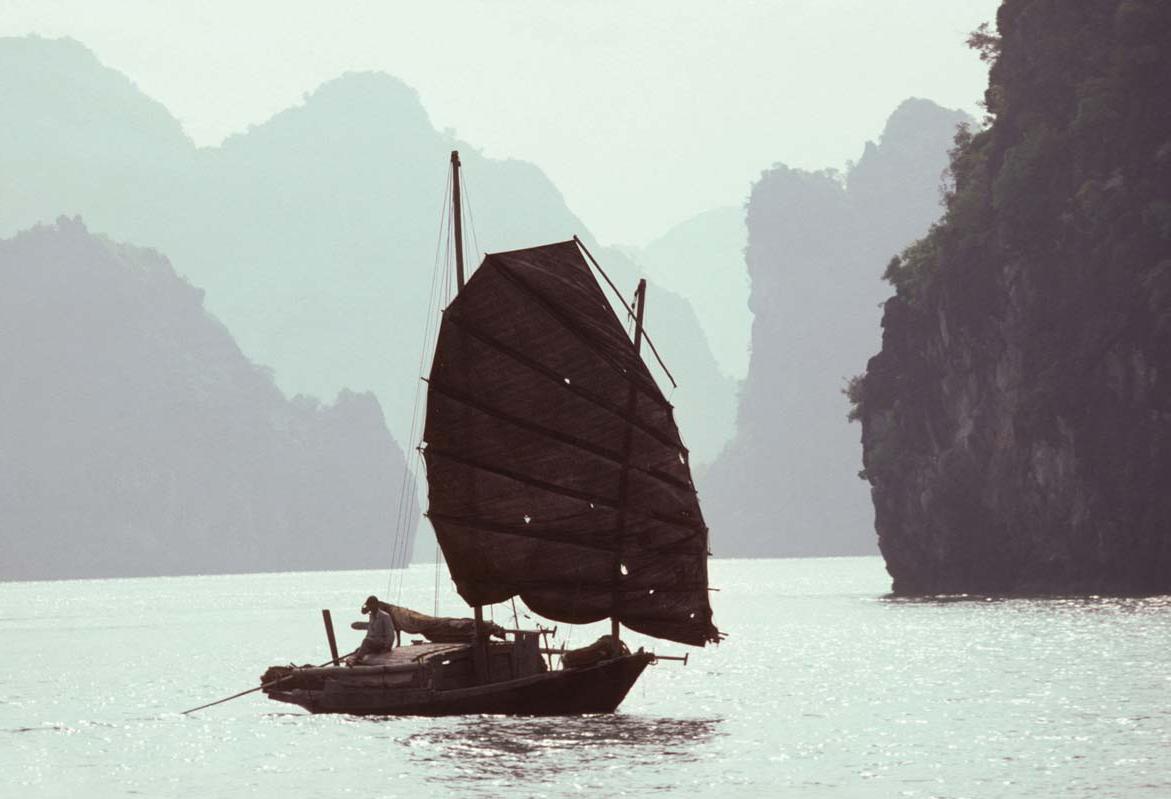
Frequently swathed in mists (for the weather in north Vietnam is like ours, overcast and grey; and conversation, like ours, revolves around it), this bay has an ethereal atmosphere. I rowed silently in a small boat around the outcrops, covered with twisted vegetation, and into echoing caves and rocky islets, re-emerging into mists where passing junks with their distinctive sails appeared and then vanished like ghosts. Extolled by poets and painters, and now a UNESCO World Heritage Site, Halong was where the French first arrived in 1872, altering the course of history. But when I asked Thu, our guide, about the recent past, she said emphatically: “It’s just that: the past. I was born after the war ended. Now we are all making our future.” Future and past are inextricable for some, though, as Nguyen Kim Manh explained when I dined at his Café des Amis on the quayside in Hoi An. This gem-like sixteenth-century town was once a great port, trading with China and Japan in silk, gold and porcelain.

Its legacy is ancient pagodas, a medieval-looking Japanese covered bridge, and a picturesque Chinese quarter of wooden merchants’ houses with sumptuous interiors. Kim, in his sixties, a former high jump champion and tennis player, learned to cook in the South Vietnamese army where he had to do more than just satisfy his commanding officers. “They also made me eat a mouthful of every dish to make sure it hadn’t been poisoned,” he said, rolling his eyes at the memory. After the north won the war in 1975, Kim’s property was seized and his 15 brothers and sisters left the country. But he stayed on, as the eldest son, to maintain the family tombs and “look after the ancestors”. Kim served me bans bao banh vac, moist parcels of rice flour stuffed with shrimp terrine, on a layer of sauce made with nuoc mam, a pungent fish paste. This was followed by sauteed cuttle fish, a local delicacy, mixed with cabbage, onion and pineapple, on a crisp pancake. Vietnamese food is delicious. Even Ho Chi Minh started out as a kitchen assistant, in London’s Carlton Hotel in 1914, and became a pastry chef in Paris under Escoffier. Had he stayed on, history might have been different. Replete, I wandered out of Kim’s to find myself once more confronted by a stream of bikes and bicycles. Now distracted by much more than fleeting impressions, I looked neither right nor left and strode across the road.

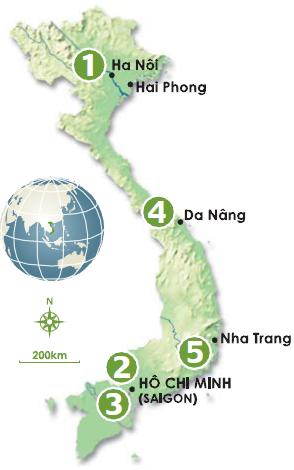
Top sites

  1. Hanoi Explore the sights of the elegant capital – such as the Temple of Literature – before losing yourself in the labyrinth of hectic alleyways in the Old Quarter, an area surrounded by pretty lakes and pagodas.
  2. Ho Chi Minh City Visit the History Museum and immerse yourself in the country’s rich heritage, then head for the Cho Lon marketplace, to absorb some of the vibrant and animated spirit that characterises daily life here.
  3. The Mekong Delta Meander past fruit orchards, bright green rice paddies, and graceful coconut palms before exploring the floating markets and countless canals in the maze of the mighty Mekong River.
  4. The DMZ Take a pilgrimage through the demilitarised zone which still bears witness to the extent of the destruction caused by the war: the barren soil has yet to recover. A nature walk in the stunning Bach Ma National Park will help soothe the spirit afterwards, as will a cruise in a dragon boat down the Perfume River, which runs past gorgeous Royal Tombs.
  5. The South-Central Coast Tour the impressive Cham ruins at Pahn Rang and Thap Cham, then relax on the peaceful Mui Ne Beach nearby.

Mozambique

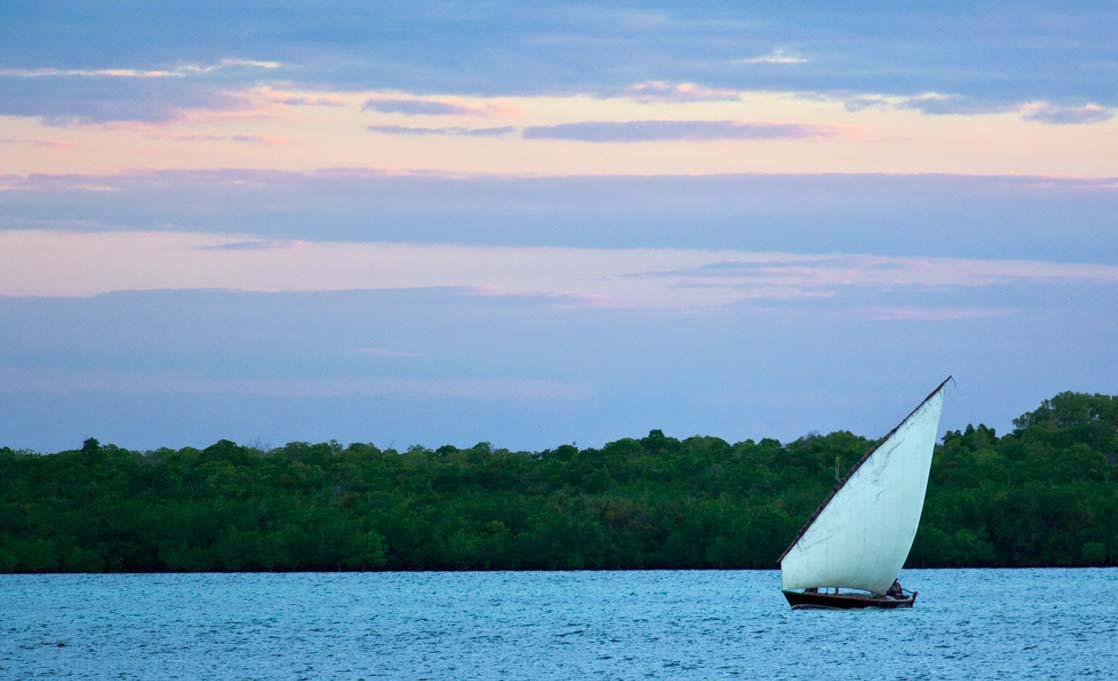
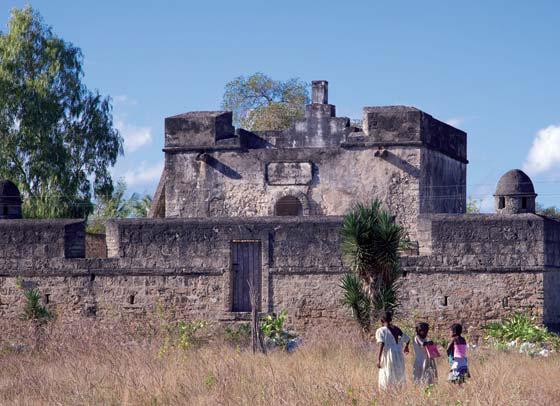
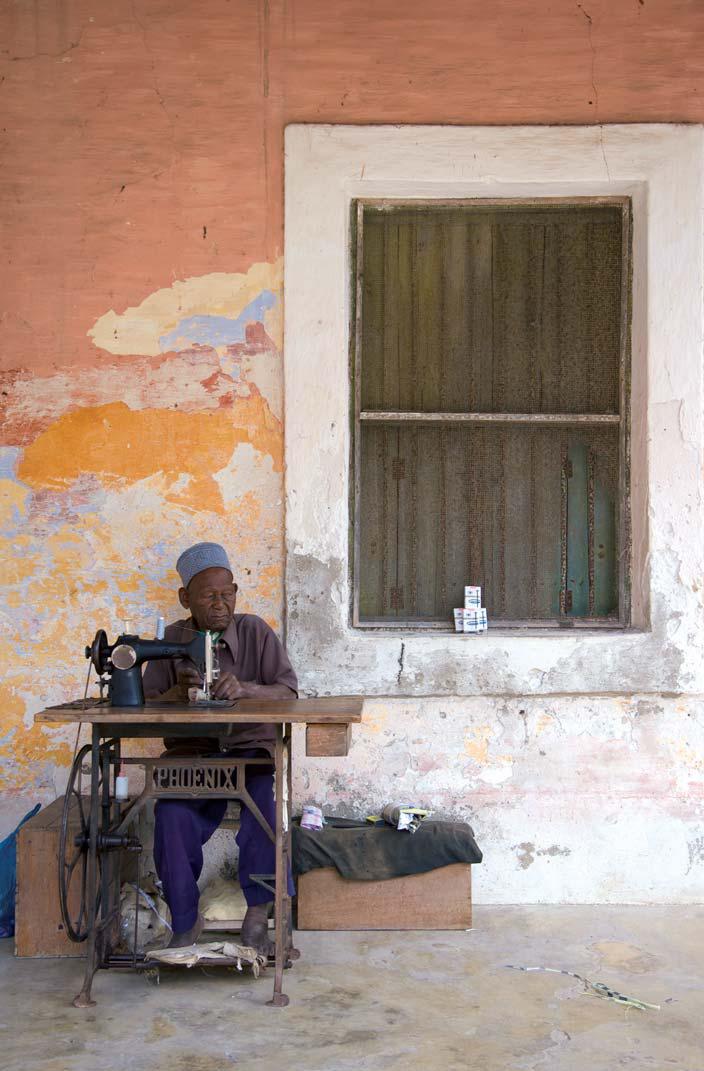
Ibo Island was once the thriving Portuguese Capital of Cabo Delgado province, Mozambique. But over the last century it has gradually flexed into ruinous beauty, becoming – tomy mind – one of the most haunting towns in East Africa. The sun beats relentlessly on this small remote spot,l ike it does most days, and creates the unchanging rhythm of the place. But as I set out to getmy first view of Ibo, rain threatened to dampen the tropical torpor. At the edges of the town I found a crumbling villa that looked as though it had been built from boiled eggs: large cowrie shells, embedded in the plaster,were bleached white by decades of sunshine. A nearby tumbledown garage was an optimistic addition, since there has not been a car on the island for years. Some houses were hollow husks, roofs long gone; the empty windows blindly gazed into streets that had vanished under a film of dust and a veneer of dry short grass. A huge Banyan tree poked through the top of a building,making the walls bulge as though heavily pregnant.With images like these, itwas easy to believe this was a ghost town, paralysed with equatorial rot.

But this enigmatic reverie was soon broken by a curious child. Abu, happily chasing a bicycle tyre, looked like an animated silhouette as he skidded past me.We walked along the street together towards the cathedral.Collapsing and lonely,one of its bells had dropped from its carriage, and the once white walls were stained grey. Abu pointed to a small hole in the door, for me to peer through:in the darkness I could just make out a solitary man staring at an altar shrouded with cobweb drapes. I rattled the door,but he didn’t stir.He might as well have been dead. In the main square,someone played on a tin whistle – the repetitive series of notes belonged to a rusty hinge that swung discordantly in the heavy air.A man sat in the lacy shade of a wrought-iron verandah, turgid, barely able to summon the energy to cadge a cigarette as I passed. He had startlingly blue cataracts in his eyes, like iridescent scales from a huge fish,and sightlessly blinked his thanks. In the Catholic graveyard, a plump putto lounged on an elaborate tomb, clutching a crucifix.But its complicated marbling, coupled with years of neglect,meant that the cherub was now covered in an exotic eczema.A mausoleum,not much larger than a garden shed,was losing its roof.The door hung open and there, on a raised concrete bier, lay a splintered wooden coffin.

A skull stared defiantly back at me.Now tangled with weeds, the place was clouded by a smell of frangipani and decadent romance. The humidity soared after the storm that never was. Clouds dribbled and thunder rolled,but the sun won the battle.By noon, viscous humidity deadened the hungry town,slowing life to the faintest of pulses.Time had stretched. It was then that I found something that I didn’t know I had lost: the quality of time I remember as a child.The day became impossibly long, and minutes stretched to hours. Ibo’s sorcery meant that the small fragments of time I usually count in had no end,and tomorrow seemed very far away. The already weak heartbeat died as the sun got higher; the main streets became utterly deserted, and the small crumbling jetty had lost the children trying to catch fish (they all carry a little line and hook in their ragged pockets). A huge silence imperceptibly fell. I sat on the promenade – its broken railings like truncated battlements – and sagged in the heat like a mad dog staring across the grassy road towards the beach and distant cathedral.Even the sea had deserted the place. A part from Englishmen,only birds risked the sun at this time: they gathered on the mud flats like so many miniature women, picking over pools looking for shellfish. By late afternoon the sun lost its grip and life stirred again. Those not busy collecting water or dealing with necessities were to be found on a scrap of land adjacent to the small fort.

There I found a football match in full swing.A small wall – the grandstand – was the perfect vantage point to watch the surprisingly energetic game.But the chatter above the action was interrupted by the electronic tweet of a mobile phone and a thin, businesslike voice saying,“Yes, I’ll see you tomorrow.” Abu was talking amicably into an ancient Gameboy,and no doubt dreaming about the time he’d have his own real phone. Darkness falls quickly near the equator, and so I made my way past disembodied voices,occasional pools of light falling from storm lanterns, and whispers from invisible radios, to find supper. A huge whirring beetle, like a small helicopter,choppered in from the darkness, glancing past the limpid geckos, pale and almost transparent, policing the wall on the lookout for moths. As I sat down to eat, two bare light bulbs suspended at each end of the verandah theatrically dimmed – as if the house were full,everyone seated and the play about to start. The darkness was utter,physical and tarry – except for a dazzling canopy of stars overhead.The table, food,wall beyond,everything including myself, had quite vanished. I had fleetingly been devoured by this charismatic and beautiful place.

Mozambique Top Sights

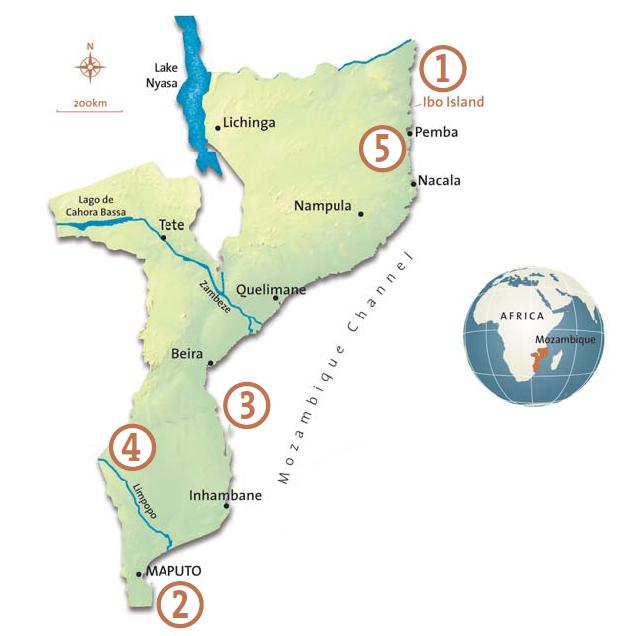
  1. Quirimbas Archipelago Island group to which Ibo belongs – with unspoilt, secluded beaches, spectacular coral formations and an abundance of birdlife.
  2. Maputo The sprawling capital of Mozambique is home to Nossa Senhora De Conceiao, the fortress and base of the eighteenth century Portuguese settlement, as well as Gustave Eiffel’s Casa Do Ferro – the rather hot ‘Iron House’.
  3. Bazaruto National Park Well known for its wonderful diving opportunities, the seas in this protected area are home to humpback whales,marine turtles, humpback and bottlenose dolphins, large game fish like marlins and barracudas and the endangered dugong.
  4. Limpopo National Park Linked to South Africa’s Kruger National Park and three Zimbabwean conservation areas, Limpopo is now home to 1,000 elephants, 147 mammal species and 500 bird species.
  5. Pemba The coastal town on the mouth of a huge bay has a lively atmosphere, beautiful beaches, and coral reefs. A tourist industry is fast developing here to provide holiday activities.

Where To Stay

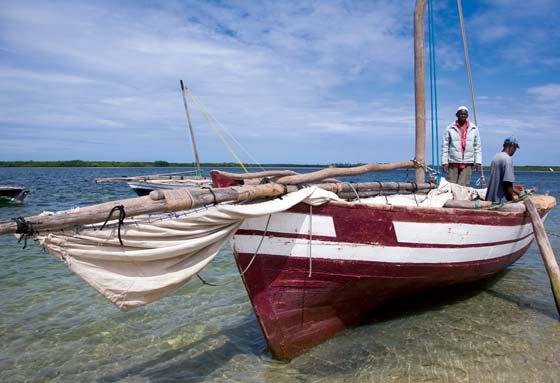
  • Ibo Island Lodge The best known hotel on Ibo Island itself spreads its nine rooms across three century-old mansions, located right on the waterfront, from where beautiful dhows set sail at high tide.
  • Quilalea This secluded island resort in the Quirimbas Archipelago accommodates up to 18 guests in nine thatched villas built entirely from indigenous materials and handcrafted timber.
  • Londo Lodge Private boutique hotel on Mozambique’s northern coast,where six villas look out to the ocean and coral reefs. It has a clifftop pool and private beach.
  • Azura Lodge Located on the Benguerra Island in southern Mozambique, this lavish eco-boutique hotel contains 15 luxury beach villas, each with its own private pool,where modern chic combines with traditional Mozambican designs
  • Lugenda Bush Camp Situated within the Niassa Reserve,among the Ngalongue Mountains, the Lugenda Bush Camp’s luxury tents are the perfect retreat for those with a love of wildlife, the wilderness and complete seclusion

Cuba

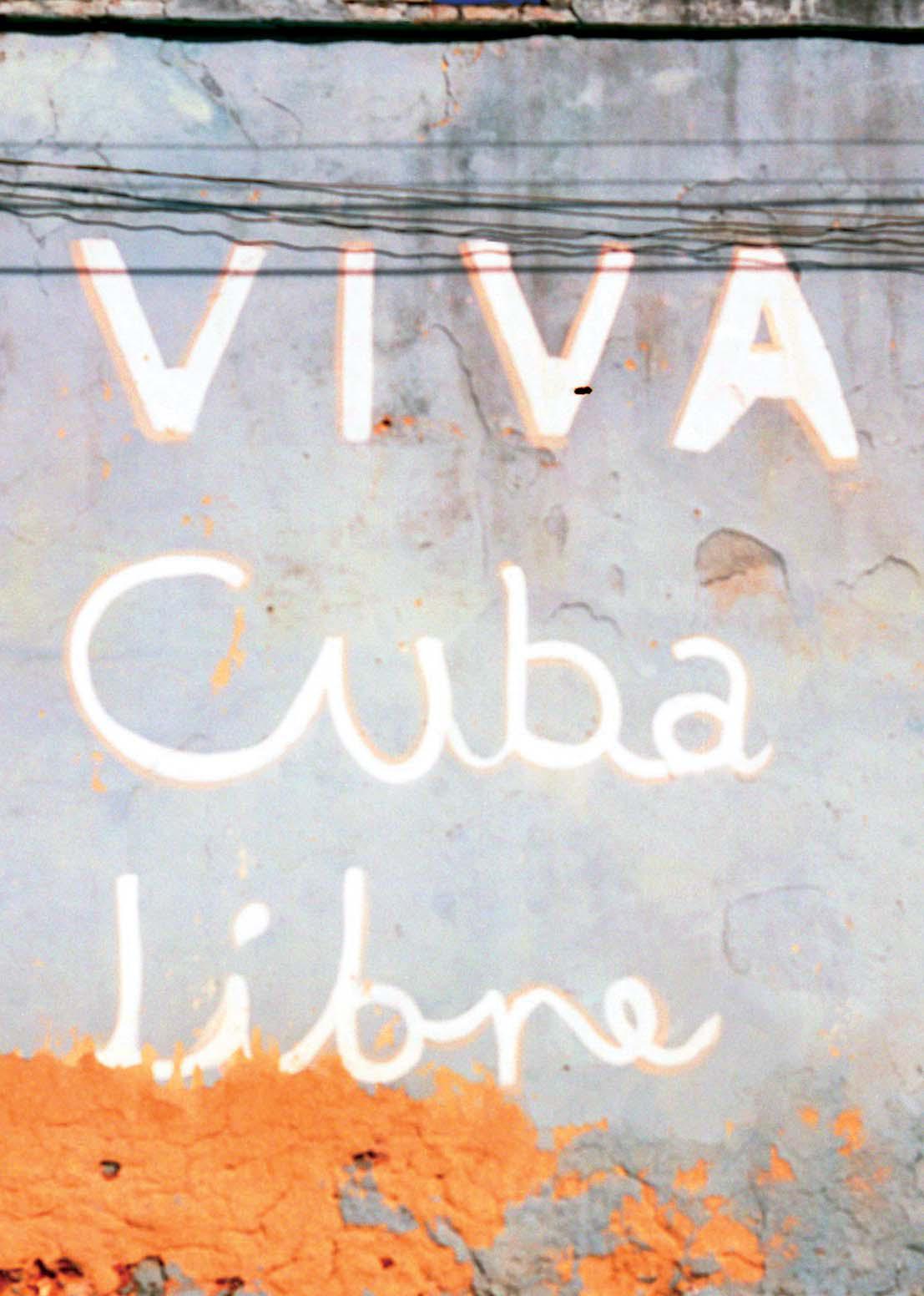
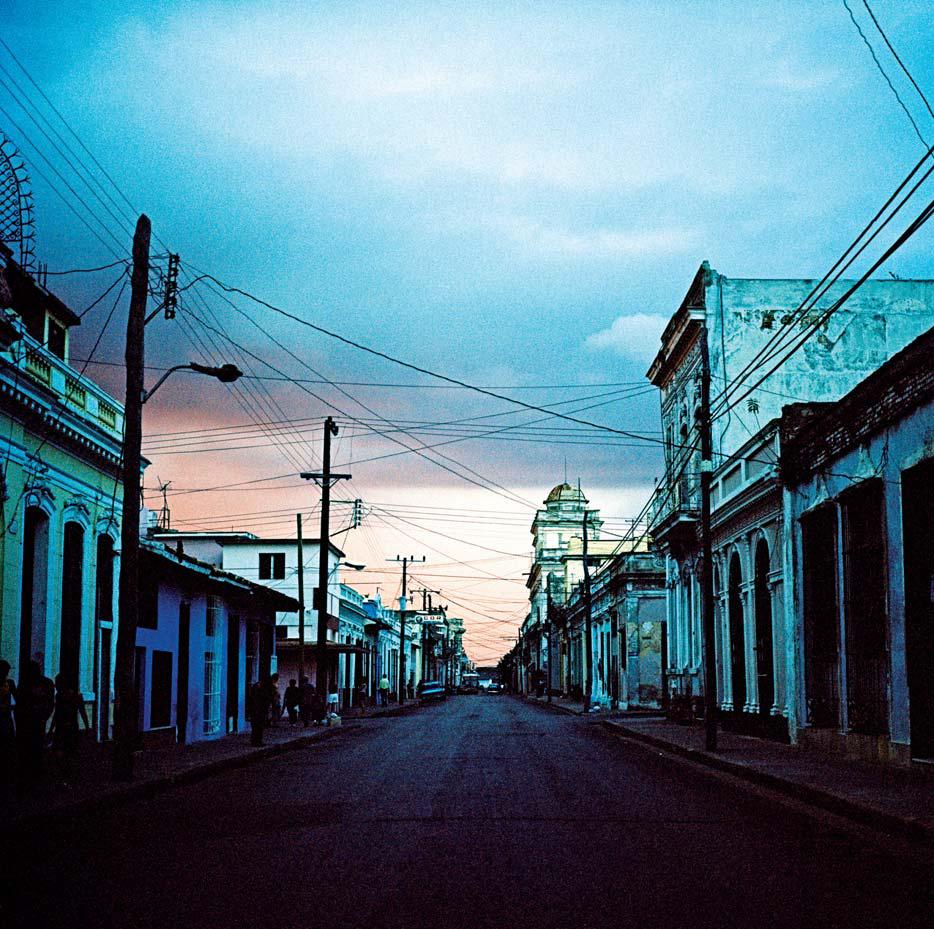
The first of January is a special day for many Cubans,but for a different reason from the rest of the world’s inhabitants. On this day the island celebrates not only the start of a New Year,but also the triumph of Fidel Castro’s army in 1959. The first of January is actually the most magical and expectant day of the year in a country that, for decades, reaffirmed its atheist character even in the Constitution, but has never stopped believing in miracles… and expecting them. On the evening of that day, as the floods of rum and the digestion of roast pork, which dismissed the old year subside to make way for lucidity,a group of the most experienced and wise babalaos, the priests of the cult of African origin (specifically Yoruba) known as Santería,gather to question the orisha Orula.This is the deity who gathers the words of Olofi, the head orisha, Lord of Time and the Future,and expert on the mysteries of the oracle of Ifá, through which people can penetrate the fate of the year that has just started. The ceremony, called the ‘letter (or sign) of the year’was brought to the island by African slaves,and has been practiced here since the nineteenth that recalls much of the Greek oracles, the ‘letter of the year’warns all Cubans, of any race, creed or political status,of the fortunes and dangers that await them in the coming months, and advises them how to ward off evil and encourage good.

Since the beginning of the devastating economic crisis of the 90s (euphemistically called by the authorities ‘the special period in time of peace’), caused by the demise of the Eastern bloc and its economic aid to Cuba, predictions in ‘the letter of the year’acquired a popularity they had never enjoyed before. The slightest possibility of opening a window into the future,which might provide a glimmer of hope,resulted in an anxious search in the ‘beyond’for whatwas not to be found in the here and now.This, despite the fact that the predictions are usually rather pessimistic:epidemics, fights, violence and announcements of new shortages. My friend and neighbour,Lazaro Cuesta, is one of the babalaos who lead the interrogation made every January. At the end of the ceremony, he prints the text of the divine word and puts it on a wall of his home for all who are interested to glimpse into the future.

The practice of divination is done on amat on which several sacred seeds are thrown,and from the positions they take emerge a series of binary codes (1–0) that are recorded and then consulted on the ‘board of Ifá’,a kind of bible, where there are signs that lead babalaos towards the responses that will shape their predictions. If the ‘letter of the year’has become so well accepted and has generated such high expectations (several dozen foreign correspondents attended the press conference where the babalaos broadcast Olofi’s message to the world), it is not because Cubans are especially religious. I would say that, in reality,we are pragmatically religious, and the black Oracle is a fulfilment of this quality. More than amystical dialogue, it is an understanding between the lived and the possible experience,an equation that Cubans have had to grapple with every day during these past and most difficult years of national life,years of power cuts, food and transport shortages, and diaspora. It is a divination exercise that places a spiritual significance on the material plane, and encourages people in the search for the miracles of survival. Because,in fact,we Cubans have lived through many years of miracles and of expecting miracles. Although my being Cuban may make my views suspicious, I believe strongly that Cuba is a very special place: it is a country that enjoys an almost metaphysical condition that makes it far larger than its limited geography.

It is this propensity to the marvellous, this fated gigantism and disproportion, that has enabled us to become a universal reference. Music,ballet,sport, politics, tobacco,rum, the beauty of the Cuban women – are all themes and realities that cross the country’s borders and give us a prominence that sometimes fills us with pride and at other times scares us. Cuba was the first Latin American country to have a railway, to make telephone communications, to transmit television signals.Itwas the first to eliminate illiteracy and polio,and was the only one to send a man into space.And now they say that we are the most educated country in the world,although we have been the last in the Western world with free access to cellular telephony,an invention of the last century. But beneath these big issues – as certain and as manufactured as all issues are – there is a real life that can be very dramatic, precisely because of the character of the islanders.Perhaps the same historical pre-eminence makes the contrast more painful between the voluptuousness of Cuban realism,even more, its pragmatism, and a story that has filled us with responsibilities that many times we did not ask for – norwanted. A short while ago, as the new governmentof Raul Castro was announcing some of the recent changes, I asked a friend what he expected to happen in the future, whether or not he believed that there would be major changes in Cuba. His answer was a lightening bolt of illumination that I am sure is the highest aspiration of many Cubans:“ The only thing I want is for this to be a normal country, the most normal in the world, just to see for once if we can live calmly.” That is the miracle that Cubans aspire to now: whites, blacks, mulattos, Catholics, santeros, Protestants, atheists, Fidelistas, migrants, men, women, elderly, educated, uneducated, the idle and the workers. The miracle of normalcy, which never appears in the‘letter of the year’– towatch the sunset one balmy evening while breathing the smoke of a good cigar,drinking a glass of rum and catching the perfume of a good stew. Has this Cuban miracle ever happened? For themoment, only God and Olofi know.

Cuba Top Sights

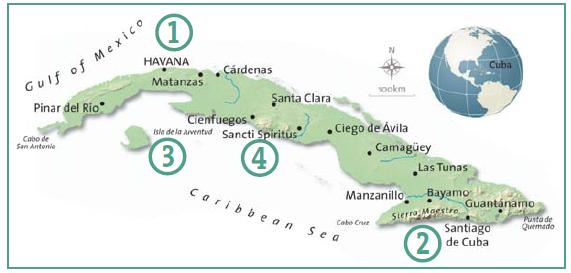
  1. La Habana Vieja The capital’s old quarter is a wonderfully lively place, and buzzing with the past. This unesco protected area is full of narrow streets, refined colonial mansions,countless churches,cobblestone squares and sixteenth-century fortresses.
  2. Santiago De Cuba Known as the Ciudad Heroe – Hero City – the charming colonial city of Santiago was a focal point for revolutionary activity due to its proximity to the majestic Sierra Maestra,Castro’s mountainous battleground. The laid-back Santiagueros believe in having a good time:in July the city hosts the Fiesta del Feugo, one of Cuba’s liveliest carnivals,and it was also here that the energetic music called son originated.
  3. Isla De La Juventud One of 350 islands in the Archipélago de los Canarreos,this quiet and unhurriedisland was formerly a hideout for pirates,and inspired Robert Louis Stevenson’s Treasure Island. In the 1950s, Fidel Castro and his cohorts were imprisoned in the island’s Model Prison.
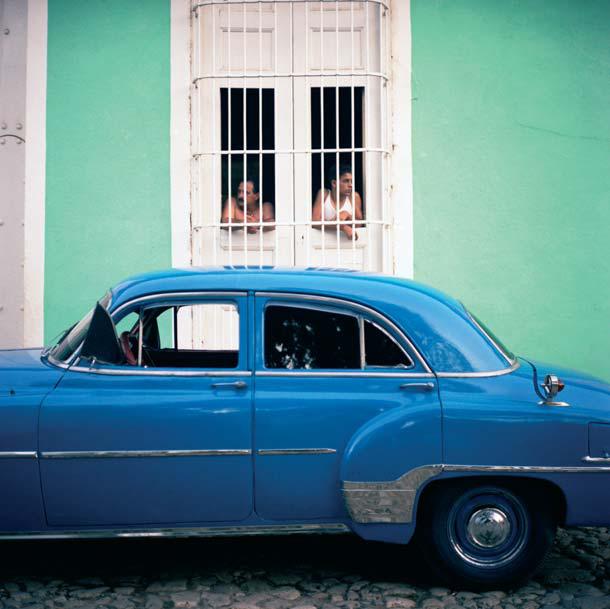
  4. Trinidad The most perfectly preserved colonial city in all of Cuba, known for its marvellous architecture,museums and art galleries.

Chile

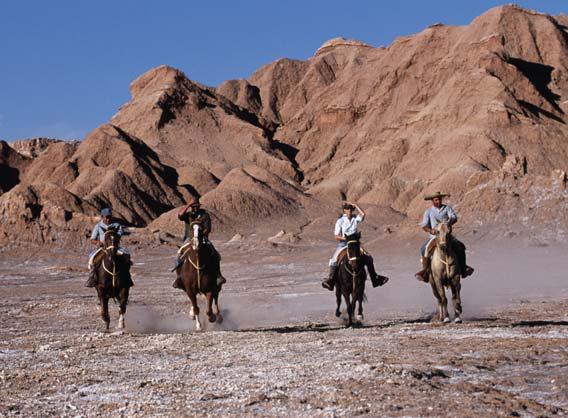
Wtih a final clattering of hooves on rock we come to a halt at the edge of a precipice. A thousand feet below us, the wind-eroded peaks of the Salt Mountain Range glint in the evening sun. It has taken our horses an hour to pick their way, with sure-footed assurance, up the narrow dusty trail that rises steeply from the valley below. Before us, the Atacama Desert stretches out like an open book. Looking beyond the Salt Mountains we see the Salar de Atacama, a smudge of grey extending to the horizon. Chile’s largest salt flat, the Salar is a vast depression where flamingos as tall and thin as Chile itself browse for plankton amid a mosaic of crystallised salt and small lagoons. At its northern tip, a splash of green amongst the burnt landscapes identifies the oasis of San Pedro de Atacama. Our eyes turn eastwards, to the great umber curtain of the Andes. Head and shoulders clear of the surrounding peaks, the perfect cone of Volcan Licancabur dominates the mountain range. Nothing prepares you for the austerity or variety of the Atacama, reputedly the driest desert on earth.

At first glance, driving through, it appears hostile and uninteresting, an endless plain of sun-baked rock and dust between the ragged coastline and the brooding Andes. It has places where no rainfall has ever been recorded. Much of it is devoid of life, with not a tree or shrub, nor even a blade of grass, to provide relief. Dusty one-horse villages, exposed to wind and sun, isolated in this harsh wasteland, endure the desert’s ravages. Yet look closer, follow faint dirt tracks that snake their way into sheer-sided ravines, and you will find villagers cultivating lush green terraced plots and shady orchards. The contrasts can be shocking. The hub for exploring the Atacama is the village of San Pedro de Atacama. Once an important resting point for mule and llama trains on the trading route between the fishing communities of the coast and the pastoralists of the altiplano, San Pedro has at varying times been under the control of several of South America’s great cultures: Tiwanakus, Incas and Spanish conquistadores.

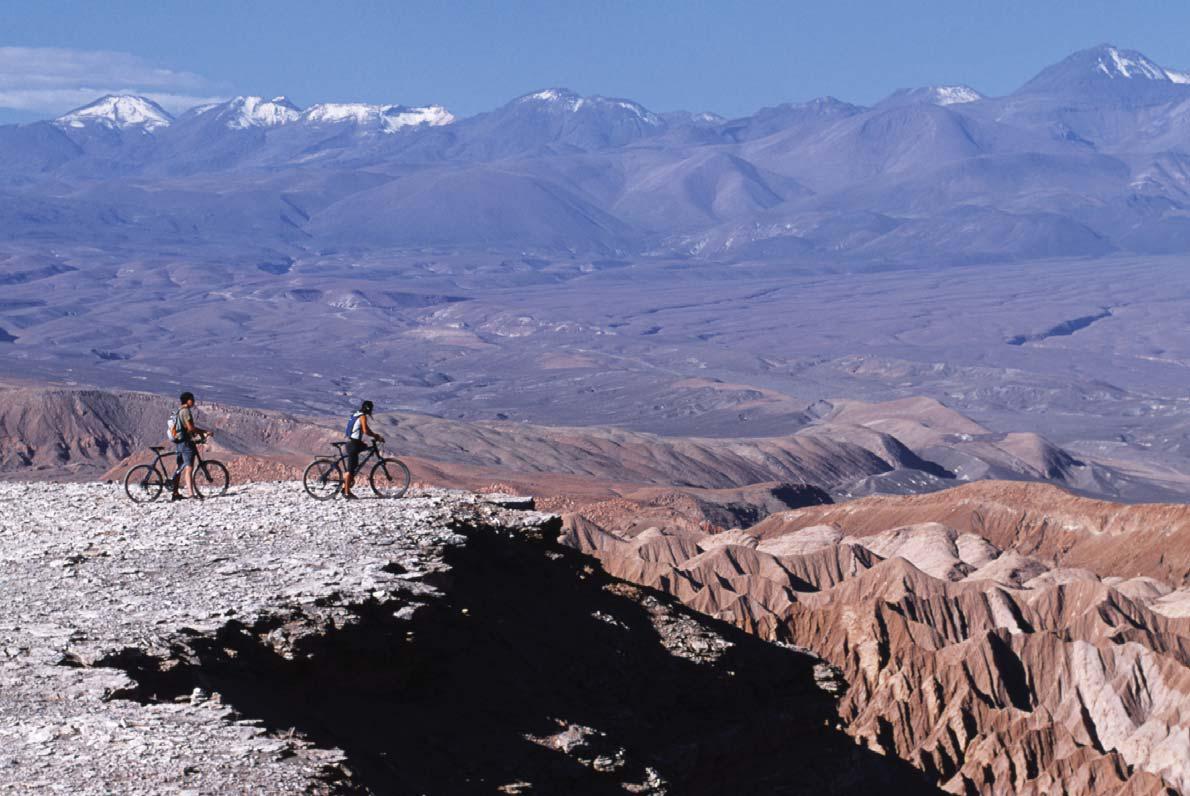
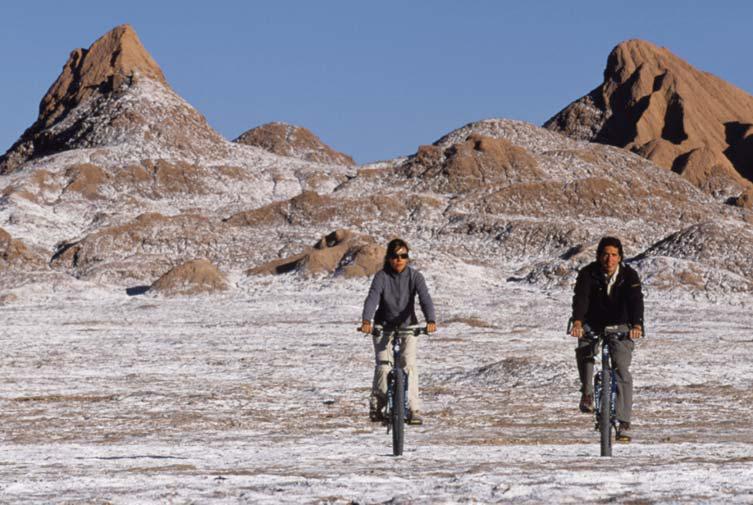
Today it has a population of around 1,000 Atacamenos. At the centre of the village is a fine Andean church, whose whitewashed adobe walls and distinctive bell-tower stand proud against the piercing blue desert sky. Beside the church, a ring of ancient pepper trees shades a small paved village square. Narrow streets radiate outwards. Many of the old mud-brick houses have been converted to hotels, residenciales, restaurants and adventure outfitters who offer horse-riding, trekking, mountain biking and four-wheel-drive tours into the desert. Despite its many visitors, San Pedro has a quiet old-world charm and an unhurried pace of life. The oasis is segregated into neighbourhoods, based around close-knit families. Follow the winding lanes and you get a glimpse of traditional Atacamenan life, as you encounter farmers on horseback driving flocks of sheep and goats, or look over a rustic fence to see people tilling the ground by hand. You do not have to venture far beyond the edge of this oasis to experience the true rawness of the Atacama. We cycled out to Valle de la Luna (Moon Valley), a Tolkeinesque landscape of bizarre twisted rock extrusions and fluted sand faces. The ground glittered with crystals of salt and mica. Leaving our mountain bikes, we hiked up a narrow gorge that cut deep into the Salt Mountains. Recent rain had exposed sheets of crystal in the sheer rock walls, which popped audibly as they expanded in the morning heat. We continued along the gorge, enjoying the welcome shade, until the debris of a massive rockfall blocked our way and we had to turn back.

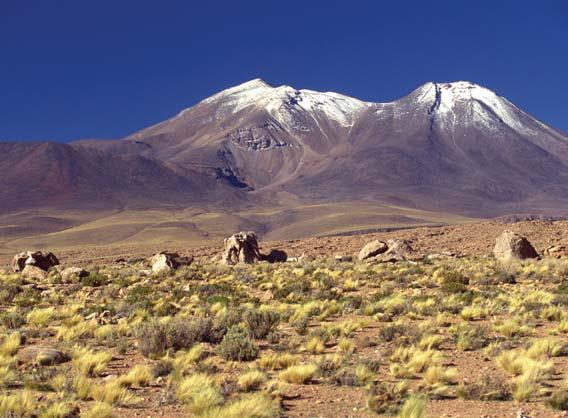
Further afield, it takes a full day of driving to climb up onto the altiplano and visit the high altitude lagoons. It is a great journey, along the side of the Salar, passing through numerous small villages with their adobe churches and hidden orchards before climbing steadily up the lower flanks of the Andes. After the barrenness of the lower plains, the altiplano feels joyously colourful and alive. Tussocks of golden grass and clumps of rosetinted cactus carpet the landscape. Herds of vicunas, wild camellids of the llama family valued for their fine wool, appear as tiny specks in this expansive scenery. The air becomes thinner and thinner, making even the slightest activity an effort, and then, just as you think the oxygen is about to run out, you are confronted by the lagunas, each pool a vivid shade of blue – turquoise, aquamarine, lapis lazuli – overlooked by mountain summits. In the dry air, their colours are so intense they seem unbelievable. Another long vehicle journey, to the north of San Pedro, takes you to Tatio, the highest geyser field in the world. Here at dawn, shafts of sunlight clamber over the Andes and illuminate the geysers’ rising steam trails, catching on droplets of spouting water and making them sparkle like diamonds. Whilst 4×4 vehicles provide access to the Atacama’s far-flung reaches, it is on foot, mountain bike or horseback that you can get closest to the desert. Scrambling up high dunes, hiking remote canyons, riding long mountain ridges – it is with the sun on your back and the wind on your face that you find the soul of this extraordinary place.

Top sites

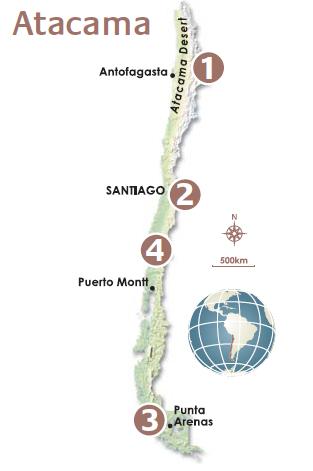
  1. San Pedro De Atacama Explore the bizarre lunar landscapes surrounding this charming town in the heart of the Atacama Desert, one of the driest places on earth.
  2. Santiago Watch the world go by in this bustling cosmopolitan capital, or in winter head out to the cordillera ski fields at Valle Nevado and Portillo to tackle some of the highest commercial peaks in the world.
  3. Torres Del Paine Explore this beautiful national park in southern Chile, noted for its many lakes, glaciers and rocky peaks, and the centrepiece of which are the majestic 2,000-metre granite pillars that give the park its name.
  4. Pucon Get active in the adventure sports centre of the country, located in the heart of Chile’s fabulous Lake District. The scenic region of lush farmland, dense forest, snow-capped volcanoes, waterfalls and clear lakes, offers superb whitewater rafting, fishing, horse riding, mountain biking, as well as the chance to spot the rare puma.
  5. Easter Island Stand beneath one of the colossal and mysterious stone moais on Rapa Nui, as the world’s most remote inhabited island (3,790 kilometres west of the Chilean mainland) is known locally. All the while, wondering just how these giant structures got there. (Not shown on map.)

Websites

www.gochile.cl Useful site dedicated to all things Chilean, covering attractions, transport, accommodation and activities. Features good general maps.

Yemen

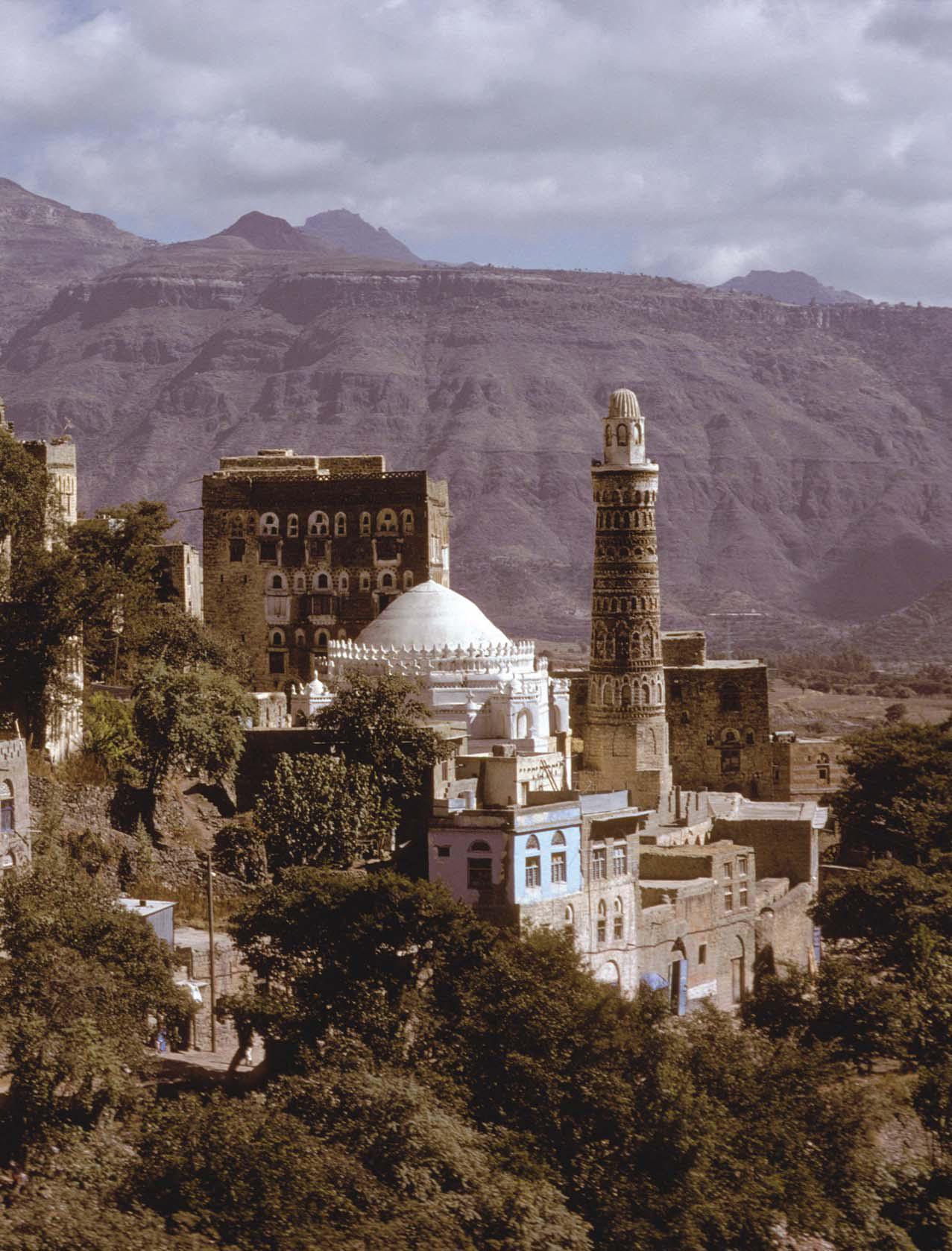
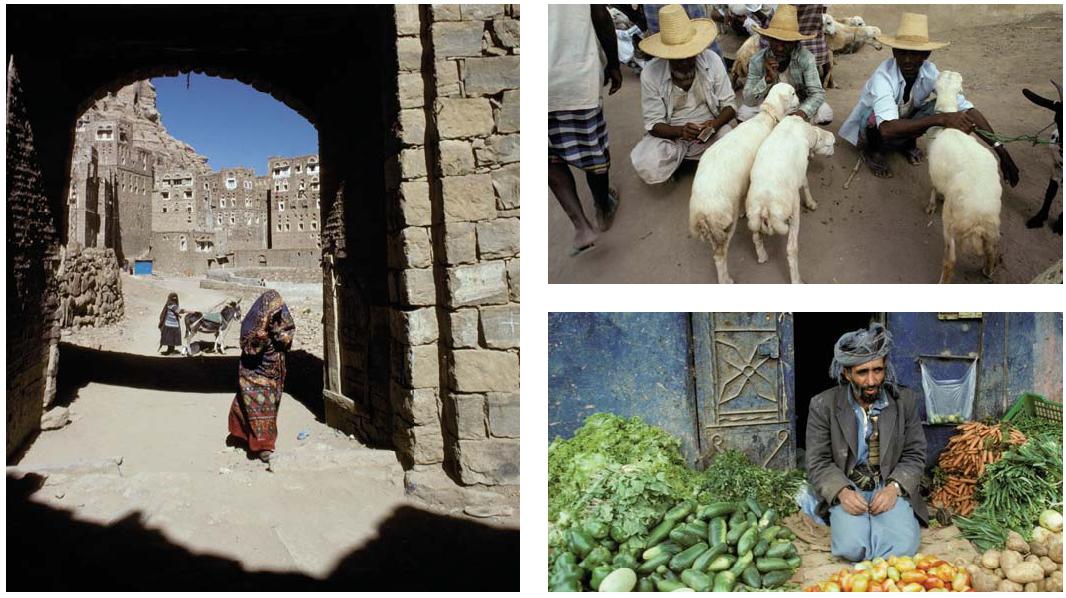
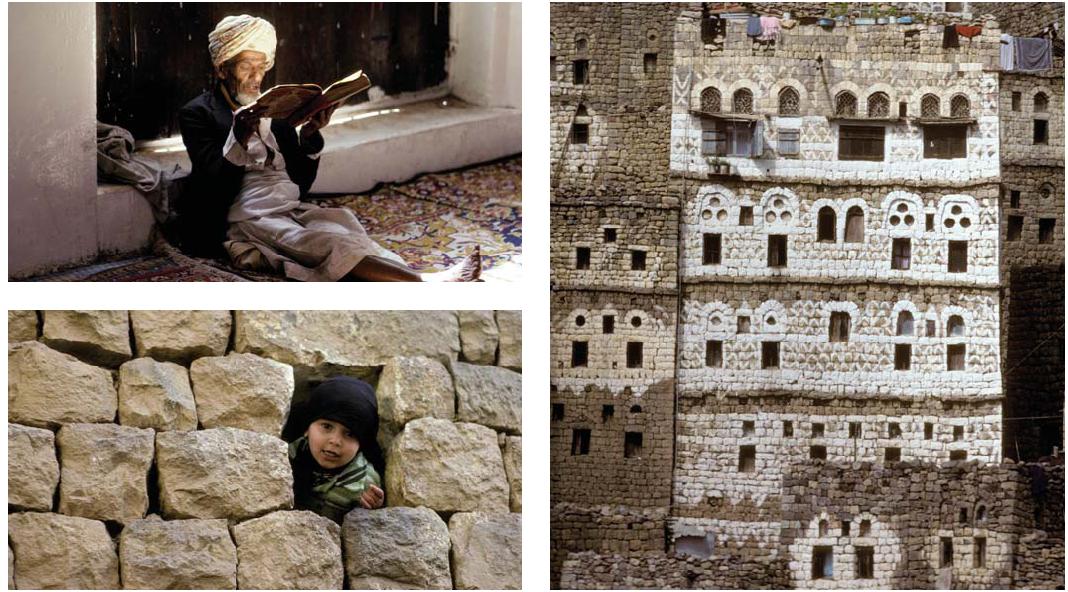
Yemen Cityscape of San’a. There among that unique and dazzling architecture was the house where I had lived when I first arrived in Yemen in 1986. I’m pleased to say it looks in much better condition now, with the whitewashed patterns neatly done and the external plumbing features tidied away. The 1980s were the city’s Richard Rogers period: electricity and water had arrived (usually fed along the narrow lanes somewhere above ground, then clambering up the walls, ducking through tiny windows, then out again and across to a neighbour’s). The city was sporting its modernity on top of the old: who cared if all these pipes and cables were meant to be urban underwear? That first house had water problems, and the plumber arrived with a cigarette in his mouth, a large wad of qat in his cheek, and a wrench in his hand. ‘Is this the faulty tap?’ I nodded. He took a swing at it with the wrench and knocked the thing clean off. The rooftop tank (shaped like a Scud missile to impress American spy satellites, said the neighbours) was full, and so a jet of water shot out of the gaping pipe and hit the far wall. The bathroom filled with drifting spray and six inch deep puddles. The plumber worked on, his cigarette miraculously unextinguished. Until that moment – a few weeks into my time – I had been pretty much obsessed with the look of Yemen. There was an undeniable snootiness to some of my attitudes.

I expressed annoyance at mountains of litter; I tutted over those knotted cables dangling in the streets and the scaffolding of pipework that propped itself on every house. I wanted a Yemen that might have existed 20 years before. I certainly did not want the road to be a hammered tin skin of soft drinks cans, as it was in many places. But the plumber opened my eyes. Before the tank was quite empty he had replaced the faulty tap, changed a length of pipe and mended the ballcock. The entire operation took a few minutes and the cigarette never left his lips. We were both drenched. Then he offered me some qat leaves and a cigarette. We retired to the mafraj, the cushioned living room, with wonderful views of the city. I produced a bag of qat and dropped a handful of leaves in his lap. The question of payment was airily waved away. Then we sat as the light took on that marvellous glow of late evening, and he began to recite poetry.

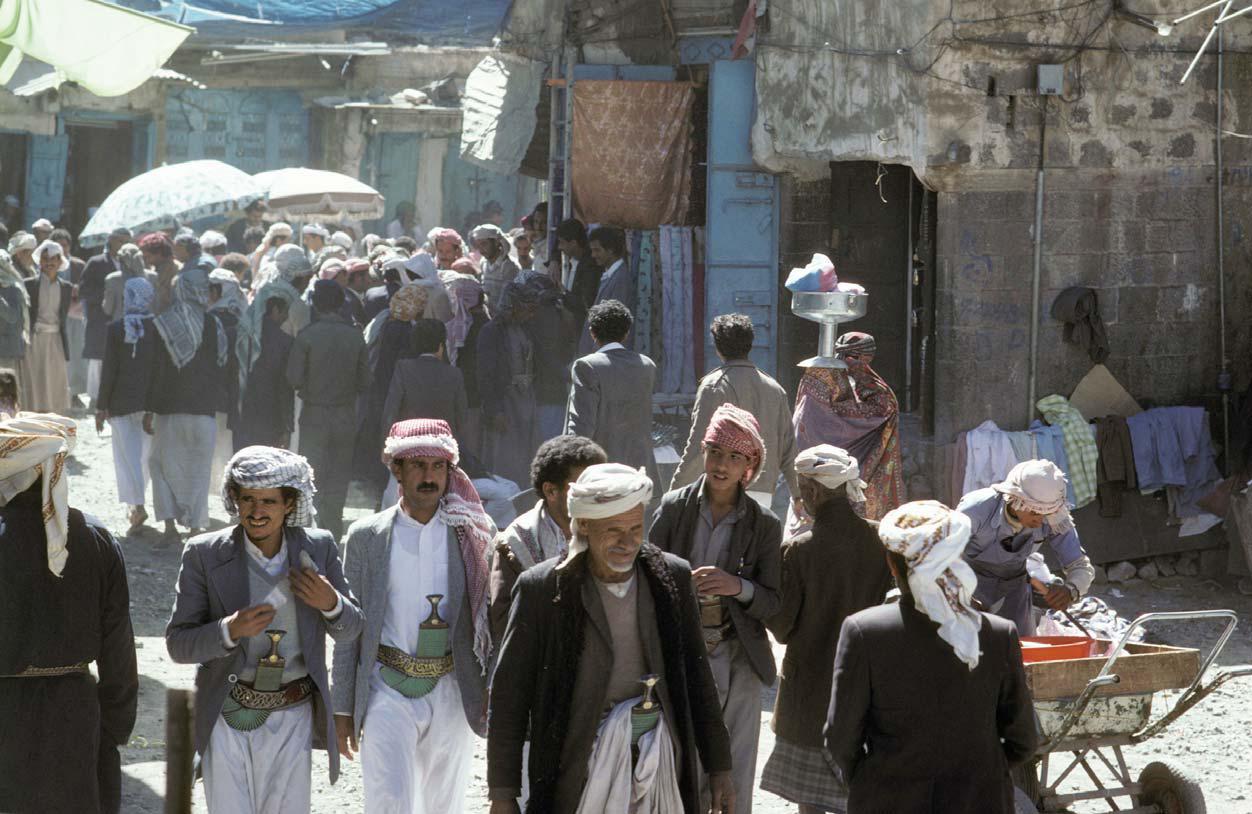
I listened, without comprehending as my Arabic was in a rudimentary state, but it sounded magnificent. When he finished, I gleaned that it was his own composition about the glories of San’a. I was impressed: by the sheer chutzpah of his plumbing performance, by his contempt for other plumbers’ rules, by the superb adaptability of a man whose entire tool kit consisted of one rusty wrench and a cigarette lighter, and most of all by his renaissanceman abilities with language. I learned a little about the way Yemen worked that day, and I looked with fresh eyes on the wayward pipework and all other forms of anarchic organisation. Other, similar lessons began to occur. There was the taxi driver who mended his engine with his janbia – the ceremonial dagger that Yemenis traditionally carry. There was another who smiled when my Landcruiser knocked his car door clean off. ‘Not a problem,’ he proclaimed when I apologised profusely. ‘This is Yemen.’ Out in the mountains I was met usually with hospitality, sometimes with stones, occasionally with total bafflement. ‘Are you a Korean?’ asked one woman.

And when I said not, she became even more puzzled. ‘So what are you then?’ Over the years that I’ve spent either living in or visiting Yemen, the country has moved on a lot. People are better travelled and more worldly: satellite television has seen to that. Old San’a has been extensively improved: lanes are paved with stone and the pipework is generally straighter. Outside the capital, roads are much improved. But the spirit remains the same. On my most recent visit, I chewed qat in the back of a shared taxi heading for Aden. This is the quintessential Yemeni experience. The mountains roll by and the passengers, Chaucer-like, share stories. One man was an off-duty tour guide and his tale was a truly memorable one. His family lived in the town of Ta’iz, he told us, but long ago had come from al-Jawf, a somewhat volatile area in the north-east of the country. During the late 1990s, when kidnappings were common, he had been taken prisoner along with a party of French tourists. They were all taken to a village in the Jawf where, a couple of qat sessions later, the driver discovered that this was where his grand-father had originally come from. Evidently he had been kidnapped by his own family. The villagers had no intention of harming their ‘guests’. In fact they treated them like royalty. All they required was that the government build the road and school they had been promised. The tourists, rather warming to their hosts, agreed. After three weeks, Stockholm syndrome kicked in and the tourists sent out a demand for the road and school. When a deal was reached, the village tried to release the hostages, but they refused to leave. The deal was not good enough, they said. Eventually the government ‘rescued’ the tourists against their will. The driver thought the whole episode hilarious. He had gone back to visit subsequently, and was hoping the country cousins might pay a visit to Ta’iz. He shrugged, ‘This country is not like any other! What can anyone say ? This is Yemen.’

Tallinn

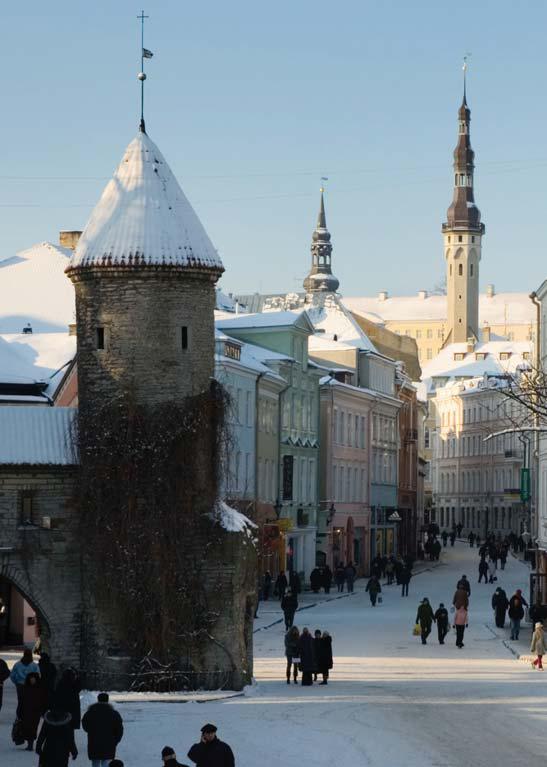
Tallinn: A heavy snow had fallen over night, but already the top layer was turning greyish brown, as if echoing the greyish brown buildings of communist Tallinn. The streets were virtually empty of cars, but pedestrians were everywhere, huddled in grey coats, heads bowed against an icy arctic wind as they trudged resolutely towards their destinations. This was December 1985, a few short months after Gorbachev had risen to power. In the West we had already started to celebrate the arrival of perestroika – the loosening of the straight-jacket that had confined the people of the Soviet empire for most of the twentieth century. But in winter-time Tallinn, any kind of freedom seemed as distant a dream as ever. Fast-forward some 20 years to now, and although the advertising that lines Tallinn’s streets appears gaudy to English eyes, it provides welcome splashes of colour in a landscape that was once grey. True, the Soviet-era office blocks and apartment complexes look as stern as they did before: but leavened now with colour and the buzz of traffic they seem somehow less forbidding. It’s summer, too, so people are more lightly dressed: but they appear to have shed a burden of grim endurance along with those winter coats. Back then, ramshackle stalls lined the approach to the old town of Tallinn. Most seemed to be selling Cuban cigars, the only imported luxury I could see.

The Soviet Union and its satellites provided Cuba with their only export market, as the ‘free world’ had banned Cuban imports. Some elderly, male, American tourists had peeled away from their group and were flapping around the stalls like a flock of seagulls looking for a feed. The thick stone walls of the old town were pierced by a once-fortified gateway, from where a cobbled street led upwards past more grey buildings to the Lossi Plats, the town’s main square. A couple of shops were open for tourist business, but there didn’t appear to be much to sell, other than a small selection of garishly coloured sweaters knitted from synthetic wool. There was a small café on the square, a low-ceilinged affair fugged with cigarette smoke. But it provided Tallinn’s only real welcome – and a passable attempt at mulled wine, although the coffee it dished up was grey and weak. These days the stalls are still there, but now they’re selling flowers: bright egg-yolk-coloured sunflowers, vivid scarlet carnations, heavy-headed marigolds, and blue flowers the colour of the sky on a perfect summer’s day. The street up to the Lossi Plats is lined with shops selling ropes of amber beads, folk costumes, coarsely woven linen shirts and tablecloths and, yes, those sweaters.

This time round, though, the sweaters are made of real wool and their designs are based on traditional patterns, intricate and sophisticated. Tourists throng the streets, and the terraces of a multitude of restaurants around the Plats and its neighbouring streets are packed. Food there is hefty and hearty, a close cousin of Scandinavian and German cuisines. Herrings in sour cream and onions, and a crisply roasted pork hock atop a substantial pile of sauerkraut, are washed down with a jug-like glass of blonde wheat beer. Anything that lunch may lack in finesse is more than made up for in the generous size of such a serving. My father’s father came from the Baltic region, so on my earlier visit I decided to go and look for the local synagogue, which my ancestors might have attended. It was a vague attempt to close the temporal gap between myself and the grandfather I’d never met. Somehow I found my way to a weatherboard cottage on the outskirts of town, where I met the rabbi. The old man was as bearded as Santa Claus, although he lacked Santa’s air of rotund contentment as he welcomed me into a sparsely decorated kitchen. Yes, he told me, Tallinn still had a Jewish synagogue, but its community was small and growing ever smaller as older members died and the younger generation refused to join, for fear of losing their livelihoods under the disapproving communist regime.

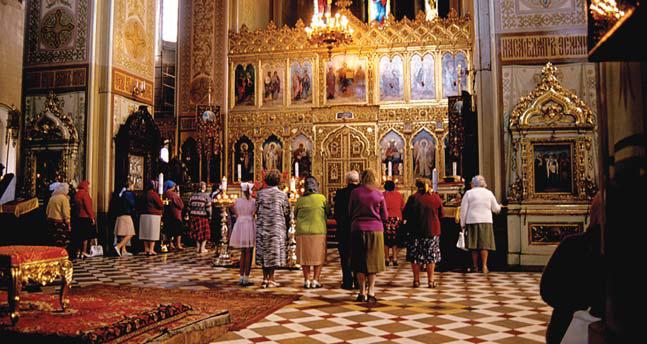
I asked whether he thought there was a future for Jews in Tallinn. He shrugged and remained silent for a few long moments, then thanked me for my visit. As I left, I felt his sense of loss weigh heavy on me. This time I didn’t have time to visit the synagogue in the suburbs, but I did make my way to the gloriously gaudy Alexander Nevsky Cathedral. Outside its doors, five old women wearing headscarves and wrinkled woollen stockings begged for alms, a plastic bowl held in each outstretched hand. Inside, all was Orthodox splendour: the walls crowded with mosaic icons of saints, the air heavy with the smell of incense. There was a crowd of communicants, mainly middle-aged women in flowery housecoats and garishly made-up younger women in tight skirts and high heels.

They queued to kiss first a panelled icon and then the priest’s hand, the latter peeping out from the sleeves of an opulently embroidered robe. Now that the dam of communism had blown open, people had flooded back towards religion’s traditional consolations. Not far away, a concert of baroque music was just beginning, in the more spartan but no less beautiful church of the Lutheran Toomkirik. Wrapped in its musical harmonies, I sat on a wooden bench and contemplated the heraldic emblems of noble and ancient families that covered the walls. I could almost imagine that these people, who once worshipped here in this sublimely peaceful cathedral, were looking down from the heavens and smiling in approval at the latest twist in Tallinn’s long history.


www.tourism.tallinn.ee The city’s official tourism website. A good general site, with essential facts and figures, a good historical overview, information on major sights and forthcoming events.

Sightseeing Tallinn

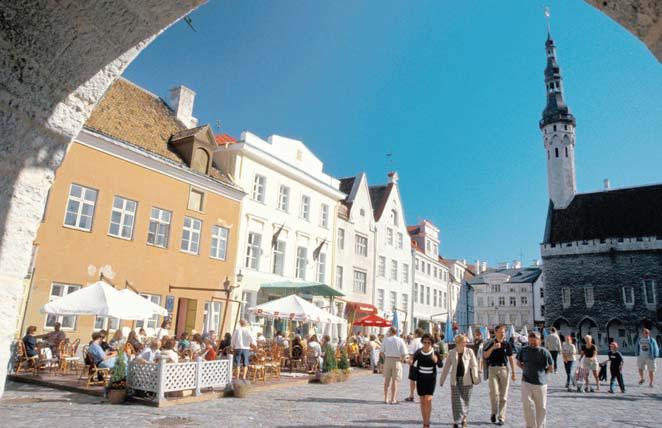
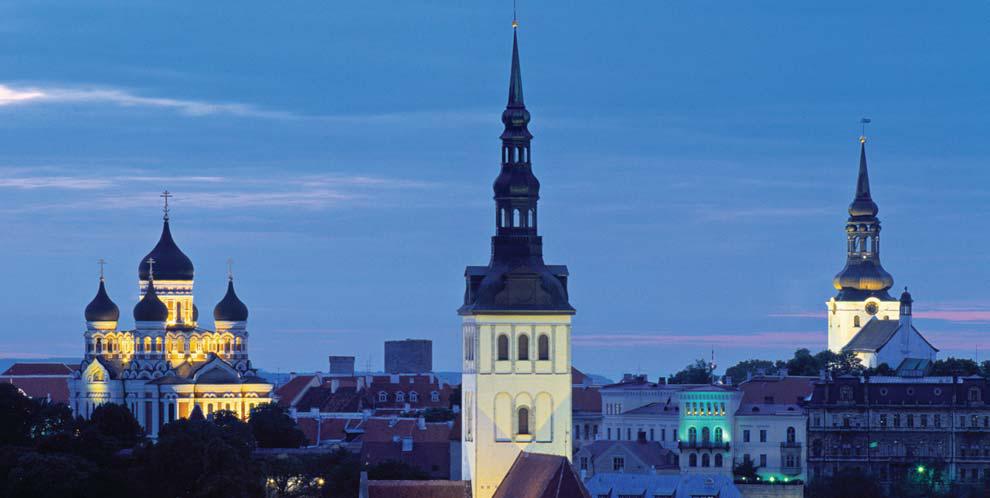
The Vanalinn (Old Town) is a UNESCO world heritage site. Its medieval cobbled streets, red-capped towers and pretty spires are surrounded by ancient city walls with imposing gates. Toompea Castle is one of the oldest and grandest architectural monuments. Once the hilltop stronghold of the German Knights who controlled the city in the Middle Ages, today it houses the Estonian Parliament. Raekoja Plats, the cobbled market square and general hub, is as old as the city itself. It is dominated by the fifteenth-century Town Hall, which boasts elegant gothic arches and a slender steeple, on top of which sits Vana Toomas, a sixteenth-century weather vane that is the city’s emblem. Alexander Nevsky Cathedral is Tallinn’s largest and grandest cathedral. It was built when Estonia was part of the Russian tsarist empire and named after the Prince of Novgorod.

Santa Fe

The scene in this corner of Santa Fe could be straight from a Quentin Tarantino film. On the porch of a bar called Cowgirls, people are enjoying vast plates of barbecued meat while hypnotised by the smooth gyrations of a beautiful dark girl in a shimmering white skirt, who seems to glow in the velvet night. Inside,men in wide-brimmed cowboy hats sit at the bar drinking beer and bristling with masculinity.Santa Fe, New Mexico, is exactly as I imagined it: a frontier town in the wild South-West. In daylight the city is less easy to define,more a melting pot of cultures, characters and styles. Driving into the city from Albuquerque along the modern highway, I’m surrounded by the harsh inhospitable terrain that greeted the Spanish when they arrived here in the seventeenth century,endeavouring to extend an empire that stretched all the way from Tierra del Fuego,at the end of the world.
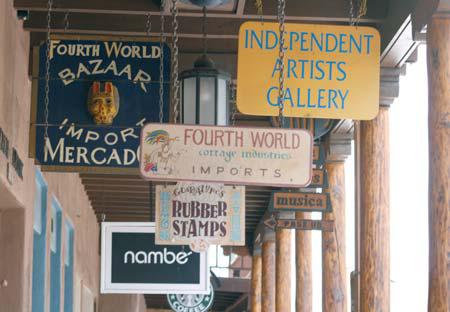
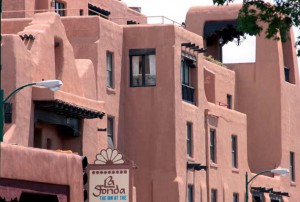
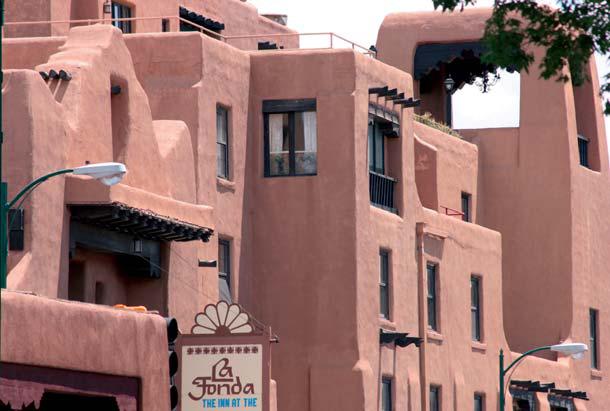
The desert landscape their horses crossed still stretches for miles, strewn with small bushes of piñon (or pine) and purple juniper. Santa Fe perches in thin air at an altitude of 7,000 feet.The desert can freeze for eight months of the year,and snow caps the southern Rockies even when the temperature is rising in the valley below.A hailstorm can appear out of nowhere to cut through the searing summer heat. Cutting through this extreme environment, the Santa Fe Trail was an important nineteenth-century trade route,passing from the forests and prairies of Missouri and Kansas, through Indian territory, to end in Santa Fe’s Plaza,where traders still ply their goods outside the Palace of Governors, the oldest public building in the usa. These days, only Pueblo Indians from the local Native American villages are permitted to trade here, in the heart of the city.The sellers sit in the cool shade of the porch, their intricate silver and turquoise jewellery laid out for sale. Across the road,Mexican enchiladas are sold from carts, and a five-and-dime store sells cheap goods and greasy burgers beneath its adobe facade. In the midst of this intriguing blend, it can be hard to distinguish what is authentic and historical and what is a modern-day recreation.Even the McDonald’s is modelled on local adobe architecture.There are only two styles allowed in central Santa Fe, the adobe and the New Orleans style, with its whitepainted wooden pillars and decks.
As a Californian-turned-local dryly remarked, “Santa Fe has uniform architecture,but total lack of uniformity in everything else.” St Francis’Cathedral is one of the only buildings in the centre to depart from the conventional style of architecture its solid stone structure still soaring above the soft, curved mud walls of the surrounding buildings,hundreds of years after the conquistadores swept in with their Catholicism. But Mother Earth still has a hold on the population,and Buddhism has crept in with an influx of Tibetans,who seem to feel at home in the high altitudes, and have been embraced by an accepting hippie community.A local Buddhist woman whispers of a double prophecy: Tibetans were told that they would meet with red men in a distant land and,strangely,Native Americans also predicted that red-cloaked visitors would come from the east. Santa Fe residents are not only spiritual seekers, though. Here you’ll find a heady mix of business-savvy Native Americans, Hispanics,South-Western folk in cowboy hats, and bohemian artists from around the world.
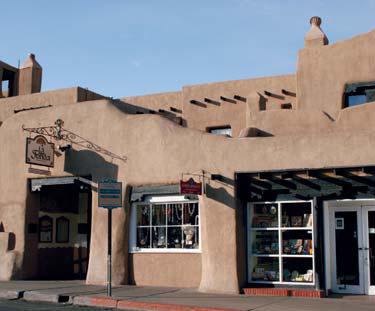
By day this disparate throng go about their separate business,but by night everyone flocks to the atmospheric El Farol for drinks and live music, to sit on the porch where the breeze is cool and scented with piñon. It’s a popular spot on fashionable Canyon Road,somehow squeezed in between the many art galleries – filled with creative offerings, from Native American art on buffalo hide, to modern conceptual art in bare white-walled rooms – that are scattered along the old Indian trail. They say that it’s the clarity of the light that draws so many artists to tiny Santa Fe, in the forty-seventh state of the Union and largely forgotten by its own country. The skies are wide, bright and blue,and for the best part of the day the ristras – bunches of dried red chillies that hang from every building – cannot cast a shadow against the mud walls, though their spicy aroma spikes the air right across town. New Mexican cuisine uses chillies to flavour almost every meal. Breakfast omelettes are filled with green chilli and cheese,lunchtime tamales are steamed corn meal stuffed with ground pork and chilli.At dinner I try the chilli rellenos, a whole green chilli stuffed with cheese and battered. Soft fried bread called sopaipilla is served, to be dipped in clear honey, offering a sweet and cooling contrast to the rest of the menu,which is as hot as the weather. It’s hard to imagine,in the scorching summer heat, that winter will ever reach dusty Santa Fe. Sitting on a porch again, this time at an out-of-town convenience store, I sip a blood-orange margarita from a jam jar.A flurry of cotton buds swirls around my head,caught in a gust of wind,and it could almost be the first snow coming in off the Sangre de Cristo mountains, dusting the city like the icing on an adobe cake.

Hotels and Resorts in Santa Fe

La Posada De Santa Fe This 157-room retreat set within six acres of landscaped grounds, in the heart of Santa Fe,has a spa with a heated swimming pool, whirlpool and fitness centre.Many adobe-style rooms have kiva fireplaces and shady patios.
Inn of the Anasazi Just off the old Plaza, this 58-room boutique hotel is beautifully decorated with large handcarved doors, sculptured stairways and sandstone walls.The cosy library houses a great collection of books about South- Western art, history and culture.
Encantado Set against the foothills of the Sangre de Cristo Mountains, there are 62 secluded casitas with stunning views of the Jemez Mountains and the Rio Grande River.The main lodge has a restaurant, lounge and courtyard with fireplaces for outdoor dining.
Hotel St Francis Built in 1880, this lovely hotel has a delightful old-world elegance, featuring leather armchairs, oil paintings and sweeping staircases. Rooms have high ceilings and mountain views.An afternoon tea of scones and finger sandwiches is served in the lobby, while the wood-panelled Artist Pub serves drinks from a copper-topped bar looking out onto downtown Santa Fe.

Top destinations in Santa Fe
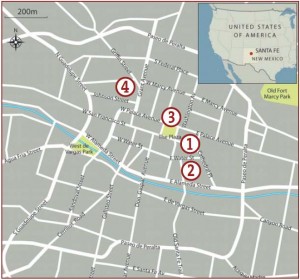
  1. Institute of American Indian Arts The only museum in the usa devoted to contemporary Native American art, it houses over 7,000 works within its adobe walls,and a sculpture garden.
  2. Loretto Chapel Completed in 1878, this neo-gothic building is famous for its ‘miraculous’spiral staircase which completes two 360-degree turns with no visible means of support.
  3. The Plaza Central hub of the city and end of the famous Santa Fe Trail. The Palace of Governors dominates one side of the square – the oldest public building in the usa,an impressive adobe structure where Native Americans sell beautiful turquoise.
  4. Georgia O´Keeffe Museum O’Keeffe’s paintings focus on the landscape of New Mexico,often transforming its contoured rocks,bleached bones and fragile flowers into powerful abstract or sensual images.The museum’s collection includes more than half of her total works.
www.santafe.org Photogalleries and history offer an overview of the city,supported by events information and listings for restaurants, hotels and museums.