Ice Hotel Jukkasjarvi

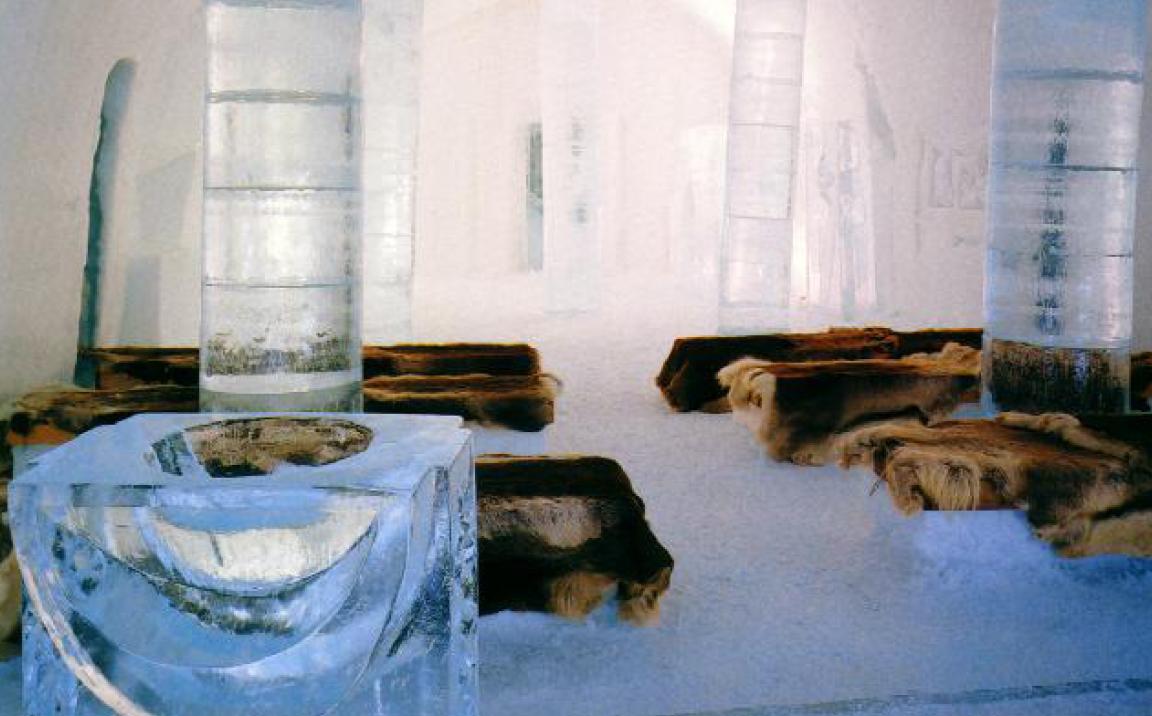
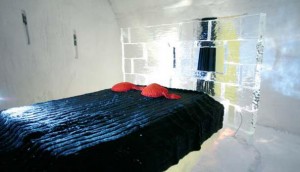
I have just  returned from four days in Swedish Lapland at the Icehotel in Jukkasjarvi. I was there for three days, the first two spent in an Ikea-style cabin, and one in the Icehotel itself – sleeping on a bed of ice in a magical ice castle, trying out dog sledding, cross-country skiing and snowmobile rides, and gazing at the Northern Lights. Sounds nice doesn’t it? And I know it’s something thatmy nine-year-old would love.But on this occasion I couldn’t take Tom because he was with his dad,so I went with the boyfriend instead. But the four-day break left me completely cold – and not for the right reasons. I found it to be totally unsuitable for families,overly expensive, ill conceived and badly organised. And my views were shared, as I discovered from other guests who have contacted me since the holiday. Don’t get me wrong, the ice hotel as a concept works.There are other ice hotels and palaces around the world, after all. But this place bills itself as being the first. It’s a hotel constructed completely of ice, built afresh each year on a vast frozen lake.They invite artists from all over the world to design sculptures for the bedroom suites in which guests sleep. You would only want to do this once and,perhaps knowing this, tour operators charge a premium price. One couple I spoke to had spent more than £1,500 per person, plus extras (like food), on their three-day trip.

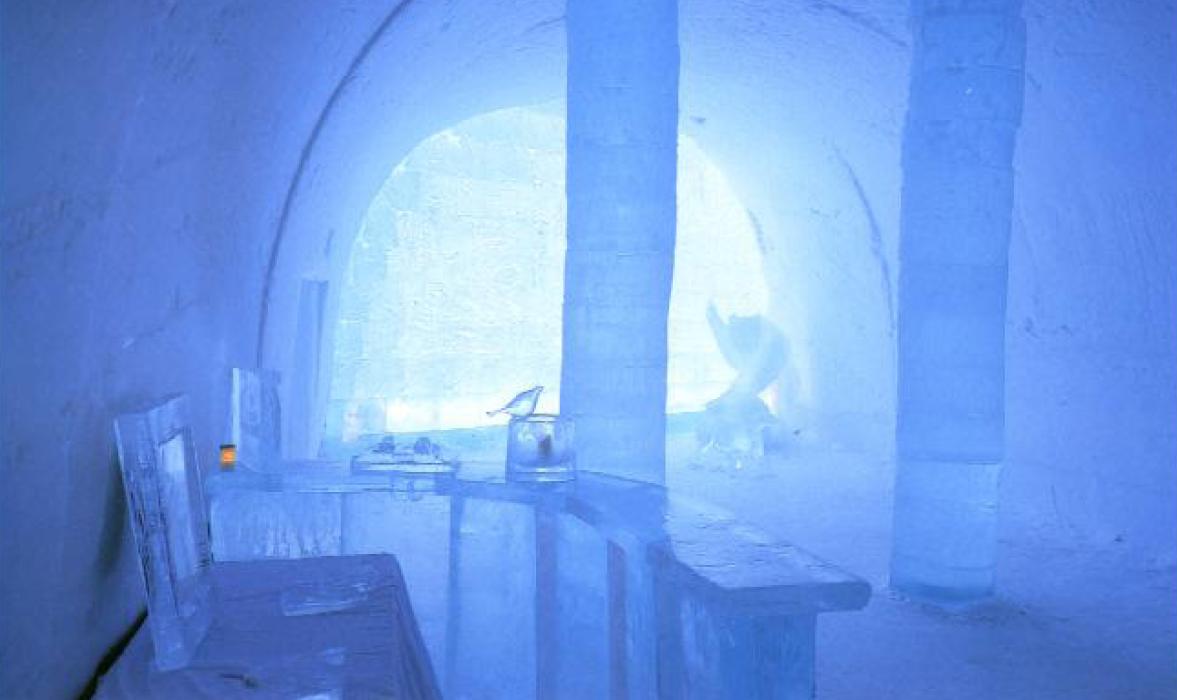
They later found out that they could get a 10-day wilderness break in the same area for the same price – with all food included. Fundamentals were also badly thought out.Considering temperatures can reach well below freezing, especially at night, and it’s an activity holiday, there’s a need to be fed often and well.There were two restaurants near to the Icehotel,both serving fussy,semi-Cordon Bleu food,in just two sittings – at six and nine. If you didn’t eat at those times,you didn’t eat. If you asked for snacks, their responses were curt and negative.The waiting times were horrendous, with guests often waiting more than 40 minutes for their main course. Families were waiting and children became fractious. The excursions were inconsistent and over-priced. Cross-country skiing,which lasted just over an hour, cost £70 per head.Compare this with the equivalent in Canada,where the same activity is run by the ice hotel in Québec (pictured above) for a fraction of the cost. No training was given, and a family of five was left stranded – the hot drink and cake they were promised failed to materialise.

So, lessons learnt:always remember when booking family holidays to ask clearly if the package/hotel/resort is suitable for children at certain age ranges, and if possible ask to speak to other families who have visited the destination. Perhaps my expectations were too high. I have been fortunate enough to sample several Arctic wilderness experiences in Canada and,although one has to travel further,in my opinion, they are far superior in every way.That goes for price, welcome, product, excursions and scenery, both on the east and west coasts.This is where to take your kids. Staying at an ice hotel is a once in a lifetime experience,which you are better off trying somewhere good.

Ice Hotel, 98191 Jukkasjarvi Sweden

Marrakech Atlas Mountain

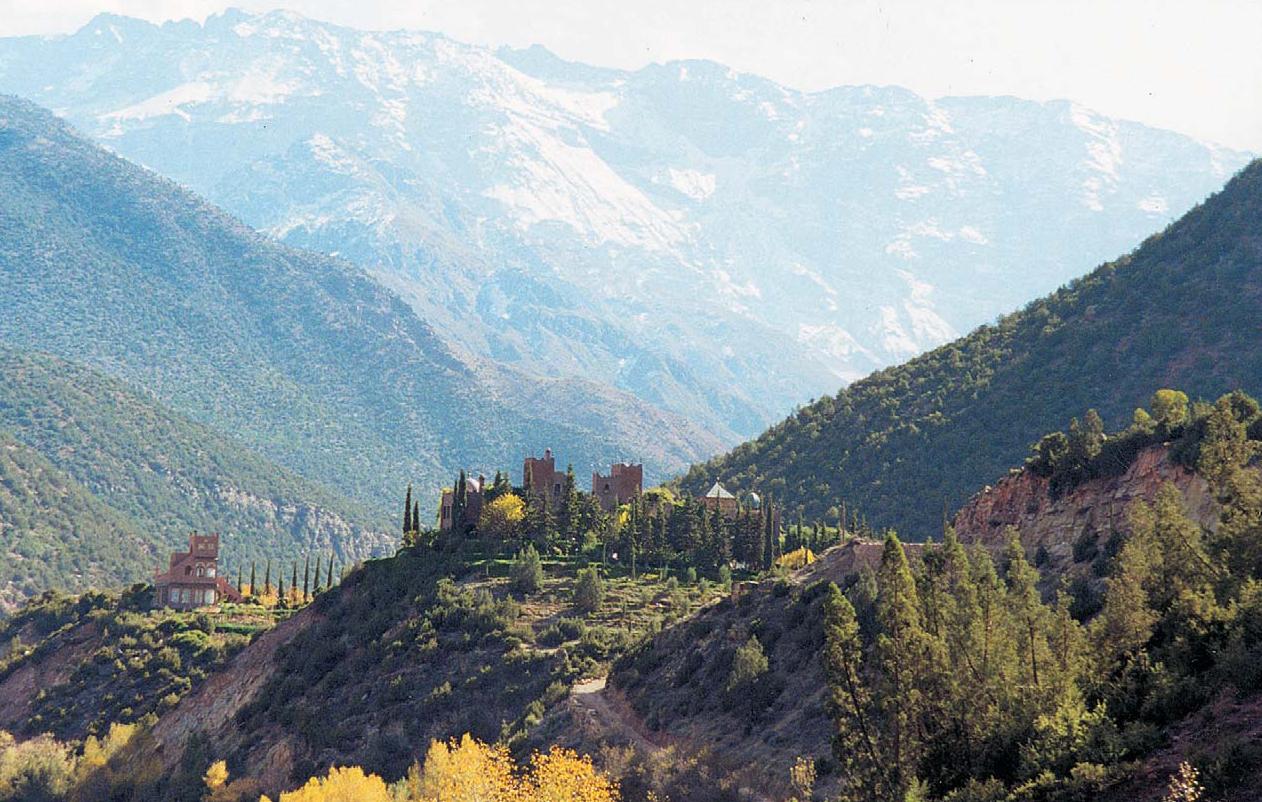
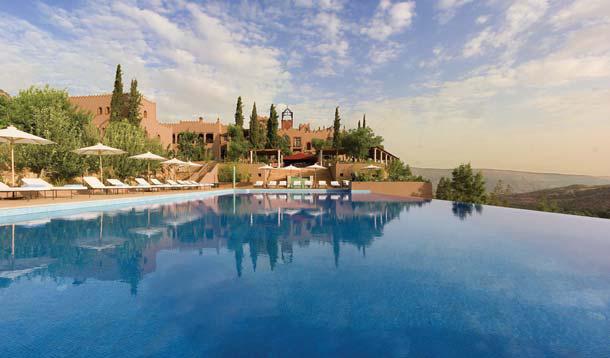
It doesn´t take long to get from the heat and hustle of Marrakech into the clean, heady air of the Atlas Mountains. I’ve gone from souks to serenity in the space of an hour, stepping out after a winding journeyto feel a welcome breeze whisk away the last lingering traces of city life into the peaks. The setting for Kasbah Tamadot, Richard Branson’s Moroccan retreat is pretty spectacular. Perched high on the edge of the Ourika Valley, near the small mountain town of Asni, the Kasbah forms a little kingdom of its own. It’s a kingdom of visual riches and total relaxation. Formerly the home of celebrated antiques dealer Luciano Tempo, this is a place filled with Arabic treasures and paintings and artefacts from India and the Far East. Branson inherited a warehouse filled with Tempo’s extensive hoard when he bought Tamadot, and it shows. From the lions at the front door to the astrolabe in a courtyard and individual pieces in the rooms –including exquisite inlaid Indian tables and Oriental sculptures – there is something to delight in at every turn. There are just eighteen rooms and suites here, each different from the next, each with a Berber name to reflect its main feature. Lemri, meaning mirror, has a ceiling full of them; Tafkout, or ‘sun’ boasts an engraving of the sun on an exterior wall and a splendid suntrap of a terrace with a blue tiled dome. I’m lucky enough to be in Atri, meaning star, because the raised terrace topped with an antique Indonesian casibo is a superb place to sit and watch the stars, which burn bright over these mountain peaks. From this terrace I can also see the vast infinity pool, seemingly dropping off into the valley below, where the river glints like a silvernecklace. The Berber village of Tansaghart appears as an abstract mosaic against the slopes. From a lower terrace, I look out over a reflecting pool, tiled in deep blue and full of rose petals, set into a tiled courtyard. The third pool at Tamadot is indoors, but the floor-to-ceiling windows that run alongsideensures that mountains remain in sight. Just off the pool is a hammam room in traditional style, with stars cut out into the domed ceiling and a series of tranquil treatment rooms. After a pretty blissful facial here, I could have slept until it was time to fly back. But that would have been a waste of the glorious surroundings, and an evening swim in the vast pool invigorated the senses intowakefulness. There was a softness to the air, the pool was lit up, a turquoise expanse under a sky turning purple behind the mountains as the moon floated between the peaks. The magic here certainly comes from the setting. While all the creature comforts are present and correct – well-appointed rooms, charming outdoor spaces, internet access, an extensive menu, tennis courts – the setting is the special ingredient.

That setting and the remarkable warmth of the local Berber staff make Tamadot a truly enchanting place. Richard Branson and his mother Eve – who persuaded Branson to buy the property because she’d fallen in love with the location and its people – have consistently made sure that the surrounding area benefits as much as possible. Every single member of staff I spoke to during my stay told me how their lives had improved. “Life was hard here,” said one. “I have four children. But now, it’s better, they can study, and I can still see them.” He was a man of the mountains and said he’d hated the idea of moving to a city to make a living. Sitting out on my terrace the next morning,I could see his point. It was early, and I watched the mountains unfold in the growing light, their outlines appearing one by one. It was like a drawing from a child’s fairytale book, and as powerful as one, beckoning to be explored. There are ways of doing this – treks and horse riding are available, but withthe stables a drive away, saddling up a Tamadot mule was the speedier option. Riding into the scenery did nothing to dispel the magic. We climbed in silence, bar the sound of hooves and the rustling of eucalyptus leaves. Butterflies fluttered past, and in the distance strings of horses and donkeys made their way to Asni for market day. With more time, we could have joined them, or riddenhigher into forests of juniper and oak. As it was, we turned back, Pepper the mule picking up pace at the thought of being re-united with Pumpkin, Pickle, Pudding and Plum, the dromedaries and donkeys that live content by the orchards at Tamadot.

Riad Kniza

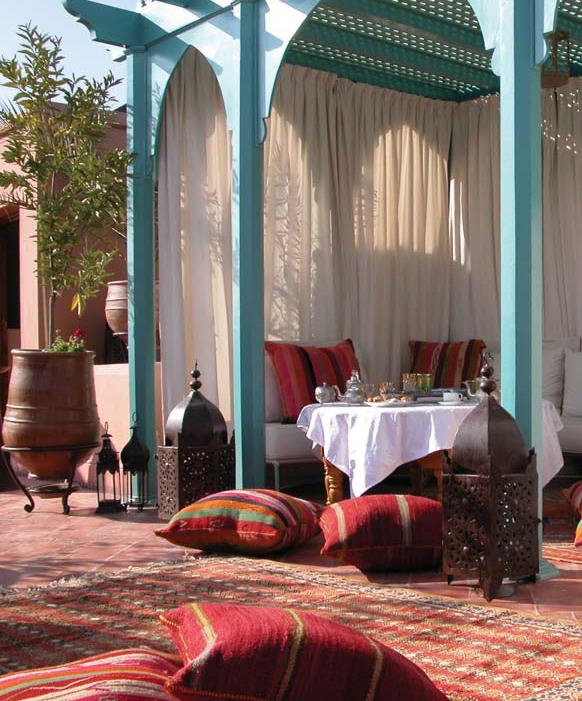
A narrow  lane in the Medina, lined with stalls. Matting overhead blocks out the worst of the heat, but intensifies the clamour and the charming chaos that is Marrakech. Around the corner lies a quieter lane. It curves into a space just empty enough to play football in, and some children are laughing as the ball comes off the high walls seemingly leading up to the sky. Marrakech has many walls like this, stretching long and high and sheltering secrets. This one frames a massive cedar door, which swings open into a sanctuary, and shuts behind me to seal the separation from street life and private life. For Riad Kniza feels like a private house, sumptuously appointed and set around a sun-filled courtyard, complete with a fountain where rose petals float. The salons that surround the courtyard are filled with curiosities and collectables – a traditional wedding belt from Fez; an ink well and pens used to sign wedding contracts, pottery from the eighteenth century, rare Bedouin jewellery.

The rooms and suites are also adorned with antiques, unsurprisingly perhaps, as the owner, Mr Bouskri, is one of the most renowned antique dealers in Marrakech. Even the outside spaces are lined with art, in the form of intricately carved doors and fabulous mosaic tiled work. I have breakfast, a simple but delicious affair of warm bread and crepes and honey, in a small secret space off the main courtyard, all sunlight and song from a brighteyed little bird perched on a door carved into geometry. Fretwork lanterns hanging on a wall cast patterned shadows. On another wall, another fountain, tiled in red and blue and yellow and white into a pattern of flowers and stars. A small sculpture of a gazelle’s head set into the mosaic glints in the light. It’s such a small space and yet so rich, every detail is full of design, and every design is full of detail. “When I look at that fountain,” says Kamal, the manager and the owner’s son, “it’s not just the beauty I enjoy. It’s the patience and craft that went into the making of it. Every tile was cut by hand, over and over, to get the perfect fit.” We’re talking about the work that’s currently

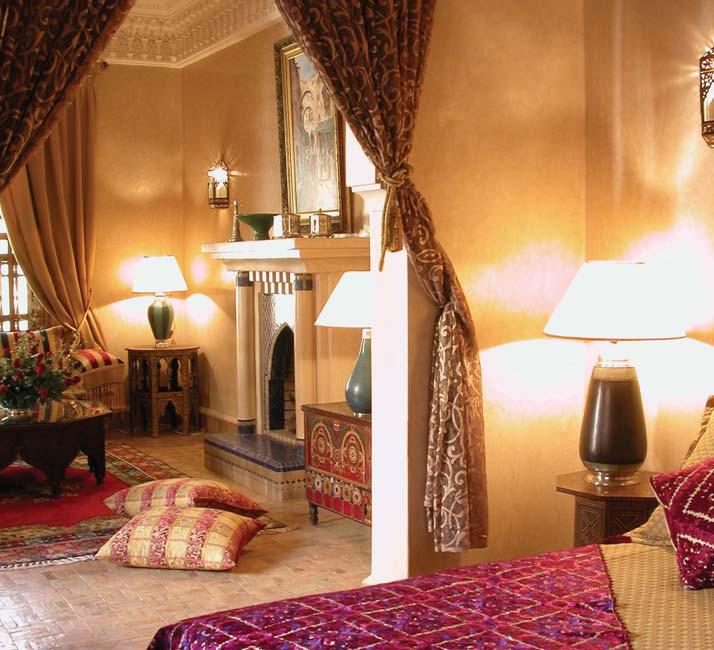
underway, to add a swimming pool and a traditional hammam to the riad, and about all the work it took to restore Kniza to its former glory. The building has been in his mother’s family for two centuries, but had been empty for two decades when the family decided to restore it. “At that point,” he says, “whenever they touched anything, it fell apart, just crumbled away, so everything had to be recreated, everything.” They started from scratch, using traditional craftsmen. Their care shows, in the painted ceilings, the embroidered curtains, the tiled fireplaces in the rooms… all have the fine finish that comes from pride in a craft. It’s not all artisan work and antiques, although these do transform each room and suite into something special. An Italian chandelier graces one, a Syrian mirror, irridiscent with silver work and mother of pearl another, a painted chest and a tiled fireplace are highlights in my suite. But while art makes each room highly individual, technology is a common factor – efficient air-conditioning, wi-fi connectivity, televisions if one must. But who could watch television with Marrakech to explore?

A particularly pleasing aspect of Riad Kniza is that it is one of the only upmarket riads that is Moroccan owned, and the owners really open up the city for visitors. Mr Bouskri, as well as running a successful antiques business, is a professional guide who for decades has shown visitors including presidents and movie stars the best of Marrakech – and he takes guests at the Riad on tour too, as does his son Kamal, who spent an entire afternoon showing me his city, dropping me off as evening began at the famous Jemâa el Fna square. Music – the beat of drums and the slightly spooky whine of snake-charmers’ pipes – and the smoke and smells from food stalls floated around the crowds and the drama, the hustle and the hustlers. Later that night, the square and souks – although just minutes away – felt incredibly distant as I relaxed on the roof terrace of Riad Kniza, replete after an excellent lamb, fig and walnut tagine. There’s no menu here, the meals are what you want, served where you want. The sky took on the faded red hues of the city walls as the sun set on the medina, a cat sat on a mat by my feet,luxuriating in its luck at escaping the relentless pace outside. So was I, as the stars came out over Marrakech.

Riad Kniza
34 Derb l’Hotel, Bab Doukala
Marrakech Médina – Maroc

Dubai

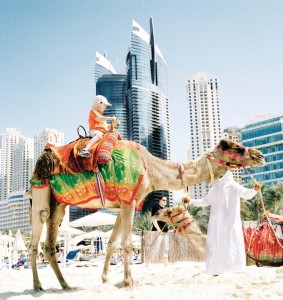
Dubai Ibn Battuta Mall: The world’s largest themed shopping mall is divided into six main courts, whose architecture reflects ‘the most influential places’ Battuta visited on his 29-year epic journey. I began in the China Court (complete with lifesized junk), proceeded to India Court (with a huge, vaguely Mughal pavilion) and eventually reached Andalucia Court whose Lion Fountain replicates the one in Granada’s Alhambra. Aimed at children, so-called ‘edutainers’ in ethnic costume lead free Learning Adventure Tours that explore Battuta’s travels and uncover some of the Islamic world’s ingenious inventions, such as elaborate water clocks. Despite the glitzy shops and chi-chi boutiques, I was reluctantly impressed. Tunisia Court’s market-cum-medina seemed reasonably attractive, while Egypt’s was mock-Mameluke with pharaonic touches. In the heart of Persia Court, I gazed in near admiration into a swollen dome with majestic archways whose arabesque and geometric mosaics echoed the venerable masterpieces in Isfahan and Shiraz. And then, slap bang in the middle, I noticed a Starbucks. Today’s Dubai is all swagger and big bucks, the biggest this and the largest that. Here size really does matter, luxury is the norm, and first is fab. Its proud construction boom has all kinds of manifestations that waver between the marvellous and the ludicrous.
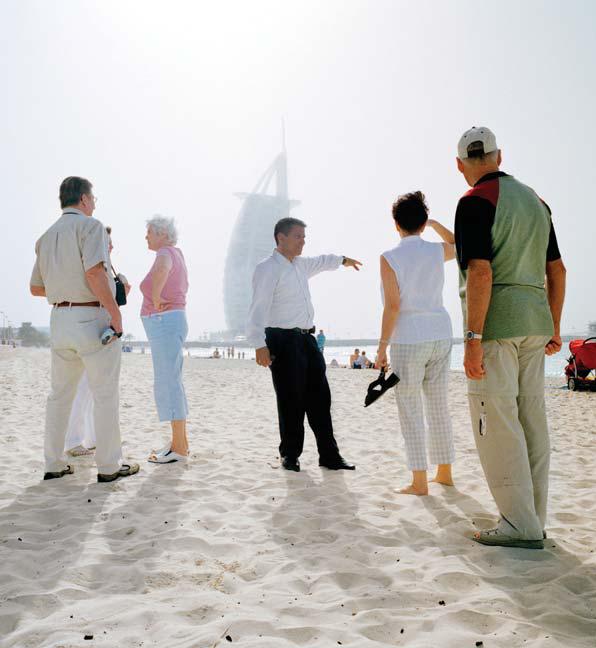
Prestige projects began with the Burj al-Arab, the world’s first seven-star hotel, complete with gold taps and Rolls Royce taxis. Then came The Palm, a man-made island shaped as a haloed palm tree, which will be ribbed with villas and fringed by marinas when complete. Its DNA was so fecund that various further Palms are sprouting, along with another island playground called The World, where the super-rich can buy a country if they don’t already own one. Environmentalists groaned when Ski Dubai – among the world’s largest ski domes, black run included – opened nearly two years ago. So they must be having kittens at the prospect of the new Snowdome, allegedly the largest free-standing transparent structure in the world, with no supporting columns. It will be more than 200 metres across, house a snowboarding mountain, a penguin enclosure and flats called Iceberg Residences.

It never occurred to me that man even built freestanding transparent structures without columns, but then Dubai excels at these things. Take, for example, Infinity Tower. It will be 330 metres tall and – drum roll, please – will be the world’s tallest building to feature a 90-degree twist. Designed, I imagine, by Esher & Magritte Partners, this is the sort of radical approach my three year-old child often attempts with Plasticine. In propertyspeak it’s ‘a masterpiece of contemporary style and spiralling design’. Meanwhile they’re busy with Burj Dubai (to be the world’s tallest building), Hydropolis (its first underwater hotel, 27 acres no less) and – my personal favourite – the gestating Mall Of Arabia.

According to developer Mustafa Galadari, this will be the world’s largest mall. “Even if someone comes up with a bigger one, we will just add more space to our mall to retain the top spot.” It will be just one part of the City Of Arabia development, comprising Wadi Walk (Mediterranean-inspired architecture plus water taxis), 34 tower blocks, and Restless Planet – a dinosaur-based attraction with five giant glass domes and 108 roaring, life-size animatronic dinosaurs that will ‘interact’ with visitors. Like sport ?  Head for Dubai Sports City, with the world’s first ICC Global Cricket Academy. Want some sea ? Dubai’s boating berths will increase from 1,000 to 40,000, with the help of Dubai Marina (yes, it’s among the biggest ever maritime projects). Lakes? Try Jumeirah Lake Towers (up to 80 skyscrapers set amid 250,000 square metres of winding canals and lakes). The list goes on and on, and for all their boys-with-toys quality, the numbers are important. Dubai’s master plan aims to at least double tourist arrivals to between 10 and 15 million by 2010. But arguably it is environmentally unfriendly – if not unsound. It already has one of the world’s highest water consumptions per capita and, according to the World Wide Fund for Nature, a huge energy footprint: think of all that air-conditioning and desalination.
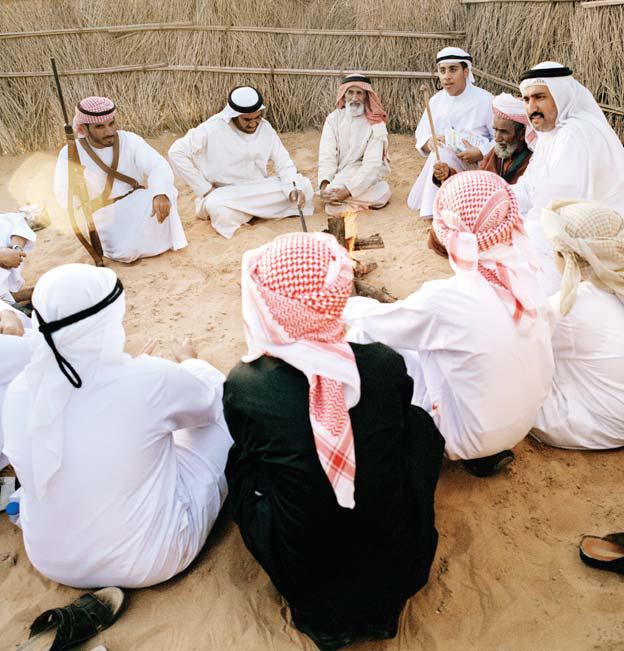
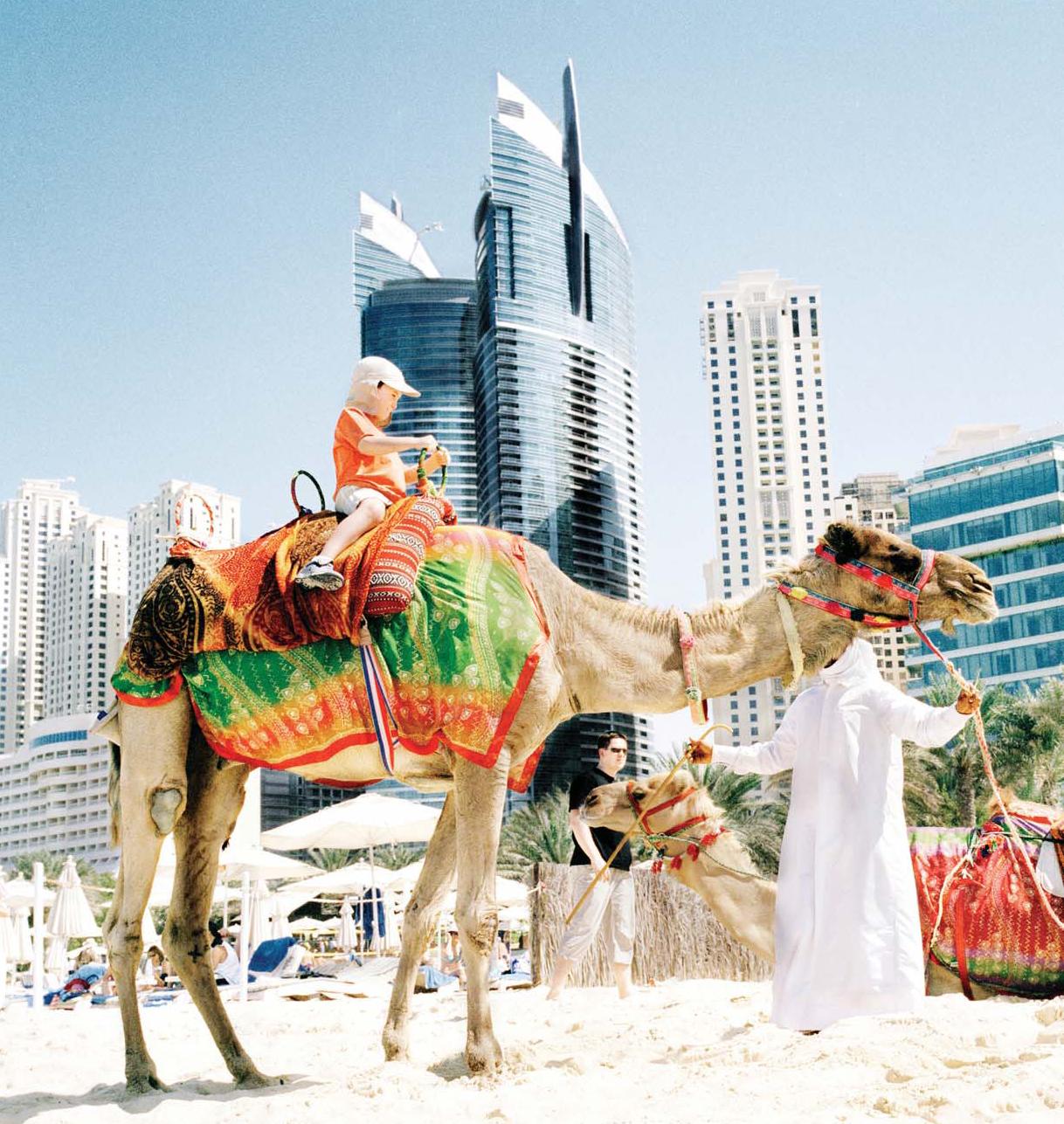
The human cost, too, is gaining attention. In a population of around 1.5 million, about 80 per cent are immigrant labourers, mainly from India, Pakistan and the Philippines, with lives far removed from the glamour of showcase Dubai. Workers’ grievances centre on low pay, harsh working conditions and poor accommodation. Last year, thousands of workers at the Burj Dubai site rioted. Airport labourers promptly downed tools in sympathy. And, most unsettlingly for the authorities, a whiff of organisation hung in the air. There have been mutterings that, in order to gain more impact, protests could be taken to the malls and the beaches. In the midst of all this construction chaos, one of the city’s most important structures is still the 1799 Al Fahidi Fort – now Dubai Museum – because it retains a sense of the older Dubai. Within its mud walls there’s an old photo showing a few huts, the fort, the Creek and plenty of empty desert: it is from the 1950s. Much as one might deride Dubai, its vision and drive are impressive. Meanwhile, I’ll stick to making my largest ever sandcastles on the sweeping Jumeirah Beach.

Dubai has a hot and humid climate, with little rain year-round. Temperatures can often reach 40 degrees or higher, especially in the mid-summer from June to August. October to April are much more bearable. Sporting events are important. Highlights include the Dubai international rugby sevens, the Dubai Desert Classic golf tournament (May), and the world’s most expensive horse race – the Dubai World Cup (March).

Hotels and Resorts in Dubai

The Burj Al Arab Iconic 28-storey hotel, once dubbed ‘the world’s first seven-star hotel’, housed in a unique sail–shaped building on a man-made island. Private butlers attend to guests in the grand suites.  Grosvenor House Hotel Ultramodern tower building in the Dubai Marina, which features an extravagant marble-floored reception hall, an exquisite spa called The Retreat and an outdoor rooftop pool. Its sister hotel, Le Royal Meridien , is well suited for families and longer-stay guests who wish to relax by the outdoor pools or stroll along the hotel’s private stretch of Jumeirah Beach. Al Maha Desert Resort Exclusive hotel designed to resemble a traditional Bedouin encampment and set within a desert conservation reserve, with panoramic views of the Hajar Mountains and the surrounding dunes.

Top destinations in Dubai
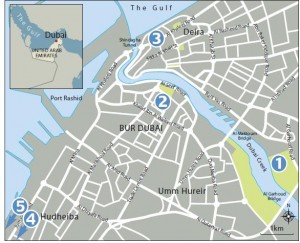
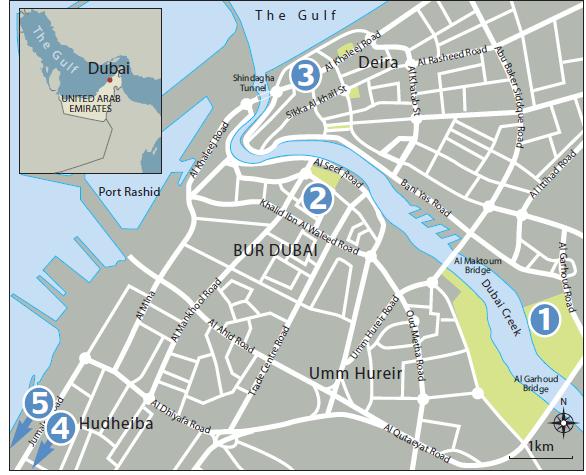
  1. Dubai Creek Lined by dhows and crossable by water taxi, the creek offers a glimpse of Dubai’s
    trading heritage.
  2. Dubai Museum Housed in the Al Fahidi Fort, built in 1787, exhibits show how far Dubai has changed in the past century from small fishing village to glamorous metropolis.
  3. Deira Gold Souk Selling every conceivable kind of jewellery, this vast market is considered to be the
    largest gold bazaar in Arabia.
  4. Ski Dubai High outdoor temperatures didn’t deter the building of the world’s third-largest indoor ski slope in Dubai, coated with 6,000 metric tons of manufactured snow.
  5. Jumeirah Beach Once a quiet stretch of sandy beach, now lined with luxury hotels and soon the fantasy peninsula of Jumeirah Palm and the island, ‘World
Istanbul

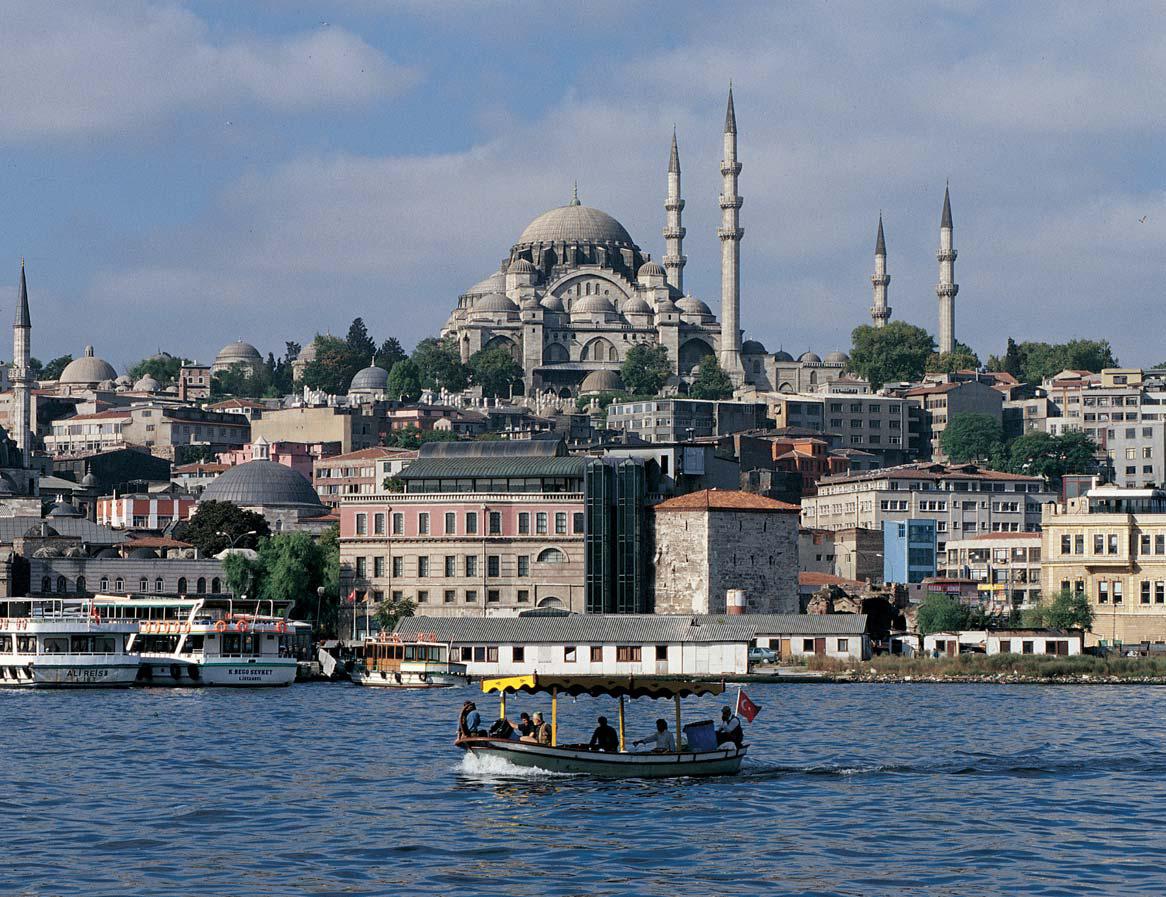
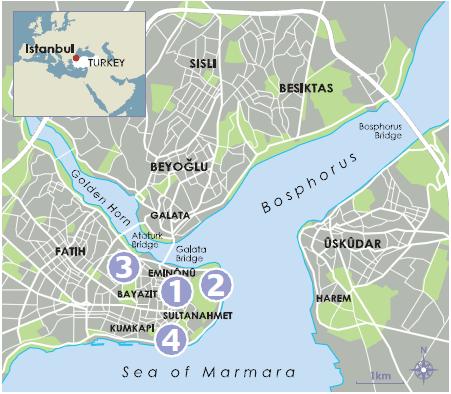
Istanbul : If you  own a map and are of an orderly disposition, Istanbul is a worry. There it sits, clearly part of the European continent, yet clearly, too, belonging to Turkey. If only a cartographical Mary Poppins could be called in: Asia would be Asia, Europe would be Europe, and everything would be spit-spot. This unhappy state of mind is easily fixed. Take a flight to Ataturk International, a slightly hairy taxi drive into town, and a short climb to the roof terrace of your hotel. At midnight, as you look out over the Golden Horn while gulls tumble around the floodlit minarets of the Blue Mosque, the map simply floats out of your mind. It becomes meaningless: you might as well throw it away. Istanbul defies conventional atlases.

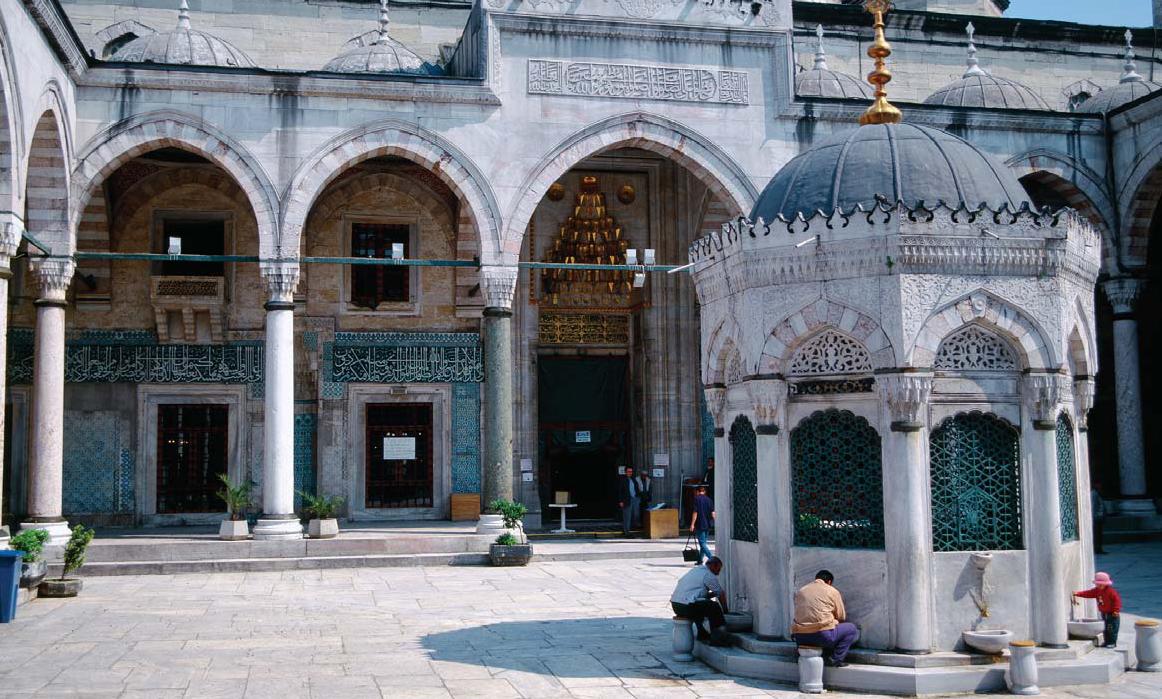
According to platitude it is the point where East meets West. Actually, it is an entity entirely unto itself. On paper the Bosphorus may be a strategic bottleneck linking the Black Sea to the Mediterranean: in reality it is Istanbul’s boating canal. The Sea of Marmara may seem to be an aquatic divide between two continents, in fact it is Istanbul’s pleasure lake. Within a comfortable radius everything on either side of these waterways belongs to Istanbul. Asia and Europe are out there somewhere, but they are mere geographical constructs. They do not impinge. And why should they? This, after all, is a city that has always considered itself to be the centre of the world. The weight of history here is overpowering. Everyone has left their mark, from the Romans who constructed the stupendous cathedral of Agia Sophia, to the Vikings who carved graffiti into its marble balconies, and the Ottomans who surrounded it with some of the world’s most splendid mosques. Yet for all its antiquity it is hard to take Istanbul seriously.

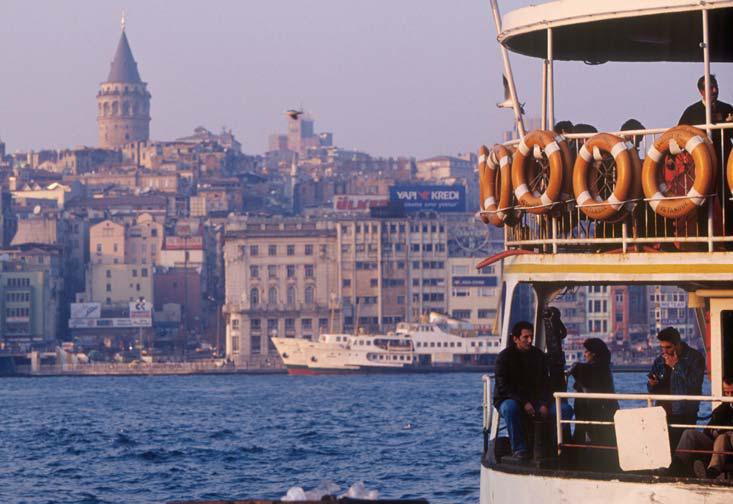
Go, for example, to the top of the Galata Tower. Built by the Genoese in the Middle Ages, it was purportedly part of the city’s defences. When you look through its vast windows you realise that its true purpose was to give a grandstand view of the city; that its conical hat was intended not to intimidate but to add a touch of decoration; and that it is in no way odd that this priapic bastion should have later become the heart of a red-light district. So many nations have desired Istanbul for so many centuries, that its raison d’?tre has become to be desirable. This is one of the most sophisticated cities in Europe, albeit not by modern, high-tech standards. Nothing necessarily works, timetables are mere suggestions, all arrangements are ad hoc and a glorious uncertainty pervades every aspect of life. Hotels still pride themselves on having an independent generator, and the currency flutters in strange financial winds: the smallest note is 1,000,000 lire, occasionally worth about 40p. Yet Istanbul has all the amenities of London or Paris: they just have to be sought in different ways. Whatever you want you can have, but it will be made and delivered by individuals. There are no fast-food chains or anonymous checkouts. Each transaction is personal: everything here is human.

Even the automobiles speak. Istanbul resonates to the sound of horns – not the aggressive blare you get in the West, but a constant, conversational moto-babble: “Be-beep, here I am”, “Be-beep, I’m overtaking you”, “Be-beep, I’m changing lanes”, “Be-beep, I’m making a new lane”. Communication, not road safety, ist he essence of Turkish driving. I recall vividly a journey from the airport one rainy night, in a taxi with broken wipers , no seat belts and a driver who spent his time leaning back to pinch my son’s cheeks. Its windscreen completely opaque, the cab veered blindly across the motorway, crying, “Be-beep” to its pals. That we reached our destination, I know; how our driver knew is something that puzzles me still. Pedestrians, as well as drivers, must learn the language of the road. Forget zebra crossings, green men and other namby-pambiness. To cross a street you first have to speak to the traffic. This involves standing in a group and focusing your will at the oncoming cars. When sufficient psychic mass has been achieved someone steps out. Miraculously, the vehicles part and you scurry across. Woe betide the solitary road-crosser: you are of less significance than an ant and should wait for reinforcements.

All of which makes life strangely refreshing. Istanbul is, truly, a city of contrasts. It is unbearably hot in summer and freezing in winter. Despite being predominantly Muslim it celebrates Christmas. It isn’t the capital of Turkey but everyone assumes it is. (You don’t hear many people saying, “Now, this year we must go to Ankara.”) It is irrepressibly corrupt, individually honest, beautiful in places, hideous in others. It contains some of the most venerable buildings in the world but sits on a tectonic fault that can topple them at any moment. It is overwhelmingly raucous but offers moments of pure tea-timeish contentment. On a cloudy afternoon, sitting in the Grand Bazaar with a plate of baklava and a cup of coffee, when not much business is being done, one can hear the rain falling – see it dribbling down the plasterwork – and achieve that cosy sensation, so alien to the West, of being absolutely unimportant: of having stepped, indeed, right off the map.

  1. Aya Sofia Walk through one of the world’s architectural wonders, the great cathedral built by the Roman emperor Constantine and converted into a mosque by the conquering Ottomans. Its fabulous central dome – the largest in the world for a millennium – inspired mosque architecture worldwide, and is surrounded by gorgeous Byzantine mosaics in gold.
  2. Topkapi Palace Explore the exquisite former palace of the sultans, who lived in this pleasure dome-cum-imperial hub for three centuries, with the women and eunuchs of their harem.
  3. Grand Bazaar Discover beauty, bargains and bedlam in the mazy streets of the Covered Market area, picking up souvenirs in its 4,000 shops, exploring its mosques, or sampling local delicacies in the many restaurants of the world’s oldest shopping mall.
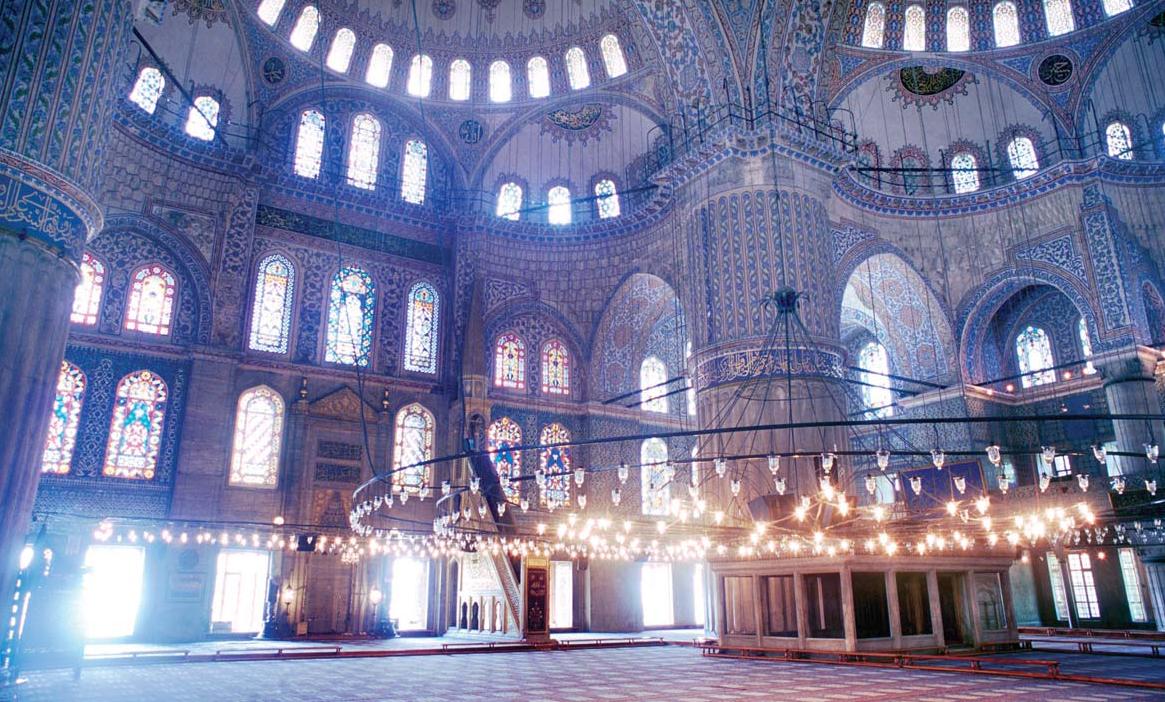
  4. Blue Mosque Admire the breathtaking Sultan Ahmet Camii, one of the world’s most beautiful mosques, its walls lined with exquisite blue-and-white tiles, its floors thick with Turkish carpets, and all lit by flickering candles.

.

Hotel Adagio San Francisco

Hotel Adagio
550 Geary Street,
CA 94102 San Francisco
(Rates from 199 $)

Hotel Information: Hotel Adagio San Franciso, in the heart of the city’s Theatre District, is just a couple of blocks to the west of Union Square, the centre of Downtown. Five minutes’ walk in any direction will bring you into one of the city’s many colourful neighbourhoods, each so different from the others. Chinatown, the Financial District, Nob Hill, Soma, and the Moscone Convention Centre are all easily explored on foot from here, while the central hub of the trams, trolleybuses, buses, and cable-cars is two minutes to the south. The 16-storey building was completed in 1929, first as the El Cortez and then as Shannon Court, but today – after an $11 million refurbishment – as Hotel Adagio. As the doors closed behind me, the street noise cut out and the slower pace that its name suggests was overwhelming. The lobby was clean, fresh, and bright. Comfortable upholstered seats surrounded chessboards, vivid canvases hung on the walls, large lampshades dangled above, and a scented candle flickered in the corner.

Category: ****

Guests review score: 7,9/10 (of 14 reviews)

Room information: There are 171 guestrooms; including 2 Penthouse Suites and Junior Suites (Not included in room price: tax, city tax) Minibar, Shower, TV, Telephone, Bathroom Amenities, Toilet, Bathroom, Cable TV, Hairdryer, CD Player

Rates: from 190 $

 An award-winning Mediterranean-style restaurant, Cortez, lay just beyond the hotel’s reception, offering a delicious mix of the fine and the funky. I was staying on the fifteenth floor, and as luck would have it, had been granted a corner suite, with views up towards Nob Hill. Decorated in deep tans, browns and ochre, the rooms cocoon guests in a world of comfort, bathroom where I found a selection of excellent Aveda bath products. Black and white prints of ash trees, in panoramic frames, decorated the bedroom walls, and a massive kingsize bed made it clear that this was a place for relaxation. A television facing the bed was subtly housed inside a pivoting wooden box, ensuring that it didn’t interfere with the soothing natural colours and textures of the room: but movies on demand and Nintendo games were still just a button-press away. A small plug in the bottom of the desk’s table lamp allowed me to plug in a laptop for free access to the internet: those without a computer can surf using the hotel’s PCs downstairs. A soft two-seater sofa and and a couple of armchairs gave ample space to rest in the day. Returning after a show, I found my bed turned down and a chocolate on the pillow, a simple and classic touch that summed up the hotel’s merits – an oasis of calm in the heart of downtown, with courteous and helpful staff.