The Gore Hotel London

The Gore Hotel
190 Queen’s Gate,
Kensington, London
(Rates from 180 €)

Hotel Information: Surrounded by museums in London’s sophisticated Kensington area, stands The Gore Hotel , a quirky boutique hotel steeped in the eccentricity and style of the Victorian era. Its high-ceilinged entrance hall is lined with nineteenth-century paintings of imperial officers, London’s streets, and Queen Victoria and Prince Albert – who played major roles in developing this area. The Albert Hall is just around the corner, while many cultural landmarks can be found nearby: the Victoria and Albert, Natural History and Science Museums, the Royal Geographical Society, and the Royal Colleges of Art and Music. In fact, the whole area was bought with the profits made from the Great Exhibition of 1851 (another project close to Albert’s heart) held in nearby Hyde Park. While all this was going on, The Gore was also being built. Originally two adjacent townhouses, it became a single hotel under the auspices of two Victorian spinsters, Miss Ada and Miss Fanny.

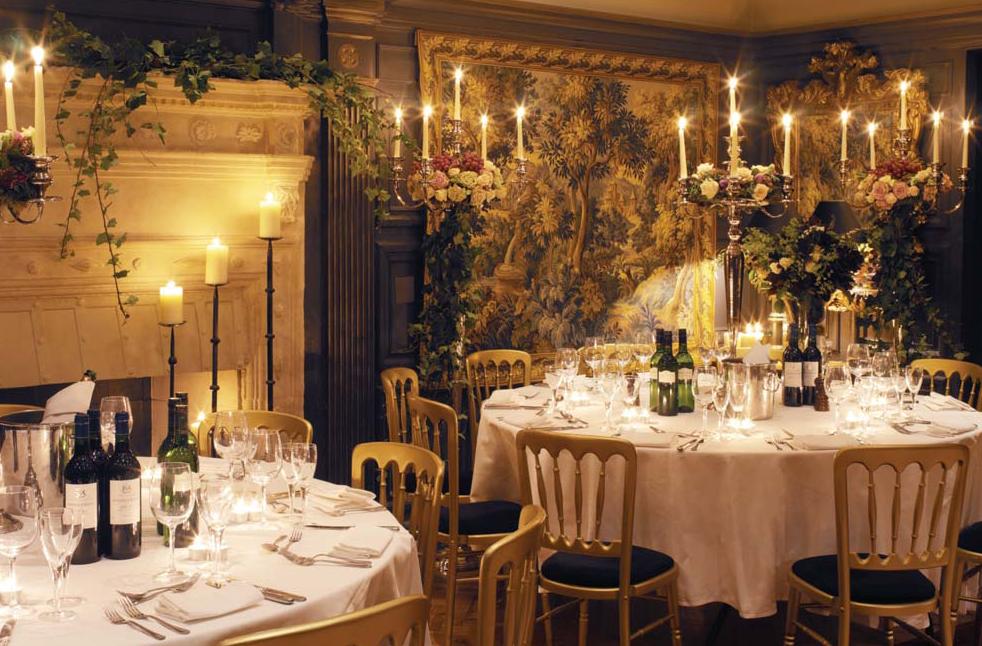
Yet in many ways, it still feels like a townhouse. In the sunlit rooms at the front – the fun and funky Bar 190 and the tranquil 190 Queens Gate restaurant – the hotel’s friendly staff serve colourful cocktails and hearty British fare to the pre-show set; while in the quiet Green Room at the back, guests read and relax in comfortable leather armchairs. Downstairs are the Tapestry Rooms – raffish conference and party facilities, lined with gilded mirrors and lavish French wall hangings.

Category: *****

Rates: 180 -280 Euro

Room information: 46 bedrooms that are among the most charming in London.

The Gore recently had a £2.5 million refurbishment, upping the quality of the decor while reducing the number of bedrooms from 54 to 46. My own four-poster bed was especially comfortable, and my room nicely finished with elegant claret drapes; while Miss Ada’s bedroom retains a Victorian charm with its mahogany and walnut panelling and stained glass windows. Contemporary necessities aren’t forgotten, either. There is wi-fi connectivity throughout the hotel, flat-screen televisions in the bedrooms, and luxurious bathrooms with power showers.

My bath, it must be said, would have better suited a shorter person from another age, but on the whole the mix of past and present is done rather well, and adds greatly to the hotel’s relaxed and personable, if slightly eccentric, air.

Room Facilities:

General  Minibar, Shower, Bath, Safety Deposit Box, TV, Telephone, Air Conditioning, Bathroom Amenities, Toilet, Bathroom, Heating, Satellite TV, Hairdryer,

Services Room Service – Meeting/Banquet Facilities – Airport Shuttle –  Services – Laundry – Dry Cleaning – VIP Room Facilities – Breakfast in the Room – Bridal Suite – Currency Exchange –  Car Rental – Tour Desk – Fax/Photocopying

Middlethorpe Hall & Spa

Online booking Middlethorpe Hall

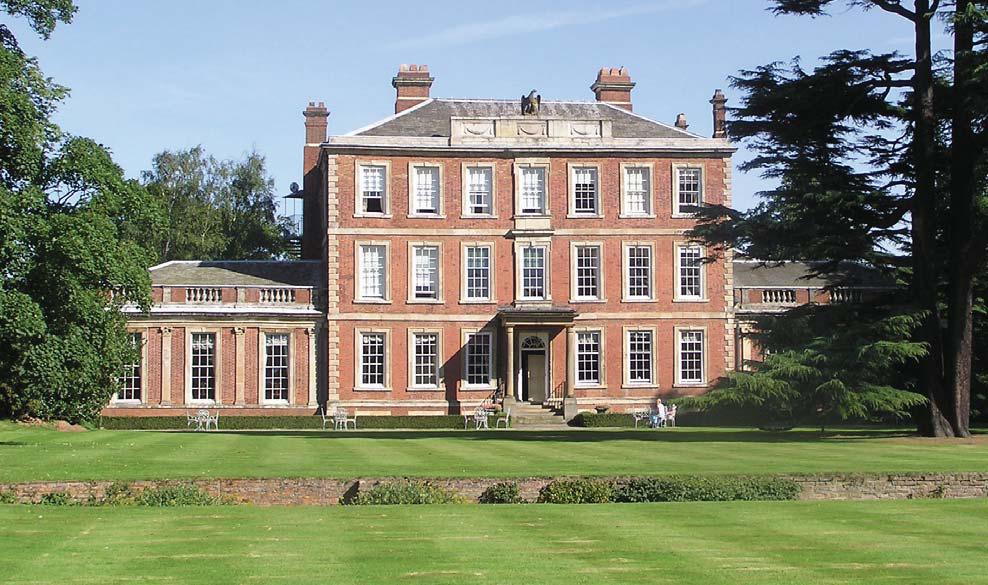
If you  were to imagine a doll´s house, then expanded it, Alice in Wonderland-style, so that the dolls were actually real-life people and the tiny rooms of miniature accessories were actually fine works of art, then you’d get a good impression of Middlethorpe Hall. On arrival at the elegant old building, my bags were picked up, not by some giant-sized hand playing human dolls, but by a friendly porter, who led me inside and up the grand staircase to my room – a spacious and airy room, with a high ceiling and tall windows fringed by flowing drapes. The centrepiece was a grand wooden four-poster bed – quite possibly the biggest and most comfortable bed I’ve ever slept in – beside which stood a sturdy writing table.

I could imagine the diarist Lady Mary Wortley Montagu, a former resident, sitting down to draft some elegant prose in such a room. Built in 1699, this William III country house later underwent a period of neglect after Montagu lived there, before being restored in recent times by the Historic House Hotels group. Located close to York racecourse, just a few miles out of the city centre, it’s well positioned for a bit of local sightseeing or a day watching the ‘sport of kings’. But on this occasion I just wanted to relax. Set in 20 acres of its own parkland, it’s a classic English retreat, charming and exclusive. Looking out from my bedroom onto the patio below, a few guests were enjoying afternoon tea in the sunshine, while from inside came the muffled murmur of others chatting over a gin and tonic in the cool drawing rooms, areas decorated with large portraits and finely-crafted period furniture. A gentle game of croquet on a secluded stretch of lawn was alluring, but instead I opted to test out the spa, housed in a pair of converted Edwardian cottages. Guests have unlimited use of the spa during their stay, so grabbing a towel and trunks I headed straight over.

Circling on my back in the cool water of the 40-foot pool, lolling in the frothy whirlpool and intermittently sweating it out in the steam room, I felt the stress of some hard weeks at the office ease away within just a few hours. Feeling much fresher, it was time to head back over to the main house for a quick change and then down for dinner, a strictly jacket-and-tie affair. The food was served by waiters on silver trays: foie gras is just a little rich for my taste, but it slipped down well with some fine wine. After dessert, I took a crisp moonlit walk across the large lawn, down to a little lake surrounded by bulrushes and shadowy trees. Strolling in the grounds under the silver clouds, childhood memories returned of Tom’s Midnight Garden. These may have been just my secret, just as they were Tom’s in the tale. Back at the house, rosy-red apples, rhubarb and assorted herbs had been planted in the walled kitchen gardens, while further on a converted complex of coach houses confirmed the feeling of a Victorian stately home, once lived in by masters and servants alike. In a way, we guests are the modern-day equivalent of the former, the assiduous staff the latter. After all, there’s nothing like a bit of pampered indulgence now and again. That’s true for both guys and dolls.

Middlethorpe Hall & Spa
Bishopthorpe Road,
YO23 2GB York
Online booking Middlethorpe Hall

The Waldorf Hilton, London

The Waldorf  Hilton

Hotel Information: There´s always been something theatrical about The Waldorf Hotel London. Bold, showy and located on the edge of London’s West End, since 1908 it has earned a reputation for elegant dining and extravagant dancing, and attracted a list of celebrity guests almost as long as its striking 190-foot stone facade. Sir Lawrence Olivier, Vivien Leigh, Julie Andrews, Lily Langtry, Elizabeth Taylor and Richard Burton, to name just a few, have all been guests, many in the historic Palm Court – the legendary dance hall upon which the ballroom of the Titanic was modelled. All those illustrious names: and in more recent times, the Spice Girls too. Now this grand old lady of the Strand has had a dramatic facelift. Thirty million pounds have been spent on a complete redesign and refurbishment, begun in 2002 and rolled out in January when the Hilton group took over. And thankfully, it’s been done well.

Its design pays tribute to the ‘grand cafes’ of Europe, and it’s a great place to relax before setting off for a West End show. Classical columns are decorated with modern art on their base, while Edwardian chandeliers loom over the stylish central bar.

Rates: 150 – 250 Euro

Room Information: 299 rooms. Plasma-screen televisions and highspeed internet connections in the bedrooms, and a fully equipped fitness gym in the basement. But the historic charm still pervades its majestic old walls, complemented by contemporary touches. In the lobby, black-and-white photos of London in the Thirties and Forties are juxtaposed with pale marble flooring andtrendily styled lounge chairs. In the bedrooms, minimalist interiors in satsuma, indigo or neutral tones balance classic features like freestanding Edwardian washstands and elegant plaster reliefs.

Hotel Facilties:

General Restaurant – Bar – 24-Hour Front Desk – Newspapers – Non-Smoking Rooms – Rooms/Facilities for Disabled Guests – Elevator  – Design Hotel – Luggage Storage

Activities Sauna – Fitness Centre – Indoor Swimming Pool

Services Room Service – Meeting/Banquet Facilities – Business Centre – Laundry VIP Room Facilities – Breakfast in the Room – Currency Exchange – Car Rental 

Hotel Grande Bretagne

Hotel Grande Bretagne

Having breakfast on a balcony with the Acropolis in full view is a good way to start the day in Athens, and staying at the Grande Bretagne, where you can do just that, is a good way to spend the rest of it. Despite the outstanding attractions that fill the city, there are days when the heat and the chaos build up, and this great old hotel, with its cool lavish interiors exerts a powerful pull as an elegant escape from the blur of sightseeing in sauna-like conditions. Of course it’s impossible to be in Athens without wanting to see some sights from time to time, and when a spell in the long cool indoor pool at the hotel’s state of the art spa has restored some energy, the centre of the city is right on the doorstep.

Situated next to Syntagma Square and the Parliament building, the Grande Bretagne couldn’t be better placed. The metro is seconds away, although most attractions are within walking distance. The hotel is in the centre of things physically, as it has been from the time when chickens ran around the surrounding streets when it opened in 1874. (There were two bathrooms then, for eighty bedrooms. Now each ensuite bathroom is a marbled extravaganza filled with Molton Brown goodies and gilded mirrors). As the hotel at the heart of city, the Grande Bretagne has been at the heart of many a historical happening. Spies, agents and other political players have stayed here and many an alliance or plot has been planned within its walls. When Athens fell to the Nazis, the hotel that had been at the centre of local social life and celebrations was requisitioned as the headquarters of the German Army – apparently Himmler, Goering and Hitler all stayed here.

Then the hotel became the headquarters of the British Expeditionary Force and later the Civil War between the Greek Army and the communist resistance in Athens saw the hotel become a combination fortress/refugee camp, with machine-guns at the entrance and hundreds of homeless people in the rooms. During these times of crisis Churchill, Macmillan and Eden all visited the hotel for conferences. Heads of state continue to visit, although now it’s usually to take up luxurious residence in the Presidential or Royal suites. All the rooms at the Grande Bretagne are sumptuously appointed with fine fabrics and furnishings, but sizes and views do vary. This is not a problem with these premier suites – living rooms with fireplaces, formal sitting areas, dining rooms for private dinners, bathrooms with jet tubs and steam baths – and the best views the hotel can offer, with the Parliament building and the Acropolis taking centre stage. Some of the standard rooms do offer similar views, with good sized balconies to enjoy them from, but there’s no missing out on the Athens skyline at this hotel.

A spell by the rooftop pool offers a fine vista of Lycabettus Hill beyond the blue waters of a pool that is the ultimate antidote to the sticky street heat, and the simple routine of having breakfast involves gazing out at the Acropolis, preferably from the outside terrace where the sun is warm but not blistering as the day starts. And in the evening, the same sight is set aflame by the setting sun as cocktail hourunfurls and the heat fades to a soft balm. Although it’s hard, it’s worth the effort to leave the hotel at this point and wander to the nearby and lively district of Plaka for a meal, if only to have the pleasure of returning to the Grande Bretagne and walking through the impressive lobby to finish the evening in Alexander’s, one of the world’s better hotel bars. An eighteenth century handmade tapestry hangs behind the bar, depicting Alexander the Great’s entrance into Gavgamila. They serve Dom Perignon by the glass, and not many places do that.

And therein lies the formula that makes this place special. The massive restoration that took place before the 2004 Summer Olympics took care to update the old building with all the mod-cons imaginable, but also took care to leave the historic grandeur of the hotel in place. That same rigorous attention to detail and service can be found in Alexander’s, and in the adjoining Winter Garden, where locals drop in every day for coffee. Continuity is comforting in a frenetic city, and while the Grande Bretagne is no longer the only place in town, it remains the place in town.


Madinat Jumeirah Dubai

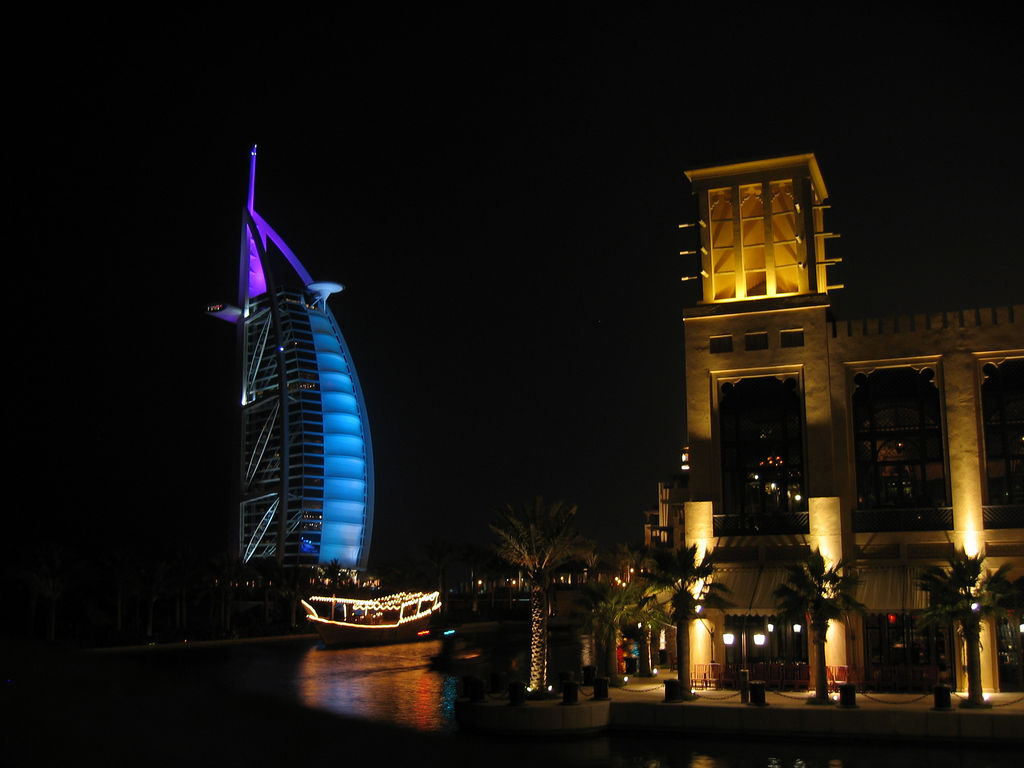
Madinat Jumeirah – das arabische Resort. Eine Stadt in der Stadt wie ein Traum aus Tausendundeiner Nacht. Der Facettenreichtum dieses Resorts bietet für jeden Gast die Möglichkeit, seinen Auftenthalt individuell zu gestallten. Genießen Sie den Komfort, den exzellenten Service und die arabische Gastfreundschaft in einem der 3 Premium Hotels:  Dar Al Masyaf, Al Qasr und Mina A´Salam. Eine 3,7 km lange Wasserstraße verläuft durch die ganze Anlage und verbindet die beiden Hotels “Al Qasr” und “Mina  A´Salam” die Dar Al Masayf Sommerhäuser sowie den Souk des Resorts miteinander. Fahren Sie gemütlich in einer Abra, einem arabischen Wassertaxi, den Kanal entlang, der gesäumt ist von ausgedehnten Blumengärtner, Palmen und großen Poolbereichen. Vorbei an Boutiqen mit Designer Kleidung, Straßencafes und Restaurants mit Terrasse, arabischen Sommerhäusern und luftigen Plätzen mit Brunnen. Sie brauchen das Resort nicht zu verlassen, um die genüssen Dubai´s zu kosten. Im hauseigenen Souk (arabischen für Markt) können Sie Waren aller Art erwerben: von arabischen Parfumfläschen über traditionelle Shischas bis hin zu Paschminaschals gibt es hier fast alles. Besuchen Sie außerdem das Madinat Theater oder die Freilichtbühne .

Insgesamt bietet das Resort 44 Restaurants, Bars, Cafes und Lounges und läßt somit kulinarisch keine Wünsche offen. Abgerundet wird das vielfältige Angebot des Resorts durch Boutiqe Hotel Mina A´Salam, der herrschaftlichen Sommerpalast  “Al Qaser” und die freistehenden Sommerhäuser “Dar Al Masyaf”, 3 wunderschöne Anlagen die keine Wünsche offen lassen und für jeden Geschmack etwas bietet.

Mina A´Salam heißt übersetzt der Hafen des Friedens. Ganz in diesem Sinne liegt das schöne Hotel direkt am Meer und ist von Wasserstraßen umgeben. Die im traditionellen arabischen Stil eingerichteten Zimmer bieten Ihnen einen wunderschönen Blick auf das im Sonnenlicht türkis glitzernden Meer des arabischen Golfs.

Das Palasthotel Al Qasr liegt mitten im Zentrum des Resorts Madinat Jumeirah. Schon die Anreise zu diesem Palast ist einmalig. Eine grüne Allee und golden funkelnde, lebensgroße Statuen von Araber Pferden säumen die Auffahrt und vermittlen dem Besucher eine Hauch von märchenhaftem Luxus. Im Hotel geben große Fenster einen wunderschönen Blick auf den spektakulären Garten und die großzügige Poollandschaft frei.

The Mandeville Hotel, London

The Mandeville Hotel
Mandeville Place,
London, West End
(Rates from 150 €)

Hotel Information: Emerging from the stuffy heat of Bond Street underground station onto rush-hour Oxford Street, London is typically abuzz with activity. But just a few streets from the bustle, tucked away off fashionable Marylebone High Street, a rather special hotel offers respite from the rush. Privately owned, The Mandeville has just had a £15 million refurbishment. Now everything has been given a bit more space, and each room has that touch of individualism that marks out the boutique hotel. At the top, the hotel’s split-level penthouse has the privacy of a townhouse and includes a small roof terrace overlooking Hinde Street Church and the rooftops of London. Throughout, the feel is that of a sophisticated and stylish, yet comfortable, property. The heart of the hotel is the supercool de Vigne Bar. Here vibrant colours of red, yellow, green and silver stand out, while the focal neon-lit bar changes through these tones sporadically, generating a lively and warm ambience throughout the room.The drinks are great too, with an imaginative cocktail list created by their in-house mixologist, the inventor of the bar’s signature cocktail, Honey Suckle – a mixture of honey vodka, rose petal liquor, elderflower, fresh raspberries and champagne.

Room Information: 142 rooms. Continental breakfast costs GBP 16.50 per person. Full English breakfast costs GBP 21.50 per person. .

Rates: from 150€

Next door, the equally modish de Ville restaurant is a secluded place in which to enjoy a traditional afternoon tea, or to settle in for a dinner based on the best of modern British fare – simple dishes based on great produce – so the potato soup tastes of potato and isn’t just warm comfort, while the rosemary rib steak served with sumptuous cherry tomatoes still on the vine and properly chunky chips leaves the most weary diner restored. It’s all dished up in surroundings that have as much attitude as the punchy flavours of the food – like much of the downstairs of the hotel, the restaurant reflects a certain tongue-in-cheek theatre. Modern, large patterned floral motif wallpaper and two imposing statues wearing Venetian masks dominate the room, between which hangs a digitally enhanced image of a slightly surreal white rabbit. It’s quirky, but sometimes we like it like that. Upstairs in the bedrooms, the colourful design remains – less theatrical, but no less charming for that. The beds are lined with pea-green bedspreads, the headboards are upholstered in white, panelled faux leather and a mirror board. At the foot of the bed fuchsia pink armchairs are nice for reclining in while watching the flat-screen LCD television that comes with each room. It has to be said, the marble-floored en suite bathroom in my deluxe room was a bit of a squeeze, but the particularly powerful shower made up for that, and had me wide awake the next morning, well able to weave my way once more through the thronging mass of London’s streets.

Grosvenor House & Le Royal Meridien

Big, Brash and on a seemingly unstoppable drive to become the Middle East’s principal tourist hub, Dubai has ‘bling’ written all over it. The Dubai Marina area by Jumeirah Beach is developing as rapidly as the rest of this twenty-first century city. At its heart stands yet another dramatic tower building,the shiny 45-storey Grosvenor House, overlooking the Marina. It was the first hotel in that particular spot when it opened in 2005, not that you’d know that looking at the surroundings just a few years on. As is customary in this rapidly growing Emirate, countless high-rise blocks have sprung up all around the hotel, each in various stages of completion.

Out by the Marina, building work is likely to continue for the foreseeable future as the hotel is itself constructing a second tower next door called The Residence, which will offer swish apartments and will be joined to the existing tower by a glass bridge. For, once inside, the drilling and hammering disappears and you finally have chanceto fully appreciate the hotel’s five-star quality. A grand marble floored reception hall lined with glass vases of fresh-cut roses sets the tone for a hotel that just exudes chic Off the lobby lie smart restaurants and conference facilities, while in the centre local businessmen in Arabic dress lounge in cushioned chairs and talk over coffee with suited Western counterparts. Upstairs, and decorated in tones of creamand chocolate brown, the hotel’s bedroomsand suites – many of which are sea facing –are just as sleek. They’re also soundproofagainst the surrounding mayhem and blissfully comfortable. With supremely cosybeds, 42in flat screen TVs, substantial ensuite bathrooms and butlers on call 24-hours-a-day, you’d be forgiven for pullingdown the blinds and not coming out fora day or two.Although you may well be tempted toventure out to the hotel spa, The Retreat.Here, you can be as pummelled or pampered as you wish with assorted body wraps, massages and other treatments.

One of the best features, however, is Bar 44 (on the 44th floor of course), an elegant champagne and cocktail bar which hosts live jazz and blues, and serves 44 different kinds of champagne. The views from here are good too, despite the building work that I saw on my visit – although given the pace of development in Dubai these are probably fully-fledged skyscrapers by now.But the view of the Marina is probably as impressive as you’ll find anywhere in the city and it’s also fascinating to peer out to sea through the heat haze and witness the progress of the Jumeirah Palm, the smallest of the city’s three enormous palm islands, which is being created in the bath-warm waters of the Arabian Gulf.

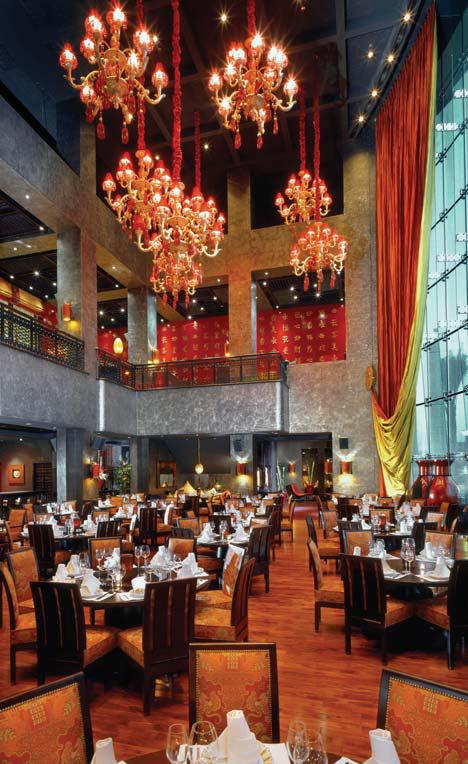
On the ground floor is the hotel’s signature venue, the Buddha Bar, a concept brought over from Paris, and known throughout the city for its fine Asian food, cool ambience and chilled sounds, at the centre of which looms a giant statue of Buddha, who looks on approvingly as guests tuck into squid tempura, salmon sashimi, or any of their other superb Asian dishes. It’s the most popular of the hotel’s 12restaurants and bars. Meanwhile, the Grosvenor’s sister hotel across the road, Le Royal Meridien, has a further 14 dining and drinking venues. Fresh locally caught fish forms the basis of a delicious menu at the Mi Vida seafood restaurant, while a choice cut of steak at Prime Rib is another good option.

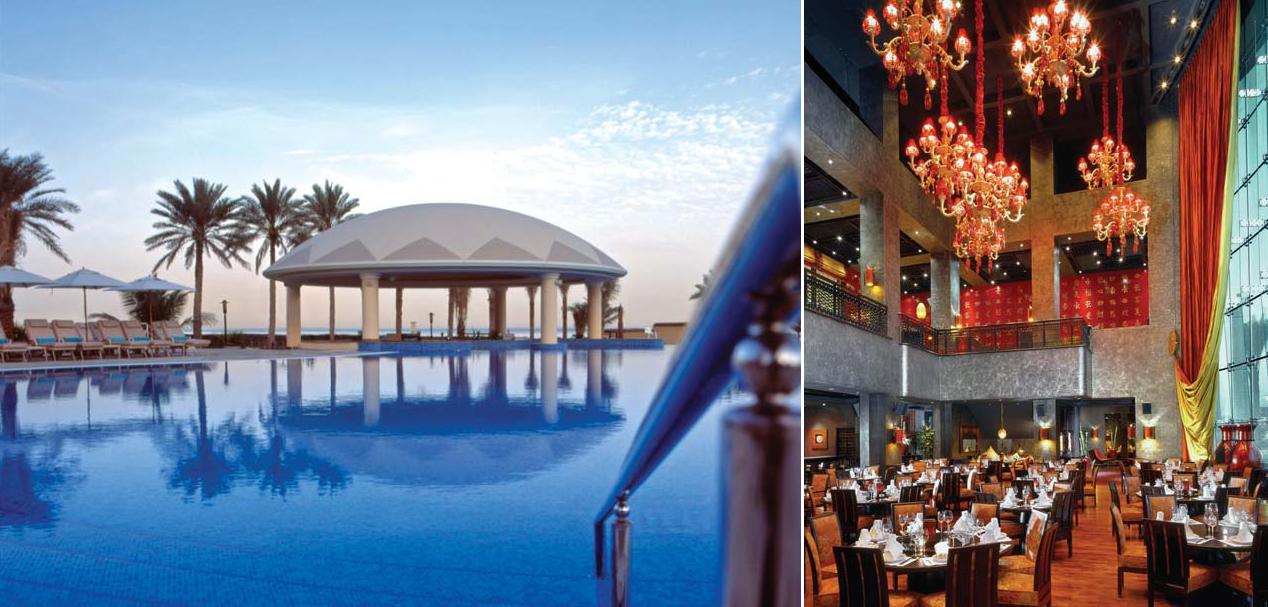
While Le Royal Meridien and Grosvenor House are just a few hundred metres apart, you’ll need to take a free shuttle bus, as walking is a no go on account of the nearby construction work, which can be a little frustrating when you feel like a stroll. Le Royal Meridien itself allows room to roam, with direct access to a sizeable section of Jumeirah Beach and private grounds with green lawns and several swimming pools among palm trees. So there’s plenty of space to find some solitude on a sun lounger.Also five-stars, but a more traditional resort hotel than it’s glitzier bigger sister, Le Royal Meridien certainly makes the most of its position on the Jumeirah beachfront, which makes it far more suitable for families. It’s also a great place to simply relax by the pool with a good book and an ice-cold drink. Or alternatively, to get married on the hotel’s private beach, as some guests have done – no doubt confident that the attention to detail that makes these hotels notable in a city where five-star hotels are two-a-penny, will be applied to their special big day.

Vancouver

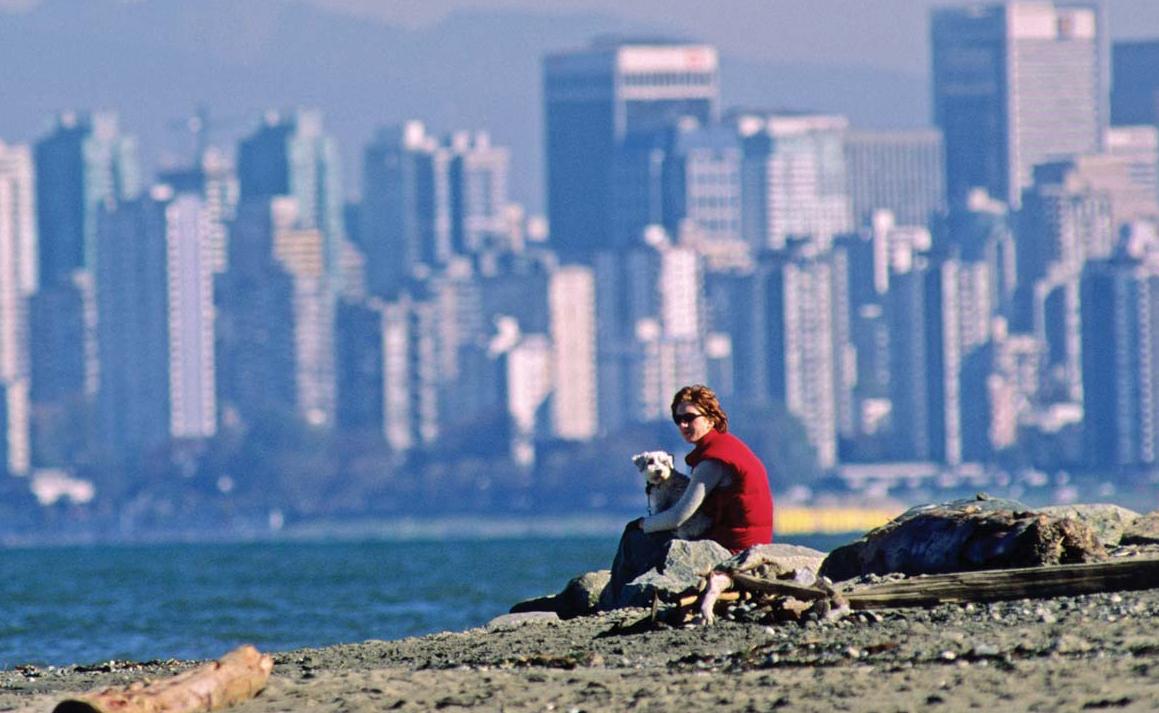
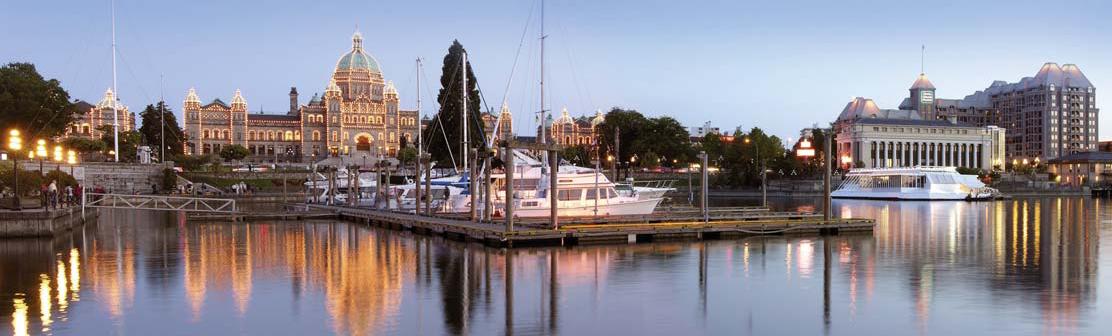
Hours from its final destination, my train slipped silently down through the canyon of British Columbia’s Fraser River, carefully negotiating the last hairpin curves and precipitous elevations. Hell’s Gate and the Kicking Horse safely behind us, the river’s flood plain stretched out toward the ocean. And the Pacific North-West emerged in all its grandeur. If you are unable to get there by wagon train or Haida canoe, it is with VIA Rail’s iconic service, which sets out some 4,500 kilometres away, that the approach to Vancouver makes most sense. As you cross the Rocky Mountains, which separate this part of the world from what lies to the east, it is its proximity to nature that remains Vancouver’s outstanding characteristic. I recall being impressed by this the first time I camehere, as a student in 1951. My first instinct upon arrival had been to make for the harbour, which lies next to the railway terminus. A light aircraft, water spraying from bulbous pontoons, was lifting away from the waterfront pier, its noisy single engine racketing around the bay. Within seconds of the plane’s takeoff, its sound had been completely swallowed up by the surrounding mountains, forests and inlets, all veiled in a seemingly permanent mist. The coastal Indians – the Haida, Tsimshian, Coastal Salish and Kwagiult – have had good reason to maintain their bond with nature.

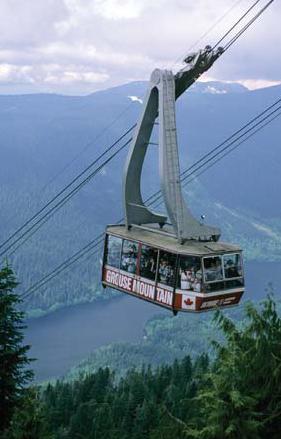
The view that greeted me more than half a century ago, when only two buildings had any claim to size, is fundamentally unchanged today. True, the district is now densely colonised by high-rises, where open spaces once allowed unimpeded views of the surrounding mountains and water. And with the facilities for the Winter Olympics of 2010 already under construction, the end of building work is not in sight. But the setting is as grand as ever For a comprehensive bird’s-eye view of the city, I boarded the sightseers’ trolley in Gastown. Nowadays aproperty developer’s dream location, this was, until recently, a decaying district that dated back to frontierdays. Local history records that within 24 hours of arriving in 1867, John Deighton opened the Globe Saloon. His nickname, Gassy Jack, gave the district its name – and the saloon he opened still stands. Our singing driver steered us past the converted railway yards in Yaletown, another focus of high-rise fever, to Stanley Park’s Prospect Point.

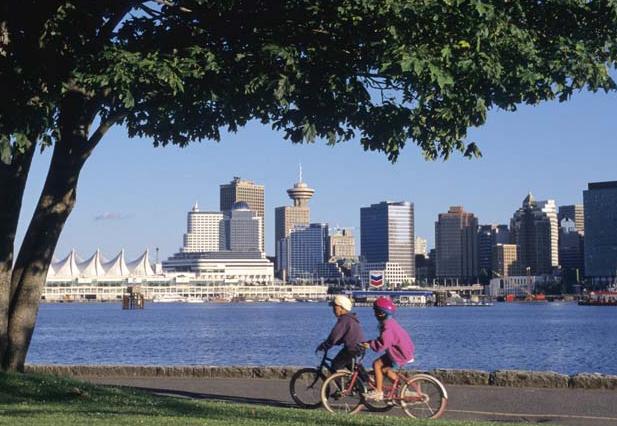
From here the spectacular Lion’s Gate Bridge soars across Burrard Inlet toward the mountains beyond. Although there are many forest trails by which to explore this third-largest of North America’s urban parks – an amazing 20 per cent larger than New York’s Central Park – my instinct took me towards open water and the nine-kilometre pathway, the Seawall, that runs along the shore. You can spend time watching harbour seals, herons, cormorants and grebes in their thousands, or simply enjoy the walk for what it is: a hub of the city’s social life and a magnet for hikers, cyclists, anglers and romantic couples.In 1886, the City Council turned a 1,000-acre chunk of downtown land into a park, which it named after Canada’s then governor-general, Lord Stanley. Thankfully, little has been done to change the space, right down to its crop of native Indian totem poles. Free public access to virtually the entire shoreline is also preserved. It is possible to walk at water’s edge unimpeded from the Bayshore Inn to Spanish Banks and as far as the University of British Columbia. Further evidence of the city’s dedication to preserving as much as possible of its natural habitat may be found at False Creek.

As its name suggests, this is not a creek but an inlet, and it lies on Granville Island – which is a peninsula, rather than an island, and is also, arguably,North America’s most successful revitalisation project. Zoned for massive development in time for 2010 and the Winter Games, it ranks among the city’s most popular neighbourhoods for dining and recreation. This popularity can be explained, at least in part, by its comprehensive access to open water. If there were one single thing to see in all Vancouver, apart from the park, my advice would be to make it the ‘island’s’ market. It is, as they say hereabouts, to die for. My most recent sojourn here ended in the far-distantpast. I heard that the salmon had returned to the shallow pools and inlets surrounding Horseshoe Bay to spawn – an annual miracle that takes place on the city’s doorstep, and one that I was determined not to miss. Bald eagleshad also gathered, in their hundreds, to scoop up and dine on the exhausted fish.I arranged with a local marina to be taken out onto the open water. What I was privileged to see, thanks to idealweather and my boatmen, was a phenomenon of nature that completed, in the most natural way possible, a vision of Vancouver that is shared by all who come here.

Cadiz

An enduring question makes its presence felt as i make my way north from Gibraltar along Spain’s Atlantic coast, the legendary miradors of Cadiz tempting me ever onwards. If a soul is something an ancient city actually possesses, where might I find it? Will it be among the throngs crowding Cadiz’s ancient lanes and modern avenues, strolling in the shade of exotic trees, or gossiping in the markets, cafés and inns? Will it be discerned in the darkness of night, while listening through an open window to the ocean’s surf piling onto the deserted beach? Does it derive from geography and the culture and history imprinted by the traders, merchants and artists who have settled here ever since the Phoenicians dominated Mediterranean commerce? Built on an island at Europe’s extremity and surrounded by the Atlantic, will Cadiz remain simply a physical entity, viewed from a hill or a tower? For a sense of place, I climbed to the top of Tavira Tower, the tallest mirador among the 160-odd scattered throughout the city.
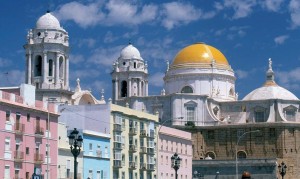
From here one’s attention is drawn south, across the city’s peerless beaches and stretching to an isolated spit of shoreline going by the name of Cape Trafalgar. As I looked out, I remembered reading that it was from here that spotters scoured the skyline for signs of pirate ships and, more famously, evidence of Britain’s Royal Navy. The waves breaking on the rocky shoals are the same that for centuries have proven disastrous for mariners. Turning to the north I imagined Bucentaure, the stricken flagship of the French Admiral Pierre Villeneuve, as it was ripped apart on these rocks following the celebrated naval battle here. The main navigable channel sweeps around the salt pans of the marshy Isla de Leon, home to some of the tastiest fish ever to reach a restaurant table, to the dockyards of La Carraca, where for centuries Spain’s great wooden sailing ships were built and repaired. On a sunny day – and most days here are sunny – the streets of the Old Town radiate in deep shadow from around the base of Tavera Tower. Being too narrow to bear heavy traffic, they have changed little over the centuries. The exception is the Alameda, a fine avenue overlooking the entrance to the bay. Here the elegant ladies and gentlemen of the town seek the shade of the trees growing handsomely along its length. At the western end, in baroque splendour, stands the Iglesia del Carmen. This is the church where the officers and men of Napoleon’s Combined Fleet gathered to celebrate mass, before putting to sea and meeting their fate at the hands of Admiral Lord Nelson.
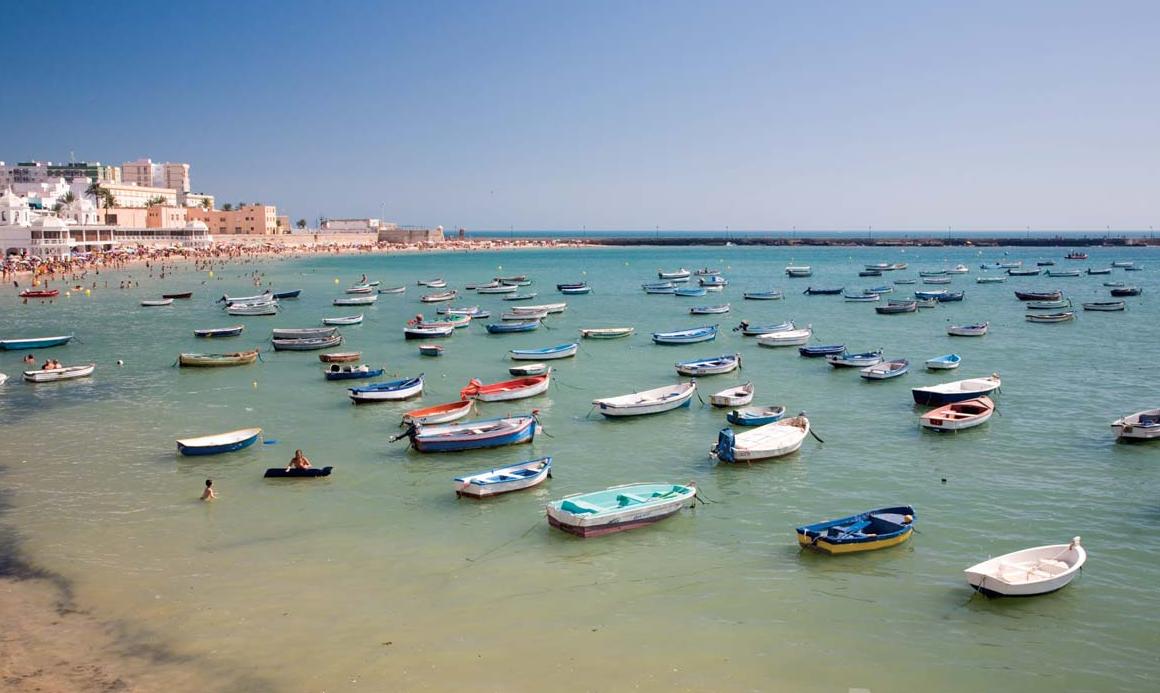
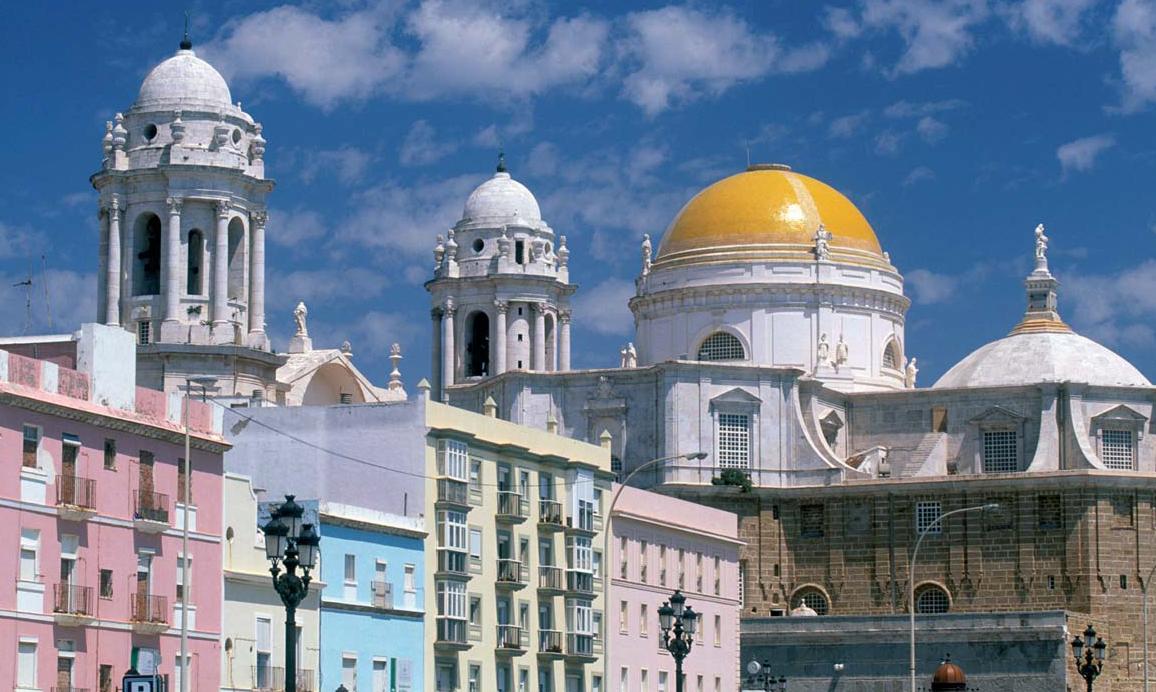
Cadiz has lost some of its sheen in the intervening years, but the opulence and elegance for which it was always celebrated are still evident. It was always less grand than Madrid with its court and aristocracy, but far more cosmopolitan. Other towns were painted white, but none gleamed like Cadiz, where the houses were faced in white marble. It was compared to ‘a great alabaster ship floating in the midst of seas’. The railings of the ubiquitous balconies and grilles, masking ground-floor windows painted sea-green, and the deep blue and brilliant yellow of the tiled masonry evoke an unmistakable flavour of neighbouring Portugal. A distant echo of those seafaring Phoenicians! But Cadiz has always attracted travellers. Carthaginian and Roman warriors brought their families and settled here, followed most famously by the Moors, whose imprint is found everywhere in this part of Spain. An uncommon mix is the result. Everything about the city, therefore, can be summed up in a phrase: a remarkably welcoming place for the traveller.
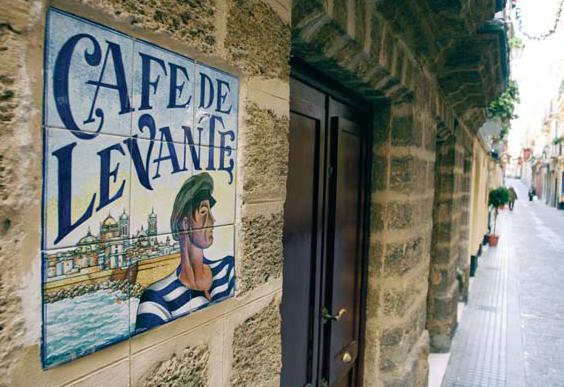
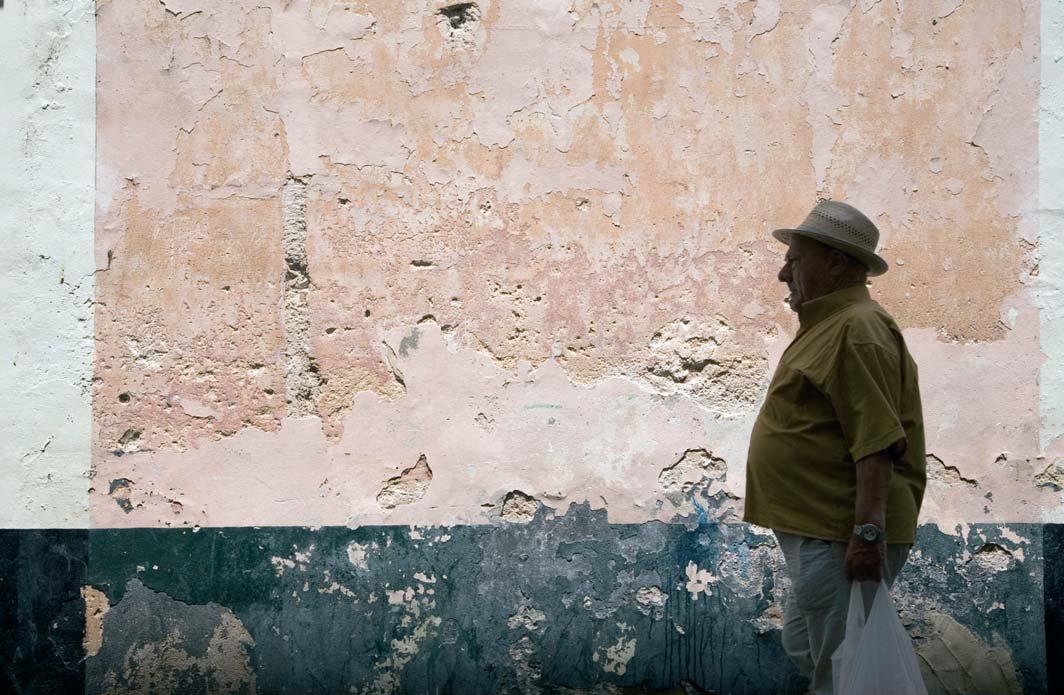
The sea is within easy walking distance from all sides of the city, which makes it virtually impossible to get lost. If you do there is sure to be a helpful Gaditano – he who hails from Cadiz, in the local vernacular – prepared to put you right. Nothing surpasses a happy face when you are in a strange place, and Cadiz is nothing if not warm-hearted. Another conspicuous aspect of the Gaditano, according to Ludwig Feuerbach, is his love of good eating and the conviviality this brings with it. ‘Food,’ the eighteenth-century philosopher wrote, ‘is the beginning of wisdom.’ Which reminds one that Cadiz claims to be the birthplace of the tapa, an idiosyncratic form of snacking customarily planned for midday but, as I can report from experience, suited to any hour. As the story goes, King Alfonso XIII (1886-1941) stopped by one blustery day at the Ventorrillo del Chato, a restaurant that still exists. The wind was unusually strong, so the waiter placed a shaving of jamón serrano – the region’s renowned cured ham – over the top of the glass to stop sand from contaminating the royal beverage. The king approved and ordered another. And yet another! It is not told whether the king was enjoying a sherry or a beer, customarily served deeply chilled. But when it came to my leaving Cadiz, the question that had preoccupied me upon arrival seemed genuinely to have been answered, if I were to believe the old philosopher: ‘Putting something into your stomach is the firstcondition of putting something into your heart and soul.’

When to go
The peninsular setting of Cadiz and the Atlantic winds can make Cadiz cooler than other parts of Spain. The Cadiz Carnival in February is one of the largest in mainland Spain. It’s a fantastic mixture of Andalucian flamenco, African and Latin American rhythms.

Where to stay

Hotel Hospederia Las Cortes Ideally situated in the old town, this clean and simple hotel has 36 well-equipped rooms with balconies.There’s also a gym, sauna and jacuzzi.

Hotel Playa Victoria Popular with families, this modern hotel block is located right on the beachfront. It has 188 rooms, each with views of the beach and sea. Facilities include a swimming pool and solarium.

Hotel Monte Puertatierra Modern, fully air-conditioned hotel tastefully built in neo-classical style. It has a convenient location in the heart of the old town, a restaurant serving local food, and conference facilities.

Hotel Spa Senator Cadiz New hotel in the city’s historic centre. It has 91 sound-proofed rooms and a state-of the-art spa called Acquaplaya. It also has indoor and outdoor swimming pools, the latter located at the top of the hotel and offering panoramic views of the old quarter and the harbour.

Hotel Sindhura Located outside Cadiz, this tranquil hotel is built in the Andalusian Cortijo style. Golf, cycling, riding and surfing can all be organised.

Cadiz Top sites
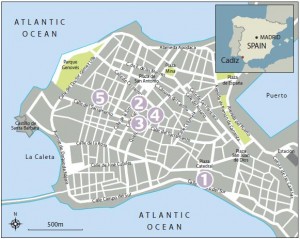
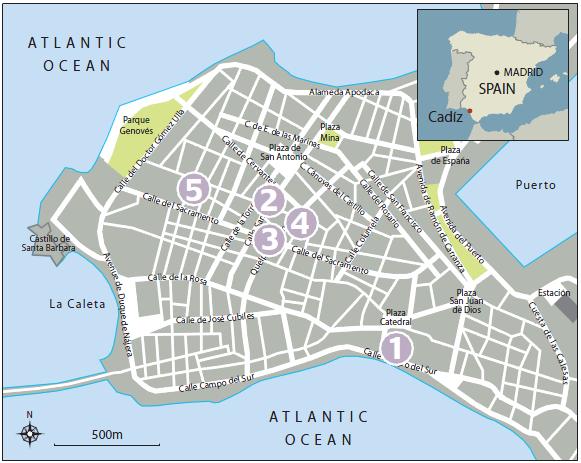
  1. Cathedral Nueva Grand building which took 116 years to complete, thus reflecting a range of architectural styles including baroque, neoclassical and rococo. Its impressive golden brick dome is a major landmark.
  2. Iglesia De San Felipe Chapel which marks the site where the Spanish Parliament was temporarily set up before the Constitution was established in 1812.
  3. Museo Historico Municipal An excellent museum containing documents connected with the Cortes
    (Spanish Parliament) and an intricate mahogany and ivory model of the city from 1779.
  4. Torre Tavira The highest and the most important of the city’s watchtowers is a good observation point, affording panoramic views of the city.
  5. Gran Teatro Falla Named in honour of the composer Manuel de Falla who is buried in Cathedral crypt, this grand theatre offers performances all year round.

Websites

www.andalucia.com/cities/cadiz The website for the Andalusia region, with a useful overview of Cadiz.

www.cadizspain.net Provides plenty of general information on Cadiz and its environs, including places of interest, local festivals, beaches and weather.

Book a Hotel in Cadiz
Hotel Claris & Grand Hotel Central

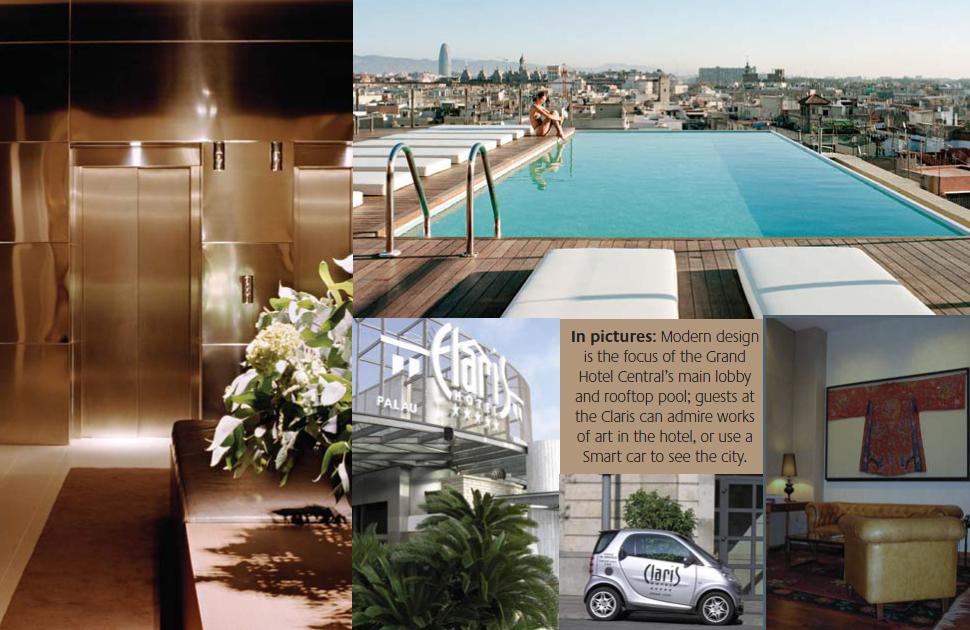
You can´t go far in Barcelona without seeing some pretty impressive buildings. Modernism is thecity’s architectural hallmark and Antoni Gaudi the creator supreme. Many of his best designs are to be foundin and around the area of Eixample, where the five-star Claris Hotel is located. Just around the corner is his sinuous apartment building, Casa Mila, while a few blocks east is the majestic, if unfinished, cathedral of Sagrada Familia. Art features prominently in the hotel, too. The Claris has retained the façade of the former palacio it occupies, but inside it’s a mix of classic and contemporary styles. There’s a private museum of Egyptian artefacts, while the 124 rooms and suites are furnished with antique furniture and sculptures from as far back as the second century. From the modern era there are some quirky objet d’arts, such as a stumpy tree tipped with large orange leaves in the central courtyard, or precariously balanced spiralled spheres in the lounge area of my split-level room. This contrast of new and old is a real draw for fashionistas – Jean Paul Gaultier is among the Claris’ recent guests.

The hotel has managed to retain its grandeur without being stuffy. In summer, food and drinks are served up on the hotel rooftop, beside a swimming pool. Guests can also use a courtesy Smart car for a few hours of city sightseeing: it’s just great for scooting up to the Parc Guell or other Gaudi sites that you can’t get to on foot.

If the Claris has a good location, then the Grand Hotel Central’s is even better, and most certainly central. It sits on a bustling street parallel to the leafy main avenue, Las Ramblas – where locals and tourists alike take leisurely strolls while buskers and hawkers try to catch their eye. Nearby is the Gothic quarter, a labyrinth of twisting streets and historic buildings, including the old cathedral, outside which locals meet each week to join hands and dance the sardana, Catalunya’s national folk-dance. Yet while the surroundings are old, the Grand Hotel Central is very new indeed, having officially opened its doors in January 2006. Its style too, is very modern, but very approachable – the funky main lobby is characterised by shiny metallic surfaces, comfortable lounge chairs and peopled with friendly young staff who booked a table for me at Actual, the hotel’s Michelin-starred restaurant. More impressively, they managed to reserve tickets for the Barcelona football match that evening.

Stylish, spacious bedrooms focus on simple luxury and pure relaxation, with electronic blinds at the windows and a host of Molton Brown goodies in each bathroom. If you have to work instead, then each large desk has an internet connection and the safe is wide enough to stash a laptop. At the very top is a small rooftop pool, which affords splendid views of the mist-shrouded Collcerola Mountains and the sea, providing a visual escape from the hectic city below. When you do decide to venture down to street level, take your pick of guidebook attractions in the neighbourhood.Or just take a stroll as the locals do. Barcelona is about artistic licence, after all.